Showing posts with label law and order. Show all posts

Sunday, March 29, 2009

CODIFY THE MODEL CODE OF CONDUCT ITSELF


GIVE SOME TEETH IN ITS JAWS

Constitution of India has bestowed the responsibility of conducting election on the Election Commission of India (ECI) under article 324. This article provides for ‘Superintendence, direction and control of elections to be vested in an Election Commission.—(1) The superintendence, direction and control of the preparation of the electoral rolls for, and the conduct of, all elections to Parliament and to the Legislature of every State and of elections to the offices of President and Vice-President held under this Constitution shall be vested in a Commission (referred to in this Constitution as the Election Commission)’
Thus the ECI has been given constitutional status so that it could conduct the election in a free, fair and peaceful manner. The independence of the Commission has been guaranteed under 324(5) of the constitution as it reads ‘Provided that the Chief Election Commissioner shall not be removed from his office except in like manner and on the like grounds as a Judge of the Supreme Court and the conditions of service of the Chief Election Commissioner shall not be varied to his disadvantage after his appointment.
Election is the pivot and corner stone of democracy; therefore it has to be conducted in a free, fair and peaceful manner. For this purpose, the Parliament enacted in 1951 the Representation of People Act and subsequently conduct of election rules to this effect was also framed in 1961.
India went on poll for the first time and it was a huge success both in terms voters turn out and peacefulness. India made tryst with destiny in the real sense of the term as dreamed by Nehru in his famous midnight speech on 14 August, 1947.
After few years, the ECI issued an order to regulate the activities of the political parties and their candidates and also to take punitive actions for violations if any. 
The ECI, in exercise of the powers conferred on it under article 324 of the Constitution, section 29A of the Representation of the People Act, 1951 (Act 43 of 1951) and rules 5 and 10 of the Conduct of Elections Rules, 1961 made an order called the Election Symbols(Reservation and Allotment) Order, 1968.
This step of ECI was a milestone in the electoral history of Indian democracy in the sense that it laid the foundation stone of model code of conduct. After every election, parliamentary or state legislative, the ECI felt the need to add more teeth into its jaw and gradually some sort of a set of regulatory guidelines with regard to political parties especially those in power and ministers, officers etc was required to be framed.
First step towards evolution of a set of code to regulate and monitor the activities related to the process of election was taken by T.N. Seshan in 1991, when he issued a set of instructions called Model code of conduct or MCC. Although this set of instructions did not have any legal or statutory backing, it was advisable on part of political parties, particularly those in power, officials related to conduct of poll etc to adhere to these instructions. This is how the seed of the present day model code of conduct or MCC was sown. There was a lot of hue and cry as to whether or not ECI or for that matter CEC can issue such advisory or instruction or not and if whether it can have some statutory effect at all.
Legal luminaries may be divided on this issue but the ruling of Apex court in this regard is worth mentioning.
In 1978 itself five Judges constitutional bench of the Supreme Court held in Mahinder Singh Gill versus CEC AIR 1978 ‘ the constitution contemplates a free and fair election and vests comprehensive responsibilities of superintendence, direction and control of the conduct of elections in the election commission. This responsibility may cover powers, duties and functions of many sorts, administrative or other, depending on the circumstances.’
Thus the apex court cleared all doubts whatsoever with regards to the powers and functions of the ECI in matters of conduction of a free and fair election. It is perhaps due this fact the framers of the constitution have made provisions in article 329 of the constitution for debarment from interference by courts in matters of elections. 
Even then the matters of dispute did arise especially when Sehan played tough on the political parties. Keeping in view of the growing tendencies of parties in power to take undue advantage of being in power, the ECI inserted in 1994 (Notification. No. O.N. 42(E) 18th February, 1994). a new section called section 16A in the Election Symbols (Reservation and Allotment) Order, 1968. In fact the insertion of this new section marked the beginning of the process of giving statutory and legal touch to the Model Code of Conduct or MCC. By virtue this section, the ECI assumed power to withdraw recognition of a recognised political party for its failure to observe model code of conduct or follow lawful directions and instructions of the commission. This is how the model code of conduct in its present form came into being.
Even after insertion of the above provision in the Election Symbols (Reservation and Allotment) Order, 1968, the model code of conduct could not be made a statute, perhaps because the said order itself in a way was an executive order issued by the ECI by virtue of powers conferred on it by article 324 and Acts enacted therein. 
In fact, the notification issued to this effect itself says ‘in exercise of the powers conferred by article 324 of the Constitution 1[read with section 29A of the Representation of the People Act, 1951 (43 of 1951) and rules 5 and 10] of the Conduct of Elections Rules, 1961.

This MCC therefore, remained exposed to judicial scanning. The first legal opportunity to examine this code came in 1997, when a petition was filed in Punjab and Haryana HC challenging the EC powers which it drew by inserting section 16A in the Election Symbols (Reservation and Allotment) Order, 1968. The Court dismissed the petition and upheld the validity of the amendment made in the said order. The court observed that EC can issue directions to the govt and ask them to follow the Model Code of conduct. The court further said that the EC is entitled to take such steps for the conduct of free and fair election. Clarifying the confusion as to what would be the date from which the MCC would come into vogue; the court said the commission can invoke this MCC even before the issuance of notification of dates of polls also.

In 2000, the Union govt moved to the Apex court against the ruling of the EC regarding the date of Model code of conduct coming in force after the above order of Punjab and Haryana High court, and sought a favourable decision from the apex court. The legal battle went on between the govt and the ECI. In the mean time a compromise was reached between the EC and Union govt with regards to the date from which the MCC to come in force and eventually the Union govt withdrew the application from the apex court.
As per this compromise reached between the Union govt and EC, it was agreed upon that the EC would announce the poll schedule two weeks prior to the notification of the election and the code will came into force from the date the EC announces the schedule.
After this arrangement the model code of conduct comes in force with immediate effect after the announcement of schedule of polls.

CATEGORIES OF MODEL CODE OF CONDUCT- the model code of conduct thus is a compendium of circulars and instructions issued by EC invariably before every election and contain dos and don’ts. It is generally categorised into General conduct, Meetings, Processions, poll day, Polling Booth, Observers, Parties in power and some questionnaire. 
Although model Code of conduct as such is not enforceable as it lacks any legal vertebra, it directs the officials especially DEOs to lodge FIRs as and when instructions under this code are violated. The ECI directs the concerned authorities to lodge cases under different penal provisions of prevailing national or local laws.

MODEL CODE OF CONDUCT AND IPC- In Indian Penal Code (IPC) for instance, a separate chapter IX A has been inserted in 1920 by Election Laws ( amendment) Act, 1920 (Act 30 of 1920). This chapter contains section 171 only but over a period of time, depending upon exigencies; sub-sections have been added to it time to time. As on now, this section 171 contains nine (9) sub-sections i.e. 171-A- 171-I. Two amendments have so far been made, one in 1975 adding clause(a) and (b) in sub-section A of section 171 and other in 2003 wherein a provision in section 171-D was made to enable duly authorised persons to cast proxy votes.
Thus for most of the violations of MCC, cases are registered under the provisions of this chapter of IPC.

Similarly violating prohibitory orders invoked under section 144 of Criminal Procedure Code of 1974, cases under section 188 of IPC are registered which is a cognizable but bailable offence. This law has become almost toothless and people make mockery of it because even if you violate the prohibitory orders, police would have to set you free as soon as you are taken into custody. In fact cases are registered under this section 188 for any kind of act of disobedience of order issued by a public servant who is legally authorised to promulgate such orders. Therefore, technically speaking, if the model code of conduct is violated, FIRs can be lodged u/s 188 of IPC also because the ECI is empowered to issue or promulgate such instructions by virtue of powers conferred on it under Article 234 of Indian Constitution.
Apart from above mentioned sections, cases are also registered for violating model code of conduct in sections other than chapter IX of this code depending upon the nature of offence.

WALL PANTING AND POSTER PASTING- The wall panting or poster and pamphlet pasting on walls are also prohibited as per the instructions of MCC subject to certain conditions. Raising hoarding and banners are also prohibited. If such things come to the notice of the concerned authorities cases are required to be registered. Problem sometimes arises that under which law and sections do these cases be registered? The EC has furnished a list that instances for which cases under Defacement of Public Property Act should be registered. This is a local law and almost every state govt has its own law related to defacement of property. For instance in Delhi there is one Delhi Prevention of Defacement Act, 2007, in W.B there is one W.B Defacement of Property Act, 1976, in Bihar we have Bihar Prevention of Defacement of Property Act, 1985 etc. Thus, for every state there is a separate law. In some states it is cognizable and non-bailable whereas in others it is bailable and non-cognizable. It causes lots of technical problems for the ECI to issue one uniform direction to all the States. Similarly for use of laud speakers, we have a plethora of Acts and rules. Almost every state has a separate law or rule regarding the use of laud speakers. 
Under the above circumstances the enforcement of MCC in letters and spirits often becomes difficult. The officials have to use discretion and it is rightly said that discretion begets discrimination. 

MODEL CODE OF CONDUCT AND RP ACT 1951- in order to help ECI to conduct a free and fair election as enshrined in article 324 of the constitution, the parliament enacted a comprehensive law called Representation of People Act, 1951. In fact it contains provisions to regulate the activities and conduct of both political parties as well as poll officials. It is therefore can be said the precursor of MCC. If a glance at this law is made, it clearly stipulates the provisions related to violation of MCC. These provisions are inserted in PART VII and titled as CORRUPT PRACTICES AND ELECTORAL OFFENCES. The chapter-I of this Part contains provisions related to Corrupt Practices and has one section 123 only. CHAPTER-III of part-VII of this Act is titled ‘Electoral Offences’ and contains sections like 125-Promoting enmity between classes in connection with election, 125A- Penalty for filing false affidavit, etc., 126-Prohibition of public meetings during period of forty—eight hours ending with hour fixed for conclusion of poll, section 127-Disturbances at election meetings, section 127A-Restrictions on the printing of pamphlets, posters, etc., section 128-Maintenance of secrecy of voting.
Last but not the least is section 8 of RP Act which deals in disqualification on conviction for certain offences. Sub-section 3 of this section says ‘ A person convicted of any offence and sentenced to imprisonment for not less than two years [other than any offence referred to in sub-section (1) or sub-section (2) shall be disqualified from the date of such conviction and shall continue to be disqualified for a further period of six years since his release.’
Sub sections (1) and (2) of section 8 contain a list of offences in which quantum of punishments is less than two years but still then the convicted persons are liable to be disqualified. 

NEED OF A COMPREHENSIVE ELECTION LAW ENLISTING MCC- In the above mentioned situations, the RP Act of 1951 has become almost obsolete especially due to amendment made in section 41 of Criminal Procedure Code which now prohibits arrests for an offence, the quantum of punishment for which is less than seven years. The plethora of penal laws, rules and orders with regard to violation of MCC has become a vexed problem both for the election related officials as well as for the political persons. Many a time acts of disobedience are committed due to non-acquaintance of laws pertaining to a particular action. Moreover what is the use of such directions or code which themselves are not codified. It is therefore advisable on part of the govt as well as ECI to take steps in this regard and enact a comprehensive legislation incorporating therein all relevant provisions connected with entire gamut of election processes.

Till date, all offences related to violation of model code of conduct are dealt in accordance with the provisions of Criminal Procedure Code, it therefore take very long time in reaching a case to the logical conclusion. The proposed legislation as discussed in above paragraphs, therefore should be enforced by a special rule also. Meaning thereby that special processes and special courts should be evolved so that these offences are tried and reached to logical legal conclusion. The present day scenario is that everyone believes that nothing happens in such cases. Even the officials are of the view that file some cases to escape the apprehended wrath of the ECI, once the election process is over everyone tends to forget about these cases. In fact, this notion about the ECI and cases of violation of its directions are very detrimental to our democracy and therefore this state of affairs must be changed. The concept of 'speedy trial' in some selected cases has been a very successful exercise in the state of Bihar.The percentage of conviction in relation to the national average has gone up in a short span of time. The cases under Arms Act, 1956 and Prevention of Corruption Act are being disposed off at a fast pace. The number of convictions in Bihar has risen to a spectacular proportion. This concept can be utilised in this matter also. After all, elections and democracy are the twin pillars of our political institutions which ought to be protected against any decay and degeneration.

Wednesday, March 4, 2009

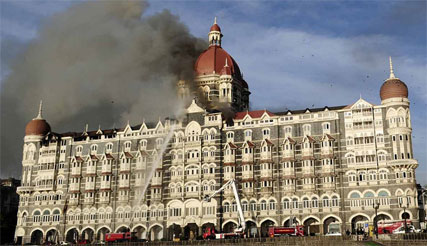
SOP ON ANVIL TO TACKLE TERRORIST ATTACKS


(BURNING OF TAJ;ATTACK ON INDIAN PSYCHE)

The Ministry of Home Affairs (MHA) is all set to implement a Standard Operating Procedure (SOP) for tackling terrorists’ crimes and attacks in the country from 31st May of this year.

This SOP has been prepared after 100 days exercise by a group of experts in security matters set up by the MHA after the fiasco of tackling the Mumbai attacks on 26/11 last year. The manner, in which the whole operation was carried out, exposed the lack of proper coordination amongst the security agencies and also witnessed almost total collapse of command and control system, at least in the important initial phase of operation. 

The above Mumbai attacks and subsequent response by the Crisis Management Group in MHA was highly criticized in the media as well as in public domain especially on the point of delayed dispatch and airdropping of NSG Commandos to the site. There was a total confusion on the site of operation and the securities forces were at a loss on the point of taking commands.

In the above circumstances, the MHA had setup a group of experts which after long and arduous deliberations, prepared a Standard Operating Procedure (SOP) for the security agencies tackling the terrorist crimes. This SOP contains list of does and don’ts, it would be followed by all concerned central and state security agencies as well as the external and internal intelligence agencies like I.B. and R.A.W. 
It is pertinent to mention here that the central as well as state security agencies do have the list of does and don’ts and SOP for Anti-Naxal operations.
This is the third important decision in the MHA after Mumbai attacks, first and second being establishment of National Investigation Agency (NIA) and amendment to the Unlawful Activities (Prevention) Act, 1967 respetively. Many experts in security and strategic matters believe that clear cut command and control mechanism and zero response time are the keys to success in tackling terrorist attacks. The kind of reflex in the rescue team which the entire world watched when a passenger plane had to make an emergency landing in the Hudson river in USA set an example for many countries including India. We, over a period of time, have created a plethora of security and intelligence agencies, but failed to evolve a scientific, coordinated and coherent system of command and controll. When tragedy occurs, the agencies bestowed on the responsibilities to carry our operations, get themselves at a loss, They usually take more than required time to respond. The recent incidents of narrow escape of President's helicopter at Mumbai air port during the visit was another example of lack of coordinationa command and control mechanism in some areas, which is matter of grave concern. Hopefully, this SOP would be able to eliminate or atleast minimise the chances of such fiasco which we unfortunately watched and experienced during Mumbai attacks.
Discussions are also going to amend the rules related to Media also, so that the entire area, where the operation is to carried out, could be cordoned off. During the Mumbai attacks, some of the electronic media (TV channels) acted in a most irresponsible manner and telecasted live the operation of the securities forces. This has proved disastrous in terms of relayed information to the terrorists inside the hotel as well as their masterminds stationed somewhere else. The amendment in the existing law will enable security agencies to disallow such things to occur.

Friday, August 1, 2008

Terrorism, who is scared? Govt or common people


Dear countrymen,
The serial bombing in many parts of India including Gujrat has rocked the entire nation. It has sent a very clear cut message to this nation ,that the terrorists are determined to destroy this country. It has shooked every one except the law makers. Like after every terrorist attck, the leaders of our country fulfilled the formalities by visiting sites , consoling the kiths of victims and visiting hospitals with camera crew and media persons to show that they really bother for them. But, when it comes to the question of acting and coming heavily down the terrorists, they do not go beyond deploring these attacks. This time also, there was a lot of hue and cry for such attack and even media wanted some harsh steps against the terrorists. The demands were raised to enact some tougher laws so that the terrorists can be brought to book and punished. This demand also meet the same fate. The politicians again seemed more concerned for their vote bank rather than the nation. It is very applaudable that in such situation, the common people kept utmost patience and the communal situation could not be disturbed. The life is limping back to normal. The common men have fight back and they have shown the kind of courage which is always lacking in the leaders.
The question is that who is scared? a common man or the law maker. Upto when and Upto which extent these politicians want this country to suffer?
your's
Om Prakash Yadav

Friday, July 11, 2008

LAW AND ORDER; NEED TO REDEFINE MAGISTRACY

IS THE EXISTING LAW PEOPLE'S FRIENDLY?

CRIMINAL PROCEDURE CODE AND CONSTITUTION OF INDIA

THE amendment to the Code of Criminal Procedure in 1973 was a landmark in the Constitutional history of India, because it marked the completion of the process of separation of Judiciary from Executive, a concept that is enshrined in the Directives Principles of States policy, inserted in part IV of the Constitution of India. Article 50 says ‘The state shall take steps to separate Judiciary from Executive in the public service of the state’ After this amendment, the power of taking cognizance was taken away from the Executive branch of Magistracy and was given to Judiciary. This was a milestone and in a way a landmark in the history of evolution and process of democratization of bureaucracy also. It was conceived that the common citizenry would now be more protected from the bloody claws of Executive branch of Magistracy. However it is a matter of debate as to whether this goal was achieved and the purpose was solved.

CRIMINAL PROCEDURE CODE AND POLICE MANUAL

We all know that this above-mentioned system is followed in every territory of this Nation except in the areas where Police Commissioner System has been introduced.
The chapter X-A of Cr.P.C., which deals with situation arising out of the breakdown of law &order due to unlawful assemblies, requires a lot of deliberations and introspection because this section has become a contentious issue between the Police and the Magistracy. The section 129 authorizes a Police officer not below the rank of Sub Inspector in absence of an Executive Magistrate to command any unlawful assembly to disperse, whereas; section 130 empowers Executive Magistrate of highest rank present on the spot to command to disperse such unlawful assemblies. Section 132 gives protection against persecution to the officers who have ordered firing on the unlawful assembly.
The above provisions of CrPC have largely failed to come up to the expectations of people as well as the State also. After every police firing on mob, there is a lot of hue and cry. Human rightists, democrats and champions of civil liberty suddenly come on the picture and almost every time the State Government under pressure orders for an enquiry by some Commission. Needless to say that this Commission then embarks and initiates the enquiry, which rarely concludes and gives report on time. Public memory is short and people tend to forget everything. Every one except the relatives of those who lost their lives in the firing and the officers who face the pains of enquiry forget every thing. The above system of ‘Joint’ responsibility & ‘Joint command’ has hopelessly failed. The recent infamous Khahalgaon police firing have again exposed the inherent weaknesses of the present system of dealing with unlawful assemblies. The startling revelation by the suspended SDM of Khahalgaon has raised many questions, which the lawmakers and law enforcers must answer. The suspended SDM reportedly said that he had never ordered the police to open fire and all what has been done was not ordered by him. Media reports and news channels footage suggest that the DM and the SP were present there. If it true then according to section 130 of CrPC, this firing will presumed to have been ordered by the DM and the SP because the District Magistrate naturally is the Executive magistrate of highest rank. It is also very shocking to learn that the erring and rowdy police men allegedly at the behest of DM and SP Bhagalpur made the SDM Khahalgaon hostage in his official residence and threatened him to sign the “firing order” or face the consequences. It is more surprising to learn the even after this incident the Government did not act. This is not a single and an isolated incidence of this kind in this state. Several times the “order” is obtained forcibly by the policemen from the Magistrate.

DISTRICT MAGISTRATE AND SUPRINTENDENT OF POLICE

With the passage of time, the system of deployment of police force and Magistrate has undergone a big change. Now the DMs issue a so called “Joint order” jointly signed by DM and SP, a system which does not figure anywhere either in CrPC or in the Police Manual. The authority of DM has been undermined to such an extent that some times the SPs themselves deploy the police force and ask the DM to depute Magistrates with them. The DM is helpless enough and is left with no option but to obey the written dictates of the SPs. The institution of the District Magistrate is as old as the British period itself. There is no denying the fact that we have inherited the legacy of British and the system of District Magistracy still continues. The District Magistrate is supposed to maintain “Law & Order” in his District. But some people rightly say that the “Law” has gone in to the hands of “Judiciary” and “Order” has gone into the hands of “Police” and the District Magistrate is left with “&” only. Naturally the subordinate Magistrates are the tails of this “&”. This is a very sad situation and therefore must be changed.
If the law & order enforcing mechanism has to be made more people friendly, the executive parts of Magistracy has to be given more “Teeth” and “Claws”. Robert Kligard has said, “Monopoly plus discretion minus accountability is equal to authoritarianism which leads to corruption. For every incident of breakdown of Law & Order, the District Magistrates are held responsible, but when it comes to the real power of policing, the power flows from the stars of the uniform of SPs. Some people rightly say that DMs are no longer District Magistrates rather they are “District Managers”.

PROHIBITORY ORDERS U/S 144 AND POLICE

Even in the cases related to chapter X-C i.e. section 144 of CrPC, the situation is far from satisfaction. This section confers powers on “Executive Magistrates” (EM SDM, ADM and DM) to issue prohibitory orders to prevent occurrence of public nuisances or apprehended danger. This is an order, which is hardly obeyed by parties and complied by the police. The police officer would comply with this order only when it has been promulgated at their instance and serve their purposes. Otherwise this order is never taken seriously by any police officer. In case of its non-abidance, the EM can do nothing except for lodging a complaint in the court of CJM u/s 188 of IPC, which itself is a bailable one. The experience says that this section has lost its vigour and impact to such an extent that people often make mockery of it. On the eve of every festival and election, prohibitory orders u/s 144 of CrPC are promulgated but it makes hardly any difference on the activities of people in general and political activists in particular.

MAGISTRACY AND LAND DISPUTES

Chapter X-D confers some powers on EMs with regard to land and water disputes. There is plethora of cases related to land disputes u/s 145 -147 of CrPC in the courts of EMs in different Districts of Bihar. These cases and orders made therein are hardly of any use and hardly serve any purpose. The EM, even after fully knowing the fact that some powerful persons have forcibly grabbed the land in question and the petitioner has been dispossessed illegally, he can hardly do any thing in this regard, because there is no provision of “Delivery of possession” in these sections of CrPC. The section 145 empowers the EMs only to pass order taking into account the actual physical possession over the land in question. He has been specifically and strictly forbidden to discuss upon and pass orders regarding “Right to Title and Right to Possession”, which is the exclusive jurisdiction of Civil Courts. Thus even after knowing the facts, the civil administration is helpless in this regard and the poor dispossessed Justice seeker is left for running from pillar to post for getting his possession restored. Of course; there is a provision in sub section 4 of section 145 of CrPC that if such dispossession has been done two months before the receipt of information to the court, the EM can make an order and he may treat the party so dispossessed as if that party had been in possession on the date of his order under sub section 1 of this section. It means that even in such cases, in which the dispossession has been done very recently, the EM is technically not empowered to make order and deliver back the possession to the poor and week dispossessed person. It means that if a person has been illegally dispossessed from his rightful property, he has to go to the Civil Court and file either a title suit or an eviction suit for getting his property back to his possession. It is needless to mention here that it will just add “one more number” in the two crore sixty three lacks and 36 thousands cases lying pending in different courts here in India. This is the state of affairs, which surprisingly bothers none including the lawmakers. 
Ours is a democratic and welfare State. We should and must listen to the grievances of our citizen and try to deliver instant justice to them. For this purpose “Janta Darbars or Janta Ke Darbar mein” programmes are held right from CM to DM and BDO to SHO. At every Janta Darbar, the authorities receive huge number of petitions regarding illegal and forcible dispossession from the land. These petitions ultimately reach to the CO of the concerned Block, the last ladder in the revenue administration hierarchy for ‘Needful action’. Now these poor justice seekers fall in the unending processes of dispensation of Justice, because what to talk of CO, even the DM is not empowered to restore possession of land. It is very surprising sometimes to learn that even the DMs ask the subordinate officers to restore possession. The ignorance of law on part of the men in Government and in the press causes lots of confusion and they start blaming the civil administration for not doing anything in this regard. The Electronic and Print media are full of such reports. If in some cases the CO, SDM or DM dares to deliver possession, those persons who had dispossessed the petitioner will naturally drag these officers into court of law. There are hundreds of cases in which officers are facing proceeding in such matters in different courts. Section 145 clearly says that the EM has to pass order stating the “Actual physical possession only” even if the possession is by wrongful means. It means that the EM has to declare only the actual physical possession and say nothing about the right to possession or right to title. In the famous Ram Sumer Puri Mahant V/s State of UP case, the Hon’ble Supreme Court of India has ruled that when a title suit is lying pending in civil court, proceeding under the executive court can not continue. These are some of the glaring examples, which expose the hollowness of these laws.

MAGISTRACY AND PEACE AND PUBLIC TRANQUILITY

Chapter VIII of CrPC provides for provisions related to security for keeping peace and for good behaviour. Sections 107 – 124 deal in these cases in which the EM is empowered to initiate proceedings. When an EM receives information that any person is likely to commit a breach of the peace or disturb the public tranquility or to do any wrongful act that may probably occasion a breach of the peace or disturb the public tranquility and is of opinion that there is sufficient ground for proceeding, he may, in the manner hereinafter provided, require such person to show cause why he should not be ordered to execute a bond for keeping the peace. When the person fails to execute bond or breach the bond after its execution, he can be sent to jail subject to some conditions. But figures available with Police Head Quarters suggest that the number of persons sent to jails in this section is almost Zero. Gone are the days when these provisions had been very effective in dealing with law & order matters. Now one can imagine very well that when the POTA and TADA have failed, how these sections can be effective. Some times its sounds very joking when we find that some hardened criminals facing 302 IPC charges are asked to execute bond under section 107 of CrPC. The time has come the re-think over this entire gamut of problems; otherwise these provisions will become a stock of laughter.
In any democratic State the executive machinery cannot be allowed to grow its nails and claws in such a way that it pierces and injures its own citizens and infringes upon the human rights and civil liberty of the common people. But at the same time the wings of Civil law enforcing agency should not be crippled in such a way that it fails to fly. Over a period of time, bit-by-bit we have made the civil administration a toothless and jawless agency. That is why in spite of best intention; the civil administration is not performing up to the expectation of the state and the citizen. The protection of human rights and dispensation of justice has been enshrined in our Constitution. The directives principles of state policy, which has been inserted, in part IV of the Constitution of India speaks about separation of Judiciary and Executive. The idea was to protect the citizen from the excesses of Executive. But unfortunately the amendment to the CrPC in 1973 could not fulfill this purpose in the sense that while it curtailed the powers of civil officers, it immensely enhanced the power of police. It is said that the Fire is a good servant but a bad master. After all ours is not a ‘Police State’ and therefore, the police machinery, if allowed to go unbridled, will create more problems than what it will solve. The Police should be given free hand in dealing with the matters related to crime and its investigation. But so far as its role in matters of law & order is concerned, there should be an effective mechanism and safeguard so that it cannot perpetrate atrocities on the citizens. Here comes the role of executive branch of Magistracy. Had there been effective provisions in the CrPC for police firing, the incidents like Kahalgaon could have been avoided. Unfortunately it is not being given the kind of significance and attention, which it deserves. Surprisingly the Administrative Reforms Commission headed by Mr. Veerappa Moily also failed to peep into this aspect of Governance. 
Undoubtedly, India has 17% of world’s population and is making 9% of annual growth. We are poised to become an economic super power. The growing economy, diversifying markets and opening up of societies are adding new dimensions in the governance here in India. There is no denying the facts that the Liberalization, the Privatization and the Globalization (LPG) have thrown many challenges to civil administration, but civil administration does not mean caring for propertied class only. After all only 1.87% population of India are HNI and rest 98.01% are those whose lives still depend on how the civil administration work for them. They cannot be allowed to be swayed away by the market forces. It is here the role of civil administration becomes very important. The growing problems of Naxalism and Maoism are the by products of abject poverty and social injustice. In a state like Bihar, if the land disputes are to be redressed quickly and land reforms to be implemented successfully, more incisor teeth have to be added in the jaws of Executive branch of Magistracy, otherwise things will go from bad to worse. The importance of Executive Magistracy has been underlined by the Hon’ble Supreme Court of India in the famous case of State of Karnataka v/s Praveen Bhai Togadia. The ruling says ‘Courts should not normally interfere with matters relating to law and order which is primarily the domain of the concerned administrative authorities. They are by and large the best to asses and to handle the situation depending upon the peculiar needs and necessities ,within their special knowledge .The courts cannot in such matters substitute its views for that of the competent authority {AIR 2004 SC 2081;(2004) 4 SCC 684.}.
Time has come to redefine the role of the Magistracy vis-à-vis Law and Order. Merely by raising more battalions of Para-military forces, the law and order situation in normal times cannot be improved.

WHO FIGHTING FOR ITS EXISTENCE: WILL IT TRIGGER NEW ERA OF CONFLICT? Politics and lust for power are not endemic of India only...