Saturday, March 7, 2009

WHO WILL BRING THE LAWYERS TO AMBIT OFLAW?

                                     WHO WILL WATCH THE WATCH DOG?

The unprecedented acts of hooliganism and vandalism done by a group of lawyers of the Madras High court in the court premises itself has raised the issue that as Policing the Police is becoming gradually difficult, similarly bringing lawyers to the ambit of law is becoming an arduous task.

The lawyers were protesting against an attempt by the police to arrest some accused in connection with a complaint lodged by Subramanyam Swami. The lawyers turned violent and started attacking the police. They set ablaze some vehicles parked in the campus. In a way the acts of violence provoked the police to resort to tough measures. Subsequently the Police also resorted to lathi charge and beat lawyers mercilessly.

The lawyers went on strike and demanded action against, what they call, the brutal actions of the police. The repeated requests by the Supreme Court to the lawyers to call off their strike went unheeded. The strike is still going on the process of law is severly hindered.

The apex court appointed one man panel to probe into this episode headed by retired SC Judge B.N.Srikrishna. The panel submitted its 22 page report to the court and was read out in the court by some senior advocates before the CJI.

The report has deplored and condemned the incident which took place on 19th February in the court premises of Madras HC. J.Srikrishna has termed the actions and behaviours of some of the advocates as ‘hooligans and miscreants’. The group of lawyers were behaving like unruly and rioting mob. It is shame on our judicial system and is an stigma on Judicial history of our country . Lawyers are the part and parcel of the entire criminal justice system and the courts cannot function without the participation of the advocates.

In recent times, a section of lawyers have formed an idea that they can take law in their hands and will go unscathed because they are under illusion that they are running the courts and the courts will not take action or allow any action to be taken against them. The report has rightly indicted the acting Chief Justice of Madras High Court because his infirm and indecisive attitude allowed the situation to go from bad to worse. 

Few days ago, similar incident, though of smaller magnitude and intensity took place inside the court room at Patna High Court. The Judge Mr. D.D. Jha was force to withdraw his order of making arrest of a lawyer for his act of contempt of the court. The said advocate shouted at the highest pitch and called all his companion lawyers. They started slogans inside the court room before the Judge and the Judge could not nothing accept left the chair helplessly and withdrew his order. Only few days before this incident, a section of lawyers and lawyer’s clerk raised slogans against the Chief Justice because the Chief Justice had issued one direction which necessitated the lawyers or the lawyers clerks to verify the stamps, they are furnishing with. This order was made in view of detection of a racket which had been using fake stamps inside the court itself. In this scam, the police said that the involvement of some advocates was allegedly possible. Any way the entire stalemate could only be resolved when this order was withdrawn.Such types of infirm and indecisive attitudes of the court have emboldened the lawyers who have started taking law in their hands.

Rising cases of so called judicial activism, according to some luminaries, are the root cause of such trends. The frequent physical appearance of senior police and civil officers in the courts due to orders of courts have left an impression that the lawyers can teach any officer a lesson if their dictates are not complied with.
Lawyer’s hooliganism and acts of vandalism have also been witnessed in Allahabad HC for more than one occasion. Few months back, a group of lawyers thrashed Pandher and Surendra Kohli, the accused of Nithari massacre, in the premises of Ghaziabad court. Such incidents are common place in our country and thus are a matter of serious concerns. Such types of infirm and indecisive attitudes of the court have emboldened the lawyers who have started taking law in their hands.

Honorable Supreme Court of India has ruled in the famous case of Praveen Bhai Togadi versus State of Karnataka that ‘COURTS SHOULD NOT NORMALLY INTERFERE WITH MATTERS RELATING TO LAW AND ORDER WHICH IS PRIMARILY THE DOMAIN OF THE CONCERNED ADMINISTRATIVE AUTHORITIES. THEY ARE BY AND LARGE THE BEST TO ASSESS AND TO KNOWLEDGE. THE COURT CANNOT IN SUCH MATTERS SUBSTITUTE ITS VIEW FOR THAT OF THE COMPETENT AUTHORITY’{ AIR 2004 SC 2081;(2004)4 SCC 684}. In spite of this the trend of judicial activism in matters of enforcement of law and order continue to show upward direction. Justice Katju has several times has come down heavily against such trend and has preached the judiciary to do the real work of dispensation of justice rather than being swayed by public and media hype.


The report of Justice Shri Krishna has rightly sought the intervention of the apex court. The panel has also suggested framing of certain guide lines for the bar. In fact there is no rule whatsoever in this matter and it is the bar council which regulates the activities of the advocates in India. Bar Councils of states and Bar Council of India themselves are formed in accordance with section 3 and 4 ofAdvocates Act, 1961.Although this Act was amended in 2003, it fail to incorporate provisions therein to regulate the actions of the advocates. Thus at present these bar councils are the only bodies which gives certain broader guide lines to the lawyers, they are becoming ineffective.The bar councils sometimes succumbs to the pressures of the lawyers and thus they are finding themselves not in a position to tame the lawyers

The Parliament should, now come up to take up and tackle this dangerous trends which is spreading like a pandemic contagion in Indian Judiciary. The time has come to frame a strict, elaborate and comprehensive law is enacted in order to ensure that such ailment is cured, and cured forever.

Friday, March 6, 2009

IT-BPO SECTOR TO GROW


(VILLAGE GIRLS USING COMPUTERS;CHANGING FACE OF INDIA)

Defying all the global trends of recession, at least one sector in India is likely to grow in coming fiscal also. If the figures released by National Association of Software and Service Companies (NASSCOM) are believed to be true, the IT-BPO sector will touch 60 billion US dollar export in the 2010-11 fiscal.

The Association, while releasing the data, said that the export in current fiscal will touch 47 billion USD whereas; it said, the previous fiscal it was only 31.4 billion USD only.The Association however did not forecast the growth for the next fiscal i.e.2009-10 and presumptions are being drawn by the experts that coming fiscal will be somewhat uncomfortable for this sector also. Thanks to the recession all around the globe. The ‘buy American’ clause in the stimulus package of USA would certainly adversely affect the export prospects and perhaps due to this reason, the growth in export of RT-BPO is not likely to grow well in resonance with the global trend.

The growth in this sector, even in the period of recession, is largely due to expansion in domestic demands. As per the data available with the public domain, the domestic market in India is likely to increase to Rs/-52,200 crore in 2014-15 from Rs/-9200 crore in 2007-08, an increase of about 60%.

With the spectacular growth in the service sector, its contribution to the GDP has touched around 50-52%; the domestic demand of IT software is increasing by leaps and bounds. Even the smaller business enterprises are using IT software to upkeep their accounts to run their business. The entire business in India has underwent a cultural change, in commensurate with the changing pace of time.The contribution of govt’s initiative in the field of IT has also contributed considerably in this growth and its contribution cannot be overlooked. The massive outlay of Rs/-700 Crore for National e-governance Programme (Ne-GP) in the general budget for2009-10 paves way for speedy growth in this sector. All most all govt departments have undertaken huge task of computerising the offices and data with the use of latest software technology. It has also contributed in a big way in terms of increase in domestic demands. The SWAN, SDC and CSC are making impressive headways and hopes are high in the coming years in terms of expansion in the domestic demands.

ANOTHER JOLT FOR CENTRAL INFORMATION COMMISSION


                           WHO WILL ADJUDICATE THE JUSTICE?

Delhi High Court stayed the order of CIC on 4th March, 2009, in which the CIC had asked the govt to disclose all the concerned papers related to the appointment of Chief Justice of Himachal Pradesh High Court and make these papers available to the petitioner. The CIC had passed this order on January 19th this year and asked the central govt to disclose all the correspondence including the noting on that file which was returned by the then President APJ Abdul Kalam regarding the appointment of Jagdish Balla as the Chief Justice of Himachal Pradesh High Court in 2006.

It was only after the return of the concerned file by the then President, the matter came in controversy and the news of Bhalla's alleged involvement in some misconduct during his tenure as judge in Allahabad HC could came in public domain.

The order of the CIC in this regard was of much embarassement for the govt and the Central govt was quick to file an appeal before the HC at Delhi. This stayal is seen as a major relief for the govt but at the same time it is another jolt for the CIC as well as the activists who are fighting against secrecy and confidentiality in the establishement.

Technically speaking, there is no provision of an appeal against the order of the CIC and it is final as per section 19(7) of the RTI Act,2005. The aggrieved party may however, file Writs in HCs or SC as enshrined in the Constitution, on the grounds of infringement of Fundamental Rights. It is being observed, and idea is being formed in the public at large, that in many cases the govt or the public authorities file an appeal before the HC or SC and in most of such cases, the order of the Information commissions are stayed. Many activists fighting for free flow of information raise serious apprehensions on the motive of the govt vis-a-vis transparency and claim that the govt hides the information and thereby nip the growth of right to freedom of free flow of information in the public domain.

Section 9 of the said Act provides for exemptions from disclosure and schedule 2 of the Act enlists 18 organisations which are entitled to exemptions. When two years back the govt sought to ammend this law to bring more exemptions into it, was vehemently opposed by the activists. The media criticised bitterely and govt bowed down and subsequently this proposal was withdrawn.

Wednesday, March 4, 2009

SOP ON ANVIL TO TACKLE TERRORIST ATTACKS


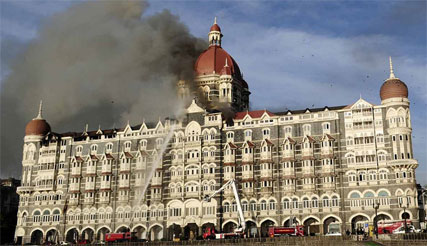
(BURNING OF TAJ;ATTACK ON INDIAN PSYCHE)

The Ministry of Home Affairs (MHA) is all set to implement a Standard Operating Procedure (SOP) for tackling terrorists’ crimes and attacks in the country from 31st May of this year.

This SOP has been prepared after 100 days exercise by a group of experts in security matters set up by the MHA after the fiasco of tackling the Mumbai attacks on 26/11 last year. The manner, in which the whole operation was carried out, exposed the lack of proper coordination amongst the security agencies and also witnessed almost total collapse of command and control system, at least in the important initial phase of operation. 

The above Mumbai attacks and subsequent response by the Crisis Management Group in MHA was highly criticized in the media as well as in public domain especially on the point of delayed dispatch and airdropping of NSG Commandos to the site. There was a total confusion on the site of operation and the securities forces were at a loss on the point of taking commands.

In the above circumstances, the MHA had setup a group of experts which after long and arduous deliberations, prepared a Standard Operating Procedure (SOP) for the security agencies tackling the terrorist crimes. This SOP contains list of does and don’ts, it would be followed by all concerned central and state security agencies as well as the external and internal intelligence agencies like I.B. and R.A.W. 
It is pertinent to mention here that the central as well as state security agencies do have the list of does and don’ts and SOP for Anti-Naxal operations.
This is the third important decision in the MHA after Mumbai attacks, first and second being establishment of National Investigation Agency (NIA) and amendment to the Unlawful Activities (Prevention) Act, 1967 respetively. Many experts in security and strategic matters believe that clear cut command and control mechanism and zero response time are the keys to success in tackling terrorist attacks. The kind of reflex in the rescue team which the entire world watched when a passenger plane had to make an emergency landing in the Hudson river in USA set an example for many countries including India. We, over a period of time, have created a plethora of security and intelligence agencies, but failed to evolve a scientific, coordinated and coherent system of command and controll. When tragedy occurs, the agencies bestowed on the responsibilities to carry our operations, get themselves at a loss, They usually take more than required time to respond. The recent incidents of narrow escape of President's helicopter at Mumbai air port during the visit was another example of lack of coordinationa command and control mechanism in some areas, which is matter of grave concern. Hopefully, this SOP would be able to eliminate or atleast minimise the chances of such fiasco which we unfortunately watched and experienced during Mumbai attacks.
Discussions are also going to amend the rules related to Media also, so that the entire area, where the operation is to carried out, could be cordoned off. During the Mumbai attacks, some of the electronic media (TV channels) acted in a most irresponsible manner and telecasted live the operation of the securities forces. This has proved disastrous in terms of relayed information to the terrorists inside the hotel as well as their masterminds stationed somewhere else. The amendment in the existing law will enable security agencies to disallow such things to occur.

Saturday, February 28, 2009

BIHAR TO GET HUGE GIFT FROM RAILWAY


(LALU PD YADAV; ARCHITECT OF RAILWAYS TURNAROUND)

Bihar is going to have two more new Railways Divisional Manager offices now. The Minister for Railways Lalu pd had proposed creation of Thawe ( gopalganj) and Bhagalpur divisional railway offices in the 2009-10 rail budget. Since this Budget has been passed by the Parliament, it paved the way of creation of the same.
Lalu pd today laid the foundation stones of these two newly created DRM offices in Thawe and Bhagalpur respectively.

With these two DRM offices coming to existence, the total number of DRM offices in Bihar has gone up to five(5). Besides these two, there are three DRM offices located at Danapur (Patna), Sonepur (Chhapra) and Samastipur respectively. All these two Divisional offices would be placed under North-Eastern Railway(NER) Zonal office, at Gorakhpur and Northern railway Howrah.

The creation of these two offices would increase the employment opportunities in this state and also add more revenues to the state's coffer. The actual construction work of these offices are likely to start only when the new govt takes office at the centre. Lalu pd has started constrution work in Bihar on a massive scale. One road-cum-rail bridge is being constructed at Digha in Patna and other is being built in Munger. One electric engine work shop is being constructed in Madhepura, whereas; wheel factory is likely begin in Chhapra. Besides this many railway stations have been updraded and modernised. Patna railway station has already been given face lift and sereral others are being given new and modern look. Gone are the days when you look the colonial vestige image on the railway stations in India. According to the information available with the public domain, about 60,000 crores rupees would be spent on these on going and proposed schemes in this development starved state.

Friday, February 27, 2009

NEW ERA TO USHER IN JAMMU & KASHMIR


ERA OF NEW HORIZON AND NEW HOPES WAIT TO USHER IN IN JAMMU AND KASHMIR

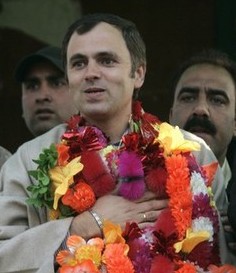
Omar Abdullah has hinted to repeal J&K Disturbed areas Act,1992 and Armed forces (special powers)Act 1958 very soon. It is pertinent to note that both these laws were enacted in order to tackle the terrorist activities in this disturbed state.

The successful election in the state in terms of high voters turn out and lesser incidents of violence have changed the political and social mileu in the state and has instilled confidence in the 'strathclyde scotland educated' and youngest CM, who in turn wants to fulfill the promises he had made to the people during his election campaign.

It should be noted that the above two laws are enacted by the Parliament, but the state govt can repeal it under the powers conferred to it vide Article 370 of the Indian Constitution and article 246(schedule-7 state list) of the constitution which gives state almost exclusive powers to the state govt in matters related to law and order.

Since these two laws give ample powers to the security forces with respect to arrests, search and firing, many human rights activists and political parties also call these laws 'draconian' and have been demanding their repeal since its enactment and application.

The withdrawal of these laws will certainly help win the good will and confidence of the people which have fast depleted over few years. But on the other hand ,it will curtail the powers of the security forces in dealing with the terrorists, which may hamper the peace process to further and normalcy to return.

Some experts in security matters are however of the opinion that constitution of National Investigationg Agency and amendment to Unlawful activities( prevention)
Act 1967 have rendered J&K Disturbed areas Act, 1992 and Armed forces (special powers)Act 1958 useless because the aforesaid law(Unlawful activities( prevention) Act 1967) and NIA are able to tackle the terrorists activities in far more effective and scientific manner.

By doing so the government can send a message of good will and kind gesture to the people of this state at large, now it is up to them to reciprocate in the same fashion.

It should be bone in mind that the local people irrespective of political affiliations have been highly critical of these, what they call'draconian and anti- kashmiri laws', therefore its repealment would usher in an era of new horizon and new hopes. This opportunity could be used to fill confidence and restore peace here in the valley,

Hopefully this step would also help in restoring peace in this strife torn territory of the Indian republic. Paksitan must also share the good gesture and reciprocate because playing with fire burns your own hands too, history has given us this lesson. All what is happening in Pakistan including in swat valley of FATA and elsewhere in this country are the fruits pakistan have sown over the years.

Tuesday, February 24, 2009

'BUY AMERICAN' ;IS IT ANOTHER SMOOT-HAWLEY ACT?


SENATOR SMOOT; THE ARCHITECT OF THE ACT

The 'buy american' clause in the Obama's 819 billion USD stimulus package has raise eye brows of many countries including India. The wave of prtectionism is blowing across the globe. The restriction in H-1B visa by USA and tightening of screws by British immigration authorities with regard to job seekers from Asian especially from coutries like India have set in this trend which will be imitated if not retaliated by many other countries across the globe. 

Similar steps had been taken by the USA after the great depression of 1930, when republican senator Reed smoot from Utah and another republcan C Hawley from Oregaon drafted America's most negative legislation called Smoot-Hawley bill which was passed by House in May, 1929. It was widely opposed by the contemporary economists of America itself, but since Hoover had made promise to the farmers of such protection, he got it implemented.It proved disastrous for not only Amrica but for the whole Europr if not the whole world. Similar retaliatory steps were taken by Britain, France, Germany and a host of such countries. They raised their tariff walls against the American goods and the export of American good fell down sharply. According to date available on the wikipedia, the export of USA fell from 2341 million dollar in 1929 to 784 million dollar in 1932. Result was catastrophic, the American Industries had to cut down production as the export fell,this led to job cuts. The figures suggest that the unemployement which was 7.8% in 1930 rose to 25.1% in 1933.

It seems that Americans have not learnt anything from history. Although Obama is opposed to this clause, the republicans are again doing the same mistakes. This clause may benifit US economy in short term but in long term this would result in negative growth of America. The export of software industries and aircrafts to countries like India, China and Brazil may go down if these countries resort to same kind of retaliatory measures.

This clause also goes against the ethos of free trade economy. If we talk in terms of a global village how can we resort to such a primitive and economically naive steps. Time has come for the Americans to ponder that much water have spilled since the first depression. World is changing and the room on the chess board is shrinking.
According to the latest figures released by the Commerce department of USA, the GDP has underwent contraction by more than 6%. Earlier it was estimated that the contraction would be less than 3% but it went more than the estimate. Obama's stimulus package lauched by the US administration is expected to show its positive results after a couple of months. This unprecedented contraction in GDP is due to decrease in domestic spending which is all time low. The figures suggest that the American export has underwent downward trend highest ever since 1970s. The Buy American clause in the stimulus package, on principle, is opposed by Obama but it is not being conceived in wider perspective.

Sunday, February 22, 2009

BERLIN CONFERENCE; PRELUDE TO G-20


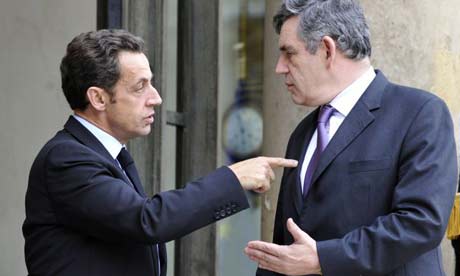
MARKEL AND BROWN; WHO WILL BELL THE CAT?

Leaders of major european countries have assembled in Berlin in a prelude to G-20 summit (India is also a member of G-20) which is scheduled to be held on 2nd April this year in London. This meeting is being attached immense singnificance because leaders of all major european economic powers have accepted officially that recession has arrived into their countries. Although no consensus is likely to be arrived at here also, but all leaders have unanimously argreed to the fact that this is a " global crisis and therefore it needs to be tackled globally", an acceptance which had been conspicously absent in all previous deliberations on economic matters. The change in attitude is significane and it seems that they are making themselves prepared to give a big say to other countries of third world, vis-a-vis new 'global financial order'. Markel went upto saying that this is the ' extraordinary international crisis' that means they want it to be solved with global participation.

Underpinning the significance of forthcoming London Summit, President Sarkozy said that ' summit would bear historic responsibility to reform global system. Apprehending the advent of trend of protectionism, Gordon Brown said that it would undo all the progresses which we have made over these years in terms of prosperity, liberty and democracy. Brown further said that an economy should be created which is based on ' soundest principles' and world needed a ' global new deal'.
Although all participating leaders have divergent views on majority of issues, but all of them reiterated the need of conferrement of major role on global financial institutions like IMF and world Bank.

The leaders also expressed their anguish and concerns on the system of giving hefty bonuses to the corporate managers at the cost of tax payers money. It should be born in minds that Obama have strongly warned against such practises. In India our PM had raised voice of concerns months ahead of this crisis when he had requested the corporate houses to trim the salaries of CEOs because it not only widens disparity but also instills frustrations in different classes of society. Unfortunately this appeal was not taken by Industrial and corporate houses in its spirit. Many laughed saying 'pay gram and you employ monkeys' 

This prelude conference at Berlin gives some idea about the agenda of the London summit on which India and other developing nations must do home works.
What actually India and other such countries want from the London summit? BRIC ( Brazil, Russia,India and China) and IBRA and other such blocs must prepare their agenda well before this summit so that they can put their case in a more cohesive and coordinated way. India has not yet started Institutionalised official deliberation on it as to what we are looking for in the forthcoming ssummit. It is the high time that we must stake claim a big role in the proposed global financial order otherwise there is no use crying over spilt milk.

Saturday, February 21, 2009

FOOD SECURITY IN INDIA; ARE WE UNDERNOURISHED?


SWAMINATHAN;HARBINGER OF GREEN REVOLUTION

One UN report on food security in India has said that about 40% of the children below age of years are undernourished. This report has been prepared after a comprehensive survey by World food programme and

The report suggests certain measures like expansion of PDS system and recommends that in place of a Targeted PDS, it should be made universal PDS so that the vailablity of food to the rural areas is made universal and made much more convenient and institutionalised.

The report has praised the schemes like NREGS and other rural developmental wage oriented programmes and emphasised the need of their better and efficient implementation so that the fruits of these programmes are reached to the rural population which constitutes about 56-60% of the total population. The report further recommends to the governments that since the food production is expected to touch record 230 Million tons in this fiscal, it should be ensured that the public distribution system be made much more wide and universal. Malnutrition and undernourishment are the stigma on our society especially when we boasts of high growth rate and a robust economy. The report urges the government that the abhorrible malnutrition is erased from the society.

SWISS BANK TO DISCLOSE HIDDEN TREASURE


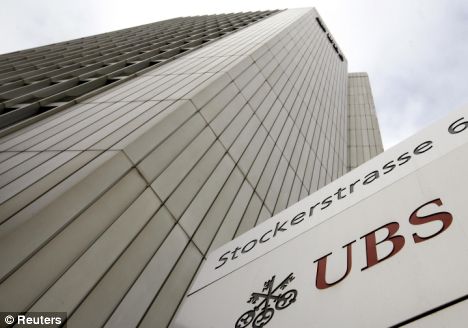
UBS, CITADEL OF PROSPERITY BUILT ON BRICKS OF POVERTY

The world economy is in deep crisis. It requires huge amount of liquidity to tide it over. It is amply clear now that the market has plummeted due to excessive financial leverage. According to one estimate, in 1980, the leverage was up to 108% of the global GDP. In fact the trend of twisting and extracting excessively from the economy even beyond its limit had started after 1990s itself. Initially, this trend paid handsomely to the money makers and finance mangers and they thought that it is the secrets of economic success. The so called boom in sectors like housing, IT, service, capital markets etc was perhaps due to this leverage also. The bottomless greed of money makers, MNCs and TNCs brought the leverage percentage up to sky soaring level of 600% of the global GDP in 2007. It is estimated that in 2007 global GDP was about 54 trillion USD, but the financial and banking sectors stretched this amount to six hundred times. Thus the growth of entire global economy was brought to stand on the foundation of sands, which was bound to sink and implode. 
Therefore, the World desperately needs huge liquidity and wealth in order to restructure, revamp and rebuilt its global financial architecture. The American GDP is about 13-15 trillion dollar. According to economic experts, the USA is in desperate need of liquidity in order to ensure that the TARP and second stimulus package get going and help US economy recover from recession. 
It is in this background the US administration is tightening its screws on the tax evaders. In a daring move, the US administration sought information from the United Bank of Switzerland (UBS) regarding the American clients who have evaded tax from the Internal Revenue Service (IRS) and deposited their money in this clandestine off shore Bank. Initially, the UBS vehemently opposed this move and declined to disclose the names of clients and their amounts in the bank account on the pretext of its age old policy of secrecy and confidentiality conferred on it under Swiss Banking Act,1934 
The US administration toughened its stand and made UBS bow down. Now the Bank’s Chairman Peter Kurer says that “We accept full responsibility for these improper activities, he added, suggesting that client confidentiality, to which UBS remains committed, was never designed to protect ‘fraudulent acts’. Now the Bank is ready to disclose the names and the turnover of 250 clients immediately and assured the US administration to divulge some more names in near future. The Bank is also ready to pay 780 million dollar as penalty to avoid possible launching of prosecution against it. 
This whole success story on part of US administration has set a good example for countries like India, the citizens of which have reportedly deposited 1456 billion dollar in UBS. According to the data of Swiss Banking Association (SBA), in 2006, Indian nationals reportedly held the largest quantity of illegally stashed money in Swiss Bank, if this data is to be believed, and there is no reason of disbelief, Russians have deposited 460 billion dollar followed by British 390 billion dollar, Ukrainians 100 billion dollar and Chinese 96 billion dollars. These figures speak much than what it appears to be. This is why it is said that India is rich country where poor citizens live. 
Ours is developing economy and we are proud of it. Even in this period of global meltdown, we have been making impressive growth, second to China only. But in terms of GDP, we are far behind than that of US, China, Japan etc. It is yet to cross 01 tn dollar at the current rate of convertibility. If the deposited huge amount of Indian Nationals is taken true, it is 1.8 times the GDP of our country. What a massive drain of wealth! Alas we could have brought it back. In fact this drain of wealth is much bigger than those of the British colonial period. Economic Historians have estimated that till Independence the Britishers had been able to drain our wealth from India equal to 5% of GDP, whereas; in post independence India it is 108% of the GDP. What a tragedy! 
Like Americans, we too desperately require huge liquidity. We have injected massive stimulus package into the economy for a ‘jerk start’, for which we require more and more money. The Indian Infrastructural Finance Company Limited (IIFCL), which provides fund to carry out infrastructural projects require money. The ambitious programne of National Rural Employement Guarantee Schemes (NREGS, which has helped our rural economy become stronger and helped increase the purchasing power of billions of people in India requires more and more money so that it can yeild much more better results. Thus, to see economy moving and rural developmental schemes get going, we require money. The million dollar question is, from where will the money come? We cannot increase the tax rate, because it is counterproductive. We have already planned to launch GST from April, the next fiscal which is expected to add 1.4% additional increase to the GDP. We have to have tax regime which provide relief to the honest tax payers.
We have, therefore, to take recourse to similar measures as Americans have taken. If we can notch hefty amounts from the UBS, it can be of immense help for our ailing economy; after all 1456 billion is an amount which can change the fate our nation. Some economists are of the opinion that the liberalisation has increased the pace of flight of capital and the size of drain of wealth kept growing with growth of economy. Time and again this issue has been raised but every time the power brokers have succeeded in thwarting the move. No serious effort has so far been made to see that the drained wealth of nation is brought back. There must be a political audacity to raise this issue and make meaningful effort in this regard. India must stand tall and extract information from UBS and other such offshore Banks with regard to clandestine bank deposits by Indian Nationals. We must talk to them in a peremptory tone and demand back the illegally drained wealth of the Nation. It is high time; India must stand firm with a determined body language so that UBS behaves with us at par with US. 

This issue can be raised on world forums including G-20 or G-7 summits. How can a Nation or a financial institution like UBS be allowed to eat up the vitals of ours in the name of century old obsolete and colonial legislation? Time has come for the international community also to exert pressure on Switzerland and see that the policy of secrecy and confidentiality of UBS and other such offshore Banks be scrapped. It does not go against the Laissez-Fairre or free market economy, after all unethical financial practises and bottom less greed have already done tremendous damage to the world financial order beyond repair. Economies are made for the welfare of citizens in particular and human kind in general. How can unethical trade and financial practises be allowed to swallow the destiny and right to live a descent life of billions of poor people who still starve, while the Banks are spilling over with money and gold?

ASSETS OF UBS AND OTHER SWISS BANKS- It is astonishing to know that the total assets of UBS, the largest of the Swiss Banks, is roughly 2 trillion dollar which four times the GDP of Switzerland and 9 times that of Iceland. If assets of all Banks in this country are taken into account, it is 6-7 times the GDP of Switzerland. Comparing with countries like America and Britain, the assets of all the Commercial Banks in these countries are hardly 70% the GDP of these countries.

THE EDIFICE IS CRUMBLING- The sources in the Banks reveal that the outflow of money from these Banks are increasing. The UBS has made certain changes in the top management also. Peter Kurer is reported not to contest the forth coming election for the top job, the Chairman, this year. It seems that the old edifice is crumbling and days are not far when the entire principle of 'privacy'or ' secrecy' on which these Banks are standing would be put to question.

Friday, February 20, 2009

IS LAISSEZ-FAIRE IN REVESE GEAR?


( BROWN AND SARKOZY,IS HONEYMOON OVER?)


THE world economic down turn has started showing its ugly and horrendous faces in social spectra also. The impact of this recession is gradually percolating down vertically and spreading horizontally across the global village. The economic depression, the product of U.S.A., is being exported throughout the length and breadth of globe and letting its jitters felt in all sections of the society.
In Europe , France is witnessing the worst ever street-protests against the alleged failure of the government in tackling the economic slowdown and mitigating the woes of its citizens. President Sarkozy is facing a grave challenge and the sweet memories of his honeymoon with Bruni are fading. This unrest has strained his relation with Gordon Brown also. Britain on the other hand, is also witnessing protests and anti-government demonstrations. “British company only for British employees” is being advocated for, very staunchly. In fact British companies have been hiring cheap paid employees from other European countries, are permissible in European Union Law, and are becoming bone of contention.
Similar social and political unrests are being witnessed in Russia and in many other erstwhile members of Warsaw Pact countries. Prime Minister Putin and President Dmitry Medevedev have been facing rough weathers in Russia. Putin, once hero of Russian people, whose popularity was said to be at a soaring level, when he quitted the presidency, is also under tremendous pressure.
Even in America, people are taking to streets and demanding tough, decisive and result oriented steps so that their lives are brought back to normalcy. In spite of Bush’s 700 billion dollar TARP (bailout package) more than 18000 jobs are being lost every month. According to America’s own labour department statistics, the un-employment rate is about to touch a double digit figure, a all time high in the post depression economic history of the country. Obama’s historic coronation to the Whitehouse seat has instilled a huge amount of hopes, which is both an asset as well as liability for this first African-American non-white president. His 836 billion dollar US Stimulus package will take few more months to make its impact felt in the socio-economic arena. Till then the American society’s patience will be put to test.
The Asian dragon, the republic of China, hitherto unscathed from the scratches of the down turn is also undergoing socio-economic as well as political upheavals. The massive 900 PLUS billion dollar stimulus package has been put on top gear of the economic vehicle. The thirst, the government says, will be on ways and employment oriented infrastructural developmental activities like Rail and roadways constructions. In spite of this the growth of this Asian Giant has shrinked to 7.5 percent. The toys industries, one of the biggest exporters of the world, have suffered very badly. It has butchered the employment to such an extent that the stimulus package’s after effects are also being neutralised.
India, one of the fastest growing economies of the world, too could not remain insulated from the viral infection of the global economic ailment. The massive pumping of liquidity into the financial systems through frequent rate cuts in CRR, SLR, REPO and REVERSE REPO RATES have applied some ointments on the bleeding wounds of economy but still a lot is required to be done. The stimulus package of Montek has a long way to go before it reaches to the tattered masses. The brunt of the slowdown has taken millions of jobs head here in India also but the social and political unrest at a magnitude similar to those in other parts of globe is not imminent here. Thanks to the accustomed Indian psyche and its endless power of tolerance. The institutionalised and bureaucratised network of social security system has done a commendable job here in this country. NATIONAL RURAL EMPLOYMENT GUARANTEE SCHEMES (NREGS), the brain child UPA government, has come as a huge relief for the people living below the poverty lines in the countryside. The massive allocation of more than 60 thousand crore rupees over a period of 3 years has done miracles in the rural economy of this country in the sense that it has provided pennies in the pockets of billions of people. It worked on KEYENESIAN theory which is based on the principle of government expenditure vis-a-vis the purchasing power of people.

THE TREND OF PROTECTIONISM -The WTO has released a report that says that about 16 countries have take protectionis measures since September the last. Many experts believe that these anti-free trade measures will provoke retaliation from other countries also and may led to reveral of the entire process of free trade capitalism across the globe.The trend of protectionism is set in USA also, ‘Buy American’clausein America’s 819 billion dollars stimulus package smack of protectionism. US administration's decision regarding H-1B visa restrictions are not in congruent with the policy of ‘lazes- fairre’, a policy which America do not get tired of boasting. One 'Patriot employer Act' is on anvil, which will give incentives to the employers taking some protectionists and social security measures with respect to providing employement in USA. Many Europeans are tightening their immigration regulations with a sole motive of saving their economy and providing employment to their own citizens. America has imposed an undeclared ban on Chinese goods. The Japanese economy has shrunk to almost negative growth due to shrink in exports, the main growth factor coming in Japanese economy, to almost Zero level. This is suggestive of the fact that the importing countries have stopped Japanese goods into their countries. 
Many Europeans nations have resorted to such similar moves which go against the basic tenets of capitalism. Germany for example have provided huge subsidies to its industries and sought to protect its economy from the onslaught of the recession. Chinese have restricted imports and is providing unprecedented protection. President Sarkozy has hinted that some protectionist steps would be taken to save the ‘French Detroit’, move opposed by many European nations themselves.
Canada, Mexico, Brazil, Argentina, Russia, Ukraine, Japan, South Korea, etc all are on similar move. The sentiment is running high across the world in favour of protectionism and the ideals of free economy are being abhorred now.
The excessive financial leverage and excessive greed have ruined the financial fabric beyond repair. According to an estimate, the financial leverage in 1980 was 108% which rose to 600% in 2007 and lending was done of worth 600 trillion dollar whereas; the total Global GDP was only about 55 trillion dollar. What an excessive leverage and what as mad race it was.
The champions of ‘European Unification’ ‘Under One Europe’, one currency and one parliament under ‘European Union Umbrella’ are sitting quiet now. The global economic forums like WTO and World Economic Forum at Davos seem to have postponed their ‘Unified world market and non-subsidised’ world economy plans. All the motions, it seems have been kept in abeyance, thanks to Xenophobia everywhere.
IMPACT ON INDIA DUE TO ‘BUY AMERICAN’ CLAUSE- the Indo-US trade has witnessed spectacular rise over a decade. According to the Ministry of Commerce, the export from India to USA has been of 160 Billion dollar in 2007-08 which rose to 200 billion dollar in 2008-09. The chart below gives the picture of more than a decade-

1993 1994 1995 1996 1997 1998 1999 2000 
India’s Exports 4,551 5,302 5,736 6,169 7,322 8,237 9,071 10,686 
India’s Imports 2,761 2,296 3,296 3,318 3,608 3,564 3,688 3,663 
Turnover 7,312 7,598 9,032 9,487 10,931 11,801 12,759 14,349 
Balance (+) 1,790 3,005 2,440 2,851 3,715 4,673 5,383 7,023 

(* Source: US Department of Commerce, Bureau of Census) ,

The above figures suggest the increasing trend of the bilateral trade over the years which have reached more than 200 billion dollars. As far as the composition of the trade is concerned, India's exports to the US have been rising mainly on account of significant increases in the exports of diamonds, textiles and ready-made garments, machinery, carpets, footwear and leather products, dyes, iron and steel products, chemicals, edible fruit and nuts and spices, coffee and tea. Items such as, cut and polished non-industrial diamonds, jewellery, textiles and clothing, carpets, shrimp and other marine products, footwear and leather goods, iron and steel, and cashew nuts constitute over 70% of total Indian exports to the USA. 
The volume of these exports is expected to witness a downward trend owing to the restrictions imposed in the stimulus package. 
As far as import of India from USA is concerned, there has been a change in the composition of India’s imports from the USA also. Due to increase in our food grains production especially wheat and edible oils, the imports of these items from the USA on a regular basis have stopped. Crude oil, which remained one of the highest imported items from USA in 1980s has been gradually phased out.
At present, we import from America, items like machinery including project items, fertilizers, aircraft and aeronautical equipment, medical equipment, and organic chemicals etc. undoubtedly, if our exports experiences contraction, we would resort to contraction of imports from USA also in order to see that the balance of trades in not slated excessively in favour of USA 
USA is the largest trading partner of India. Share of USA in India’s export is 17%, and its monetary value as we have seen is more than 200 billion USD. This economic meltdown had already adversely affected India’s export in general and export to USA in particular. According to Federation of Exporters Association (FOE), the exports from India are already showing signs of decline due to this slowdown syndrome. Figures suggest that it is experiencing a decline of more than 15%.
The bilateral trade has been galloping with unprecedented pace due to variety of reasons, thanks to the cementing of bilateral ties over a number of issues including strategic and nuclear matters.
Although, this protectionist clause will help improve the situation in the domestic demand in America on short term basis, but in the long term, this would affect adversely the American trade also. If exports from this country plummets, similar retaliatory measures are taken by host of countries. 
1. EFFECT ON IT-BPO AND SERVICE SECTORS- the service sector constitutes 50% in our GDP, meaning thereby that this sector has witnessed boom over a decade or so.
Over a period of time, the export of this sector increased by 33.5% amounting to 8.4 b USD in 2007-07, it is expected to reach 10-11 b USD by the end of 2007-08. According to National Association of Software and services Companies (NASSCOM), the number of employees working in BPO-IT sector in India is under-

Year Number of employees
2003-04
2,16,000
2004-05 3,16,000
2005-06 4,15,000
2006-07 5,53,000

The current figure is certainly much more and is increasing day by day. According to one estimate it has touched a figure of 1 million. They were getting salaries worth 1 b USD during the year before last year and naturally it has increase substantially in 2008-09. According to one estimate, about 82% of US software companies prefer Indian software professionals for obvious reasons. 
The buy American clause would be adversely affecting this outsourcing industry also and Obama has made it clear that the American companies which outsource would not get tax reliefs. Message is clear, they would be discouraged from outsourcing the job to the Indian software sector in particular and service sector in general.

Tuesday, February 17, 2009

GOVERNMENT GOES TOUGH ON CORRUPTION


HARBINGER OF HOPES IN THE TATTERED STATE

Site Meter


Government of Bihar is coming out with a comprehensive legislation to confiscate assets of the public servants against whom case (s) of ‘Disproportionate Assets’ have been filed and charge-sheets have been submitted in the court of law. A bill in this regard is likely to be tabled in the forthcoming budget session of the State Legislative assembly itself.

While speaking on a seminar organised by DFID, the CM reiterated his commitment to weed out corruption from governance and hinted at this move. He has geared up the vigilance sleuths in the state and the number of trap cases by the state vigilance bureau has increased many folds. As many as 60 trap case with 68 arrests in 2006, 29 trap cases with 37 arrests in 2007, more than 60 trap case with 70 arrests in 2008 and 7 trap cases with equal number of arrests have been made in 2009. Subsequently cases of Disproportionate Assets are launched but thanks to the slow pace of trial a very few could actually be convicted. Apart from this bureau, one Special Vigilance Unit (SVU) has been set up to take anti- corruption measures against high officials. This Unit has also made some headway with respect to recover huge amount of wealth from the possession of officials including several IAS and IPS officers. Their assets could not be confiscate due to non-availability of any specific law in this regard. To sort out this problem, special courts are to be set up and speedy trial would be started, hinted the sources at the state secretariat.

On the other hand, rules are also likely to be amended and the power of making appointments of Teachers would be snatched from the Panchayats and ULBs representatives very soon. The CM received innumerable complaints of corruption and nepotism during his Vikas Yatras against the Local representatives especially Mukhiyas of the Panchayats. Two years back, the CM had formulated the policy of appointment of Teachers (Bihar Panchayat and Nagar Nikaya shikshak niukti niyamabali’) by Panchayati Raj and ULBs representatives with a utopian idea of devolution of powers to lower level of functionaries as enshrined in the constitution. But this effort has failed miserably due to rampant corruption in the panchayati raj and ULBs institutions. Many academicians are of the opinion that the qualities of the ‘appointed teachers under this scheme’ are hopelessly poor because it is based on ‘counselling’ and not on ‘tests’, which has given ample opportunities to the representatives to play foul in this game. This has adversely affected the qualities of primary education, many people lament.

Saturday, February 14, 2009

GOODS AND SERVICE TAX;A SILENT ECONOMIC REVOLUTION


(VIJAY KELKAR, CHAIRMAN OF 13TH FINANCE COMMISSION)

1990s marked the beginning of new era in the Indian economy. The period was marked by deregulation, de-licensing and decontrol. This era of liberalization formally eschewed the Nehruvian socialistic pattern of economy and policy of liberalization, globalization and privatization (LPG) became new mantras of development. The formulation of new economic and industrial policy spurred the growth and India could shed its stereotype image of Hindu growth rate. 

We brought in reforms in almost all sectors of Economy; this led to rapid growth in sectors like service, manufacturing, capital market and finance. The late 1990s witnessed spectacular growth in IT-BPO sector and gradually the culture of corporate governance as well as finance capitalism ushered in our country’s economic arena also. But tax regime is one area where minimum amount of reform have been done and in fact it represents the grotesque of the erstwhile economy fettered with obstinate regulations. With the economic growth registering around 7-9%, over a decade, India needs to bring about a massive overhauling of existing tax regime. 
At present, this regime is marked by a plethora of taxes collected both by States and the Centre. This system of taxation is cumbersome, complicated and taxing as well as unfriendly to honest tax payers also. Sometimes, the amounts spent on collection of taxes are more than that of collected tax itself. The taxation across states is also, many a times, non-rational, impractical and unscientific. 

India is now all set to introduce a new tax regime from 2010 fiscal. The 13th Finance Commission under Vijay Kelkar has been working on this issue for quite some time. It has proposed a new taxation regime called goods and service tax (GST) and is being finalized by Empowered Committee of State Finance Ministers (ECSFM). If all goes well, this new system would subsume the older one. Kelkar is optimistic on the basis of his meticulous calculation about the encouraging outcome of this proposed tax regime in terms of amount of collection. He said that the values of GST reform will be about 500 billion Dollars i.e. half trillion dollar. If it proves true, it is going to bring about a silent revolution in the history of economic development of India. It is worth mentioning that India’s GDP in 2007-08 fiscal is about 57 lac crores, which is equivalent to about 1 trillion Dollars at current rupees value. It is being estimated that the GST will add 1.4% additional growth to the GDP. 

The present pattern of contribution of different sectors to the GDP in terms of percentage is vastly different from what it was in pre 1990s. for instance, the Service sector’s contribution has swelled up to 50% and that of manufacturing sector stands at about 25%, whereas ; the contribution of agriculture has been drastically reduced to 24-25% in the GDP. This changing pattern is suggestive of the fact that we ought to evolve a new and modern but unified tax regime which should be in commensurate with the changing times. It is in this perspective the tax regime is urgently required to be overhauled, simplified and unified. 

HOW WILL THE GST HELP IN SPUR IN GROWTH AND INCREASE THE VOLUME OF COLLECTION.
There is a saying in Kautilaya’s Arthshastra, the first book on Economics in the world, that the best taxation regime is that which is based on principle of “Liberal in assessment and ruthless in collection”. The proposed GST seems to be based on this very principle.

Firstly, at present, due to multiplicity of taxes being collected through an inefficient and non transparent system, many areas are either under-taxed or non-taxed or over-taxed. The introduction of GST is likely to rationalize it and thereby plug the loop holes in this system. It will help stop pilferage and at the same time will off load the over loaded tax burden from some organizations. 

Secondly, the multiple taxations due to existence of a number of taxes imposed by centre and states have led to birth of a somewhat repressive and lethargic system of tax collection and are doing more harm than good to the growth of the economy. The red tapism in this area is loathing and no progressive country can afford it. The GST would hopefully do away with many, if not all, such anomalies in the system and metamorphose it into an efficient agency based on scientific and rational system of assessment. The removal of multiple taxes on goods at different levels would in a long run help increase the overall amount of tax collection.

Thirdly, the present system of refunding of taxes is a horrible experience. It encourages corruption as well as creates unnecessary secretarial works. The un-refunded tax on capital goods is a bane for capital accumulation. This in a way hinders the savings also, which is a pre-requisite to the growth. If this over-taxation is done away with, it will come as a boon for the honest tax payers. It will also lessen the chances of corruption by minimizing the discretionary powers.
Fourthly, At present indirect taxes are collected at various points, right from manufacturing to retailer’s outlet. It involves cumbersome process of assessment and primitive ways of collection. Such systems ultimately encourage tax evasion and also increase cost of commodities. GST proposes that the indirect taxes would be levied at the destination point. It is supposed to be less distorting and non-complicated. It would help remove imposition of taxes at different levels. This would help enhancement in revenue and lessening of hardships. Experiences across the world suggest that a more friendly tax environment helps increase in the collection without imposition of newer taxes or increasing the rate of it.

Fifthly, - if we take into account the GDPs of countries like USA, China, Japan, they are significantly much more than that of ours. For instance GDP of G-20 Nations (chart below) suggest that India has miles to go to achieve the level of the developed nations. The ongoing economic down turn and slow down of economy across the world has given India a golden opportunity to stake claim and get a cushioned berth in the world order, but for this we are required to increase our volume of GDP at least twice the present level.

The direct taxation regime has been by and large undergoing annual fine tuning and as a result of it the revenue receipt in this account has considerably increased but reform on such scale in indirect taxes has not been done. Indirect taxes are therefore urgently required to be made rationale and unified. If the GST is introduced in ‘letters and spirit’ would certainly increase the volume of the tax collection, thereby provide a great stimulus to our gently moving economy which has arrived at a level playing field vis-a-vis many major economies of the world.

Country GDP IN TRILLION USD
USA 13.84 
JAPAN 4.30
GERMANY 2.81
BRITAIN 2.14
FRANCE 2.05
ITALY 1.79
CANADA 1.27
CHINA 6.99
India 1 trillion dollars

Finally, the time has come to say goodbye to the primitive type of tax structure which is obstructing the growth. The globe is moving towards economic unification. The very concept of European Union (EU) is based on a common European market based on unified and simplified taxation system. They have adopted ‘euro’, a single currency, so much so that even the concept of a European Parliament is being visualized. Steps are being taken to form this Parliament. If two or more nations come close and form economic unified entity (SAFTA,NAFTA,ASEAN etc are examples), why the federating units of India i.e. States do not eschew trivial interests and shun political differences to help establish a modern, unified and efficient tax regime. After all the very concept of distribution of taxes amongst the states were enshrined in the constitution to do away with such contradictions. We do practice this in case a number of direct taxes, this system can be introduced in other indirect taxes also. 

PROBLEMS AHEAD- It is politically naïve to think in terms of its success in totality. Ours is a federation and each state has a different type of tax structure. Many states levy octroi, entry tax, stamp duty and municipal tax and plethora of other taxes. It is happy to believe that the states would agree and not levy these taxes in addition to GST.
If the states levy these taxes above GST, it would mar the very purpose of the proposed new tax regime and the very concept of a common Indian market with unified and simplified tax structure would not be visualized and implemented.
A consensus has to be arrived at in the ECSFM so that all states agree to it and help evolve a tax regime which is in congruent with the new global financial order dominated by culture of corporate governance. 

Om Prakash Yadav
omjiyadav@gmail.com

Wednesday, February 11, 2009

CABINET IN VILLAGE;BIHAR CREATES HISTORY IN GOVERNANCE

GOVERNANCE AT THE DOOR STEP; WILL IT DELIVER?

Nitish Kumar, the CM of Bihar created history on10th February, 2009 when he chaired a full-fledged cabinet meeting in Barbighi village of Begusarai district. The entire ministers of his cabinet as well as important and concerned secretaries/Principal secretaries were also present in the village. This is the first cabinet meeting ever held in any village in India. Nitish Kumar is known for his innovative and self styled functioning. Few days back he had launched one “Vikash Yatra” in which he along with his ministers and officials stay at night in tents in village itself and take stock of feedbacks of the people vis-a-vis performance of his govt.
Raffled by his growing popularity, the opposition rebukes him of being extravagant and making futile expenditure of public money on what they call ‘political gimmicks’ and settling political agenda.
He is killing two birds with a single stone in the sense that on the one hand he is campaigning for the ensuing parliamentary election and on the other reviewing the on-going developmental projects and schemes across the state that too on govt expenditure.
Yesterday in the Cabinet meeting held at the village, he took several decisions like upgrading 1350 High Schools into intermediate college, approving 30.54 crore for panchyat building in naxal affected districts, purchasing vehicles for police and conferment of Nagar Parishad status to Hilsa Nagar panchyat.
A large number of people are turning to these Vikas yatras with litany of their complaints regarding various problems.
The people are levelling serious charges of corruption not only against Mukhiyas, Local officials, police but against the MLAs also. It is, however, not known that to what extent the CM would act against those against whom complaints are being levelled because many of them are allegedly said to be close to ruling parties. The CM, nevertheless say that the law would takes its own course. He seems, as per his unrelenting records,not ready to bow down before any one whosoever comes in his way of his much publisized ' susashan'.

DEDICATED FREIGHT CORRIDOR;HISTORY IN MAKING

BUILDING INDIA OF 21ST CENTURY

With the inauguration of construction work of Eastern Dedicated Freight Corridor (EDFC) by Sonia Gandhi and Lalu Prasad on 10th February, 2009 at Dehri-on-Sone in Bihar added a new chapter in the history of economic development of India. This ambitious project is said to be the biggest ever in the Post-Independent India which will cost about Rs/-24,000 Crore (in EDFC only) according to initial estimate. This estimate would go up and Railways have arranged funds from International agencies like Asian development Bank, world Bank and Japanese financial institutions. 
In this project a dedicate lane of rail track would be laid from Dhankuni in West Bengal to Ludhiana via Dehri-on-sone, a total length of 1850 Kms. Similarly, a Western Dedicated Freight Corridor (WDFC) would be constructed connecting from Ludhiana via Dadri to Jawaharlal Nehru Port Trust in Mahrastra. 
With the construction of this corridor, a dedicated rail track would be made available for the freight carriage. It is said that the freight trains would move at a 100 Kms/hr speed and the percentage of freight carriage by Railways vis-a-vis road would improve resulting in significant rise in the earnings of Railways which is soaring with a rocketing speed during Lalu’s regime. According to this fiscal year’s estimate, the gross profit of railways would go up to Rs/-70,000 crore with 76% operating ratio, the best in the world.
The construction of EDFC and WDFC were conceived years ago but due to one reason or the other it was not being implemented. According to the railways sources, the railways are incurring loss in passengers train but earning profits in freight trains, but due to political compulsions and welfare state concept no govt can afford to either hike the fare or diminish facilities. Therefore the concept of a dedicate freight corridor was visualised which would provide uninterrupted and dedicate track to the freight trains.
The story of Lalu’s magic and miracle with respect to railways turnaround is based on this concept in he provides succour to passengers and increase the share of freight in the transport sector.

Sunday, February 8, 2009

SATYAM FRAUD; A FAILURE OF CORPORATE GOVERNANCE


(MONOLITH STATUE OF LORD BUDHA IN HYDERABAD, THE EPITOME OF TRUTH)

Satyam fraud is unfolding and so are the inherent weaknesses of Corporate Governance in India. Ramalinga Raju, once a posture boy of India’s growing software sector who could find a seat beside Bill Clinton on the dais, has become a villain in the corporate world for valid reasons.
His emotionally charged four and half page letter of startling revelations shook the entire corporate world when he admitted of cooking the account and inflating the figure by Rupees 5040 crores. He committed this fraud and tried to hush up it by an abortive bid to purchase Maytas infra, a company created by him and run by his son Teja Raju. The move was opposed by some of the directors and thus last attempt of Raju to cover up the scam was thwarted. This is the story in brief which all of us know.
This scam is being equated with Enron of USA because here also the scam was orchestrated by its Auditor, Arthur Anderson, in Satyam, Price Waterhouse cooper.
WHY DID RAJU UNFOLD THE SCAM HIMSELF-
There are two sets of serious questions which still desperately require answers. Why did Raju, the mastermind of the entire fraud, accept the guilt? Why did he choose to surrender before Police and not run away from India, which he could have easily done? Why was this fudging done and for what? Secondly, what were regulators and watch dogs like SEBI, ICAI, and independent directors doing?
The question remained unanswered that whether this fraud shook the conscience of Raju and he unravelled the truth out of sagacity, or he was simply unable to hush up the matter which was increasing day by day assuming insurmountable proportions? 
No, simply not. It was a well calculated, well strategized blended with legal opinion and well thought move to unfold the story and surrender before the police. 
Mahabharata, the Great War was caused due to Dhritarastra’s obsession for his son Duryodhana. The lust of kingdom and its geographical expansion had led many wars across the world. 
Like many fathers, Raju too wanted to create two separate empires for his sons, Teja Raju and Rama Raju jr. He subsequently formed Maytas infra and Maytas info for Teja and Rama respectively. By the end of the 20th century, Satyam computers had made a name for itself on the globe and had emerged as the 4th largest software in the country. The meteoric rise of the company can be substantiated by the fact that it was established in 1987 as private company and got listed by BSE in 1991. In 2001 its share was listed in NYSE and in 2004 it made its place in European stock market. According to company’s statement, its revenue exceeds to 2 bn USD in 2008.
Similarly Raju’s son’s companies also were moving with leaps and bound. Maytas infra got the ambitious Metro projects and bagged many tenders including one of construction of Technology Park.
It is in this perspective, the question that everyone is willing to ask is that when everything was fit and fine then why did Raju fudge the account of the company and commit countries biggest fraud.
The fudging of account had started when the Maytas were formed. Raju started diverting the cash from Satyam into Maytas and many other companies which he had formed either in his own name or benami like Godavari bio, Godavari agro etc. In fact such practices are very common and prevalent in many Indian companies and it would not be a matter of surprise it similar frauds are unravelled more in future. They do it for simple reasons, to help establish their kiths and kin. This ‘drain of wealth theory’ is substantiated by the fact that the share of Promoters in the company which was 25.6% in 2001, diminished to 3.6% in January, 2009. Similarly by 2008 Raju had pledged almost all his shares and had thus siphoned off most of his shares. In fact according to information retrieved from NSE, not only Raju but CFO V.Srinivas, A.S.Murthy, V. Murli etc has sold shares of 3,6500, 3,14,000, 1,83,000 respectively. Raju inflated the account for increasing the price of shares so that he and his accomplices get maximum profits, in which he succeeded also. The day this news broke, the Satyam’s share was soaring. He wanted to hush up the matter in December, 2008, when he made a desperate but unsuccessful bid to purchase his son’s Maytas. It was vehemently opposed by one of the independent directors Mangalam Srinivas, he subsequently resigned. Thus the entire game plan of Raju was shattered. He, by now had come to know that he is not going to succeed in his plan. He therefore, wrote an emotional letter and confessed him fraud.
How did he do it? - As per the accounting practise, the Bank accounts are presented before the Auditors of the company by the CFO after its verification. It seems that the fraud was initially connived by Raju and CFO vadalamani srinivas. Later this nexus might have widened after possible inclusion of auditors and the Bankers. The continuous inflating and cooking of accounts, that too on such a big scale was going unnoticed and unchecked by the auditors and the Bankers sounds absurd, therefore, the possibility of a connivance of bankers and the auditors cannot be ruled out. CID has claimed that Raju had inflated the numbers of the employees also, if it goes true, the involvement of Banks would be proved beyond a shadow of doubt.
WHY DID RAJU SURRENDER AND NOT ESCAPE?- a very pertinent question arises but surprisingly a very few is asking as to if Raju was aware of the magnitude of his crime as well as quantum of its punishment then why did he not escape and choose to surrender before the police.
Reasons are not far to search. The crime he has committed would attract sections 406,409,420,465,471, etc of IPC and section 628 of Company Act, 1956 and can undergo imprisonment up to more than 7 years. He was fully aware of it but at the same time he also knew that he would be sued in USA under provisions of Security and Exchange Commission Regulation rule 10-5 B. These suits are called Class law suits and the compensation awarded under this is huge. Raju knew it and thought that his entire earnings and his family would be taken away and would be left with naught. One the other hand, he fully understood the loopholes in the Indian Criminal Justice system which hardly punishes white collar criminals. Ketan Parikh scam still is sub-Judice and is expected to go years and years. It is this scam which ruined hundreds of Cooperative Banks across Nation and plummeted Unit-64 a popular mutual fund scheme of the UTI, India’s largest mutual fund company. Harshad Mehta died without being finally convicted. Global trust Bank scam is still under the labyrinth of law. Examples are many, results are same. He therefore preferred to surrender than to face class law suits in USA. 
IS CORPORATE GOVERNANCE IN INDIA NOT WORLD CLASS? - Interestingly Satyam has bagged Golden Peacock award for best corporate governance by World Council for Corporate Governance only a few years ago. The scam has raised many doubts about the class of corporate governance in India. While speaking at a seminar on corporate governance organised by CII, Ministry of Company affairs and National foundation of corporate governance, C.B.Bhave, the chairman of SEBI said on 6th February, 2009 that the corporate governance is an ongoing process. There is a retrospection everywhere that some concrete steps with respect to it should be done. 
There are few importance elements of corporate governance namely Auditing, Independent Directors, Regulators and Finally the Board including CEO itself. If we examine these constituents one by one, it would be crystal clear that all the constituents either failed or did not act as was required. 
The role of Price waterhouse Coopers(PwC), the Auditing firm of Satyam has been dealt. Institute of Chartered Accountants of India (ICAI) constituted under Charter Accountants Act, 1949 is the regulatory body of all the accounting and auditing firms across the countries. According to a report there is acute shortage of qualified chartered accountants and auditors in India and around the world also. The number of CAs passing every year is hopelessly small. It is apprehended therefore that the auditing firms out source unqualified or semi-qualified commerce graduates of Post graduates to do the auditing in the companies. The prestigious firms get the assignment by virtue of their name and fame which they recklessly sell in the market by out sourcing the auditors at a very low remuneration. In case of Satyam, the man who was supposed to do audit was incidentally executive member in ICAI.
In a startling revelation, the auditors say that they approved the accounts because of Raju’s ‘towering presence’ suggests how ridiculously the auditing was being done.
Thus if Scam occurred, the onus would undoubtedly go on the firm. The kind of attitude which is adopted here in India in doing auditing is certainly not in congruent with the standard of world class corporate governance. In fact if we look at the functioning of institutions like ICAI, we would come to know that they are in a way hijacked by a group of people. They have the vast statutory powers but without any responsibilities. 
Over a period of time so many extra constitutional authorities have come up in India and have taken up the State’s role and act as per their own framed regulations. This needs to be changed. This is the need of hour.
Secondly, the independent directors have also failed to discharge their duties properly. Section 49 of SEBI Act and section 229 A of Company Act, 1956 provides for appointment of Independent Directors in the Companies for protecting the rights of public at large in general and shareholders in particular. In the case of satyam T.R.Prasad, the retired Cabinet Secretary Govt of India was one of the directors. It speaks a lot about the procedure of appointment of independent directors. What kinds of people are being appointed in the company? Moreover, they are appointed by the Companies themselves and pay hefty salaries and perks for virtually doing nothing. Under this circumstance is it thinkable that these Independent directors would dare to peep into the affairs of the company against the wishes of the CEOs? 
There are only two possibilities in Satyam with respect to Independent directors. Either they connive with Raju and knew everything that was going on, or they did not know. In both the cases they failed miserably to discharge their duties. What is the need of such Independent Directors if they cannot do anything in this matter? One unpalatable justification is given that the Independent Directors participate in the meeting and are not concerned with autonomy of the company. It should be bone in mind the Enron scam was exposed by Sherron Watkins, a women independent director.

Thirdly, the SEBI and Ministry of Company Affairs too have failed in their assigned jobs. SEBI is the highest regulator and keeps eagle eye on the activities of the capital markets. When the profits of this company were registering abnormal growth, thereby the prices of the shares were soaring, what were these guys doing? There has been a lot of hue and cry with respect to insider trading; a howl SEBI failed to listen to and it inflicted heavily on Satyam. Raju had pledged almost all his shares so did many of the promoters. The newly appointed CEO Murthy is also said to have sold about 3.14 lakhs shares including 40,000 in December itself belonging to him and his family members. These are the insider trading. Although insider trading per se is not illegal but it is unethical, moreover when Company’s high official who were on share selling spree must had the idea of what was going in the company. All such transactions are needed to be probed.
As a matter of fact the tax holidays for the IT-BPO companies also needs to be said goodbye. Had Raju to pay the I.Tax according to the profits shown in the accounts, he would not have fudged it to this scale. The ministry of Finance must deliberate upon the entire gamut of issues related to tax heaven provisions. 
INVESTIGATIONS, THE TASK AHEAD- the breaking of news lead to reflexes in all the concerned, the SEBI, ROC, State government and above all MOC.
The Ministry of Company Affairs (MOC) came into action and asked ROC in Hyderabad to conduct preliminary inquiry. SEBI and state govt all jumped in the fray. The state govt ordered CB CID inquiry and filed an FIR against Raju and others by themselves as no one came to file a formal complaint against this fraud.
After receiving the inquiry report from ROC, MOC order inquiry by Serious Fraud Investigation Office (SFIO). Raju was remanded to judicial custody in Chachalguda Jail and formal inquiry set in. 

INQUIRY BY CID-CID made some commendable headway and arrested CFO and others. They made a startling revelation by saying that Raju had about 13000 ghost employees and had been drawing their salaries for years. If it is true, the involvement of Banks in the entire gamut of scam is beyond any doubt. It has also identified many Bank accounts of Raju as well as CFO and other accused. Large amount of wealth in terms of Bank account, real estates, false companies etc have been traced. The investigation is still going on. Well the investigation is limited to the provisions of IPC only. The CID must also look into the possible nexus of Raju and politicians and bureaucrats, because the kind of meteoric rise that Maytas made smacks of existence of such nexus. The bagging of Metro project by Maytas infra must be brought to the ambit of investigation because this project was awarded to Maytas in spite of Sreedharan’s opposition, a man of impeccable reputation and whose knowledge about Metro is simply unparallel.

SFIO AND SEBI- both of them have started the probe in their own style. The SFIO has later been asked to cover as many as 325 public and private sector companies and 25 individuals under its enquiry by the MOC. SFIO have seized some computers, documents and software of the company in order to find out the roots of the scam. But due to the widening of its inquiry, the result of this, probe is likely to be delayed by few more months. Till date SFIO has not been able to procure remand from the court to grill Raju.

SEBI on the other hand has come out with a series of new and so called stiffer guidelines for the listed companies. The promoters will have to inform to it and the share market within 7 days about its pledging of shares. Strict vigil is sought to be kept to check inside trading. But it seems that still it has not understood the symptom of the disease. Experts in this field enlist symptoms and prescribe prescriptions. There is, of course, no denying the fact that prescription in retrospection is easy, but at the same time ‘prevention is better than cure’. It is said that if a company suddenly changes the field and diversify in a completely different are; it is harbinger of tragedy, as it happened in Satyam. No one could foresee that why a premiere software company started diversification in real estate (Maytas infra is a real estate company). 
Similarly, when a company’s growth is meteoric in terms of profits, it should smell some rat. This is done in order to increase the value of share and once it is achieved, the inside trading takes place. SEBI has rightly formulated that peers accounting shall be done, it would minimise the chances of fudging the accounts. SEBI must concentrate on the modalities of this scam so that the offenders are brought to book and at the same time corrective measures are taken.
Many experts suggest that if there is a sudden spurt in insider trading in any company, the regulator should sound alarm bell. In this case the SEBI failed to discharge this job and could not trace when it was going in Satyam.

PROBLEMS IN INVESTIGATION AND COVICTION-
The inquiry and investigation are being conducted by a number of agencies; it therefore, is always a possibility of conflicting and intermingling of actions. To avoid this there is need to evolve a mechanism so that a more coordinated and concerted actions are taken and this investigation reaches to a logical conclusion. 
With respect to the preparation and submission of charge sheet against the culprits including Raju u/s 173 of CrPC, utmost caution is required to be taken. We should not forget that Raju has amassed huge wealth through this scam and the investigating agencies have so far been unable to unearth his treasures. He is capable of hiring the best legal brains available in the world that can tatter the prosecution’s case due to a slightest loop holes.
The simplest theory in the criminal justice system is that the crimes including white collar crimes are inherent part of the society, but the quantum of punishments and pace of dispensation of justice are very important and serves as deterrents. 
USA enacted SARBANES OXLEY ACT, 2002, one of the toughest penal laws with respect Corporate and Capital market crimes after Enron scam. 
Chapter IX and SECTION 901. of this Act SHORT TITLED ‘‘White-Collar Crime Penalty Enhancement Act of 2002’’ provides for the penalty for such crimes. In fact section 906 of this Act provides for 20 years of imprisonment, whereas in India, the Company’s Act, Section 628 provides for 2 years imprisonment only. It is perhaps due to this fact that sufficient deterrent is conspicuously absent in India and fraud after fraud are taking place. The govt will have to come up with a harsh legislation in this regard so that the culprits are severely punished.

WHO FIGHTING FOR ITS EXISTENCE: WILL IT TRIGGER NEW ERA OF CONFLICT? Politics and lust for power are not endemic of India only...