Showing posts with label economy. Show all posts

Friday, August 28, 2009

WOMEN RESERVATION BILL FOR PRIS ON ANVIL

WOMEN RESERVATION IN PRIs; WHEN IN PARLIAMENT
The union government has decided to provide 50% reservations to the women in Panchayati Raj Institutions (PRIs). A proposal to give effect to this provision has been taken by the Cabinet, which met in New Delhi yesterday. The Bill, the government said, would be tabled in the coming session of Parliament. This would necessitate a constitutional amendment; therefore the proposed bill will be in a Constructional Amendment Bill form and would amend Article 243(D) of the constitution of India. This article provides for reservation of one third of seats in PRIs for the women.
It is being interpreted as a major step in the area of empowerment of women in the country. The 73rd Constitutional Amendment Act, which conferred constitutional status on the PRIs, brought in by Rajiv Gandhi was a land mark in the field of devolution of power at grass root level, and was regarded as the first serious attempt to visualize the dream of Gandhi. Although the framers of constitution had enshrined in the constitution, the directives principles of state policy, the devolution could not be made till the 73rd constitutional amendedment was brought in.
Bihar, under Nitish Kumar, became the first state to provide reservation up to half the total number of seats to the women by enacting a law called Bihar ‘Panchayati Raj Act’ in the year 2005 i.e. just after coming to power in the state. This legislation was hailed through out the length and breadth of the country by people across party lines and from different walks of life. Subsequently, two years after the huge success of this provision in terms of wider participation of women especially from Scheduled Castes (SCs,) Most Backward Castes (MBCs) and Other Back ward castes (OBCs) in the elections held, the Bihar government enacted similar legislations for providing reservation to women in Urban Local Bodies (ULBs) also. The Bihar model of reservation to the women in ULBs and PRIs paved way for many states to legislate on similar patterns. States like MP and UP have also made similar provisions.
Now with the proposed constitutional amendment, it would be mandatory on the part of all the federating units and UTs to legislate provisions for Women up to 50% in near future. This constitutional amendment will again bring to the fore, the Women’s reservation Bill, which has now gone in to oblivion. The civil society must rise above and exert pressure on the government to pass the legislation and cherish the goal of women empowerment. Bihar has played the role model now it is the turn of union to do the same.

Friday, August 21, 2009

INDIA BECOMING POORER?

STILL IN HOPE OF BETTEMENT

S.D.Tendulkar, the former chairman of Prime Minister’s economic advisory council has prepared a report, according to which India has 38 % population below poverty line (BPL). At present Planning commission of India’s 2006 figure is only 28.5%. of the population is under BPL.


If Tendulkar’s report is accepted officially by the Govt and the Planning commission, there shall be an addition of about 11 crore populations in the exiting number of people living BPL. In India, since 1972, Poverty is being calculated in terms of calories. 2100 calories for Urban and 2400 calories for rural areas are the yardsticks to measure poverty in India.

Tendulkar has used different methodology for this survey and took education, health, sanitation, nutrition and household income etc into account while calculating Poverty, the definition of which has always been a point of difference amongst economists and experts. Many experts, economists and rights activists believe, and they give some convincing arguments also to support their views, that poverty measurement formula in India is not satisfactory, there are actually more people below BPL, they argue.

Efforts has had been made earlier also by the government in order to find a broader consensus on the definition of poverty. One N.C.Saxena committee was formed by government in June this year which suggested that 50% people are under BPL. In 2007, Arjun Sengupta, associated with National commission for enterprises in unorganised sector, said that 77% of Indians are in BPL.

Only a couple of years ago, NSSO, the national sampling govt organisation, has thrown a figure in the public domain that about 70% of populations in India don’t even spend 20Rs/- a day on them. Whereas in this country itself, there are people who gifts 700 crores plane to his wife on birthday. The number of HNI in India is increasing with galloping speed and it has crossed one lakh figure till date. What a contrast and irony in deed!

Nitish Kr, CM of Bihar, only a couple of years ago, organised one ‘Global Seminar’ at Patna for evolving a unanimous definition on poverty. It was attended by a plethora of luminaries from across different fields ranging from economy to science and from NGO to government functionaries. The seminar deliberated upon ‘Poverty’ and consensus was arrived at that the definition of poverty should be made ‘broad based’. Kumar had called on the union government to reconsider the determinants to define the poverty. The report of Tendular has vindicated the stand of Nitish kumar.

FALL OUT ON PROPOSED NATIONAL FOOD SECURITY ACT- the union government is to come out with a historic bill on food security in the next session of parliament. The proposed legislation is historic in the sense that it would guarantee availability of at least 25 Kg of grains to one BPL families per month @ 3 Rs/-. The proposed legislation would incur an additional 9500 crore rupees on the subsidy of the grains. At present government is incurring 37,010 crore rupees on the subsidy of the food meant for BPL families.

Wednesday, June 3, 2009

National Food Security; challenges before the New Government.


MEN AT WORK; A SILENT REVOLUTION TAKING PLACE

Among many other challenges posed before the new UPA government, providing food security to all undernourished and mal nourished population is the most challenging and herculean one. Why is this challenge so huge? Why can this problem not be deferred? These are the questions which will meet answers in the report released by UNICEF only a couple days ago.
The latest report of UNICEF on hunger in South Asia is shame on humanity not because we have not been able to eradicate poverty and hunger from this region; but due to glaring paradoxes in which prosperity, growth, buoyancy in financial markets, increase in number of HNIs and other indices of growth on the one hand and poverty, hunger, malnutrition and child deaths exist side by side. It is disdainful and no civilised country can give political and economic sophistry whatsoever to downplay or decouple it from progress and development. How can a Nation move in which billions of population is in thrall of abject poverty and abhorrable hunger?
The report says that hunger in South Asia has reached to highest level in 40 years due to global financial crisis (GFC) leading to rise in prices of fuel, food and fodder. India did not fall incidentally in the trap of hunger and poverty; but it has been under this labyrinth for many years despite spectacular robust economic performance in almost all sectors of economy including agriculture. It is ironical that in spite of bumper food grains production in successive years, the food security situation has not improved significantly. We had reports when people die for want of food in Kalahndi, Balangir and Koraput areas (KBK) in state of Orissa despite food grains in FCI go-downs and warehouses were decomposing and decaying. What a travesty!
The report says the region would witness 100 million people going to bed without food; worst among the countries are Nepal, Bangladesh, and Pakistan. India is not an exception, the report laments.
Only a few months ago, a comprehensive report was prepared by M.S. Swaminathan Research Foundation (MSSRF) and World Food Programme (WFP) on hunger and food security in India. This report has said that about 40 billion population i.e. 1/3rd of the population suffer from energy deficiency due to mal or under nutrition in India. This report made startling revelation that about 40% of the children below 5 years of age are under nourished and about 27% of the world’s undernourished population live in India which stands at 94th rank on Global Hunger Index in 2001.
Even according to the FAO, number of hungry people in India has increased by 19 million between1991 to 2001. Nearly half the children are chronically malnourished. According to NSSO about 1/3rd or 200 million rural Indian populations spend only 12 rupees/ a day and consume only 12 kilograms of cereals per month. Situation of Urban poor is also not better.
Under the above mentioned grim scenario, the proposed National Food Security Act is a commendable initiative of government। This law would hopefully realise dreams of Mahatma Gandhi to provide food to every human, a goal that was inserted and enshrined in Constitution of India as Right to life (Article-21) sixty years ago. The proposed legislation seeks to provide access to sufficient food to the deprived section of society by making provision therein to provide 25 Kilo Grams of wheat or rice per month at a subsidised rate of Rs/-3 rupees/ Kg to the families living below poverty line (BPL). This legislation is perhaps the first of its kind after NREGA. After nearly huge success of NREGA, both in terms of providing employments and public spending, hopes of successful execution of this proposed legislation are also running high. According to reports and figures of Ministry of RD, about 460 crore man days employment have been created with Rs/-35,000 Crore expenditure under NREGS across the states in India. It is a consolable figure even if sporadic instances of corruption and pilferages are taken into account. Mechanism of social audit needs to be strengthened and people’s participation into these schemes can further be encouraged. This programme is all set to bring a social and economic revolution in rural India; a concept which has gained appreciation in countries like USA, UK and host of others.

WHAT SHOULD BE DONE TO MAKE NATIONAL FOOD SECURITY ACT, A HUGE SUCCESS- when NREGA was enacted, many Neocons were pessimist about its implementation। But when it was implemented in February 2005 in as many as 200 districts in Phase-I (one) across Nation, it started giving encouraging results and some states did exceeding well. Within years of its execution, rural population in some states socked desired level of benefits. The benefits have started percolating down slowly but steadily. Nonetheless a lot more is required to be done to make in more result oriented and successful.
१. The payment mode of wage component in the scheme needs to be made less complicated and time consuming. At the same time wage should be hiked and should not be linked with minimum wages Act or any other such law which regulate wage size.
·२.The assets which are sought to be created in due course of work done in this scheme should be reoriented and reshaped. Many a times such types of schemes are selected which are of little or no use at all. More expertise are required to be involved at gram Panchayat level to select more useful schemes which will both create employment and assets.
३.Social audit of NREGS are required to be institutionalise and made effective. The use of Right To Information Act (RTI), 2005 can be of immense use.
४.The proposed National Food Security Act should be synergised with NREGS so that a composite and comprehensive programme is evolved which in turn help fight hunger and poverty.
५.NREGS is a rural employment and job guarantee scheme and is confined to rural areas only, but the hunger and unemployment in urban areas are also grim and gloomy. It is therefore desirable on part of the government to enact similar law for urban areas also. The National Food Security Act should be made applicable in urban areas also. If this law is implemented effectively can be a land mark in the economic, constitutional and social-political history of India.
Hopefully the government would undertake this challenge in positive and unflinching resolve and implement this law to eradicate the blot of hunger and poverty for ever from this country once for all. The flagship schemes of government of India have paid dividends in the period of crisis. It seems that Keynesian theory has worked here; of course Indianised version of Keynesian theory. Hopefully India would perhaps pioneer the world by giving an alternate model of economy.

Tuesday, February 24, 2009

'BUY AMERICAN' ;IS IT ANOTHER SMOOT-HAWLEY ACT?


SENATOR SMOOT; THE ARCHITECT OF THE ACT

The 'buy american' clause in the Obama's 819 billion USD stimulus package has raise eye brows of many countries including India. The wave of prtectionism is blowing across the globe. The restriction in H-1B visa by USA and tightening of screws by British immigration authorities with regard to job seekers from Asian especially from coutries like India have set in this trend which will be imitated if not retaliated by many other countries across the globe. 

Similar steps had been taken by the USA after the great depression of 1930, when republican senator Reed smoot from Utah and another republcan C Hawley from Oregaon drafted America's most negative legislation called Smoot-Hawley bill which was passed by House in May, 1929. It was widely opposed by the contemporary economists of America itself, but since Hoover had made promise to the farmers of such protection, he got it implemented.It proved disastrous for not only Amrica but for the whole Europr if not the whole world. Similar retaliatory steps were taken by Britain, France, Germany and a host of such countries. They raised their tariff walls against the American goods and the export of American good fell down sharply. According to date available on the wikipedia, the export of USA fell from 2341 million dollar in 1929 to 784 million dollar in 1932. Result was catastrophic, the American Industries had to cut down production as the export fell,this led to job cuts. The figures suggest that the unemployement which was 7.8% in 1930 rose to 25.1% in 1933.

It seems that Americans have not learnt anything from history. Although Obama is opposed to this clause, the republicans are again doing the same mistakes. This clause may benifit US economy in short term but in long term this would result in negative growth of America. The export of software industries and aircrafts to countries like India, China and Brazil may go down if these countries resort to same kind of retaliatory measures.

This clause also goes against the ethos of free trade economy. If we talk in terms of a global village how can we resort to such a primitive and economically naive steps. Time has come for the Americans to ponder that much water have spilled since the first depression. World is changing and the room on the chess board is shrinking.
According to the latest figures released by the Commerce department of USA, the GDP has underwent contraction by more than 6%. Earlier it was estimated that the contraction would be less than 3% but it went more than the estimate. Obama's stimulus package lauched by the US administration is expected to show its positive results after a couple of months. This unprecedented contraction in GDP is due to decrease in domestic spending which is all time low. The figures suggest that the American export has underwent downward trend highest ever since 1970s. The Buy American clause in the stimulus package, on principle, is opposed by Obama but it is not being conceived in wider perspective.

Saturday, February 14, 2009

GOODS AND SERVICE TAX;A SILENT ECONOMIC REVOLUTION


(VIJAY KELKAR, CHAIRMAN OF 13TH FINANCE COMMISSION)

1990s marked the beginning of new era in the Indian economy. The period was marked by deregulation, de-licensing and decontrol. This era of liberalization formally eschewed the Nehruvian socialistic pattern of economy and policy of liberalization, globalization and privatization (LPG) became new mantras of development. The formulation of new economic and industrial policy spurred the growth and India could shed its stereotype image of Hindu growth rate. 

We brought in reforms in almost all sectors of Economy; this led to rapid growth in sectors like service, manufacturing, capital market and finance. The late 1990s witnessed spectacular growth in IT-BPO sector and gradually the culture of corporate governance as well as finance capitalism ushered in our country’s economic arena also. But tax regime is one area where minimum amount of reform have been done and in fact it represents the grotesque of the erstwhile economy fettered with obstinate regulations. With the economic growth registering around 7-9%, over a decade, India needs to bring about a massive overhauling of existing tax regime. 
At present, this regime is marked by a plethora of taxes collected both by States and the Centre. This system of taxation is cumbersome, complicated and taxing as well as unfriendly to honest tax payers also. Sometimes, the amounts spent on collection of taxes are more than that of collected tax itself. The taxation across states is also, many a times, non-rational, impractical and unscientific. 

India is now all set to introduce a new tax regime from 2010 fiscal. The 13th Finance Commission under Vijay Kelkar has been working on this issue for quite some time. It has proposed a new taxation regime called goods and service tax (GST) and is being finalized by Empowered Committee of State Finance Ministers (ECSFM). If all goes well, this new system would subsume the older one. Kelkar is optimistic on the basis of his meticulous calculation about the encouraging outcome of this proposed tax regime in terms of amount of collection. He said that the values of GST reform will be about 500 billion Dollars i.e. half trillion dollar. If it proves true, it is going to bring about a silent revolution in the history of economic development of India. It is worth mentioning that India’s GDP in 2007-08 fiscal is about 57 lac crores, which is equivalent to about 1 trillion Dollars at current rupees value. It is being estimated that the GST will add 1.4% additional growth to the GDP. 

The present pattern of contribution of different sectors to the GDP in terms of percentage is vastly different from what it was in pre 1990s. for instance, the Service sector’s contribution has swelled up to 50% and that of manufacturing sector stands at about 25%, whereas ; the contribution of agriculture has been drastically reduced to 24-25% in the GDP. This changing pattern is suggestive of the fact that we ought to evolve a new and modern but unified tax regime which should be in commensurate with the changing times. It is in this perspective the tax regime is urgently required to be overhauled, simplified and unified. 

HOW WILL THE GST HELP IN SPUR IN GROWTH AND INCREASE THE VOLUME OF COLLECTION.
There is a saying in Kautilaya’s Arthshastra, the first book on Economics in the world, that the best taxation regime is that which is based on principle of “Liberal in assessment and ruthless in collection”. The proposed GST seems to be based on this very principle.

Firstly, at present, due to multiplicity of taxes being collected through an inefficient and non transparent system, many areas are either under-taxed or non-taxed or over-taxed. The introduction of GST is likely to rationalize it and thereby plug the loop holes in this system. It will help stop pilferage and at the same time will off load the over loaded tax burden from some organizations. 

Secondly, the multiple taxations due to existence of a number of taxes imposed by centre and states have led to birth of a somewhat repressive and lethargic system of tax collection and are doing more harm than good to the growth of the economy. The red tapism in this area is loathing and no progressive country can afford it. The GST would hopefully do away with many, if not all, such anomalies in the system and metamorphose it into an efficient agency based on scientific and rational system of assessment. The removal of multiple taxes on goods at different levels would in a long run help increase the overall amount of tax collection.

Thirdly, the present system of refunding of taxes is a horrible experience. It encourages corruption as well as creates unnecessary secretarial works. The un-refunded tax on capital goods is a bane for capital accumulation. This in a way hinders the savings also, which is a pre-requisite to the growth. If this over-taxation is done away with, it will come as a boon for the honest tax payers. It will also lessen the chances of corruption by minimizing the discretionary powers.
Fourthly, At present indirect taxes are collected at various points, right from manufacturing to retailer’s outlet. It involves cumbersome process of assessment and primitive ways of collection. Such systems ultimately encourage tax evasion and also increase cost of commodities. GST proposes that the indirect taxes would be levied at the destination point. It is supposed to be less distorting and non-complicated. It would help remove imposition of taxes at different levels. This would help enhancement in revenue and lessening of hardships. Experiences across the world suggest that a more friendly tax environment helps increase in the collection without imposition of newer taxes or increasing the rate of it.

Fifthly, - if we take into account the GDPs of countries like USA, China, Japan, they are significantly much more than that of ours. For instance GDP of G-20 Nations (chart below) suggest that India has miles to go to achieve the level of the developed nations. The ongoing economic down turn and slow down of economy across the world has given India a golden opportunity to stake claim and get a cushioned berth in the world order, but for this we are required to increase our volume of GDP at least twice the present level.

The direct taxation regime has been by and large undergoing annual fine tuning and as a result of it the revenue receipt in this account has considerably increased but reform on such scale in indirect taxes has not been done. Indirect taxes are therefore urgently required to be made rationale and unified. If the GST is introduced in ‘letters and spirit’ would certainly increase the volume of the tax collection, thereby provide a great stimulus to our gently moving economy which has arrived at a level playing field vis-a-vis many major economies of the world.

Country GDP IN TRILLION USD
USA 13.84 
JAPAN 4.30
GERMANY 2.81
BRITAIN 2.14
FRANCE 2.05
ITALY 1.79
CANADA 1.27
CHINA 6.99
India 1 trillion dollars

Finally, the time has come to say goodbye to the primitive type of tax structure which is obstructing the growth. The globe is moving towards economic unification. The very concept of European Union (EU) is based on a common European market based on unified and simplified taxation system. They have adopted ‘euro’, a single currency, so much so that even the concept of a European Parliament is being visualized. Steps are being taken to form this Parliament. If two or more nations come close and form economic unified entity (SAFTA,NAFTA,ASEAN etc are examples), why the federating units of India i.e. States do not eschew trivial interests and shun political differences to help establish a modern, unified and efficient tax regime. After all the very concept of distribution of taxes amongst the states were enshrined in the constitution to do away with such contradictions. We do practice this in case a number of direct taxes, this system can be introduced in other indirect taxes also. 

PROBLEMS AHEAD- It is politically naïve to think in terms of its success in totality. Ours is a federation and each state has a different type of tax structure. Many states levy octroi, entry tax, stamp duty and municipal tax and plethora of other taxes. It is happy to believe that the states would agree and not levy these taxes in addition to GST.
If the states levy these taxes above GST, it would mar the very purpose of the proposed new tax regime and the very concept of a common Indian market with unified and simplified tax structure would not be visualized and implemented.
A consensus has to be arrived at in the ECSFM so that all states agree to it and help evolve a tax regime which is in congruent with the new global financial order dominated by culture of corporate governance. 

Om Prakash Yadav
omjiyadav@gmail.com

Sunday, December 21, 2008

RECESSION IN INDIA; HAS IT REACHED?

THE SIGNS OF DISPAIR;WILL IT DISAPPEAR?

The global economic crisis has slowly been spreading its bloody tentacles over Indian Economy. There may be difference of opinion with respect to the magnitude of its effects in terms of percentage or odd figures, but there is no denying the fact that the contagion has started spreading gradually into the financial and economic health of the Nation.

TRENDS AND FIGURES-

Figures released by Index for Industrial Production (IIP) a week ago stated that the Industrial production has shown negative growth of 0.4%. The data suggested that in the same month of previous year, the growth in Industrial production had been 12.2%. The figures also suggested that except the coal, all other key infrastructure industries like cement, electricity, finished steel, crude oil and petroleum refinery products etc. showed growth in decline mode.
These data sounded alarm in the North Block and the then FM hurriedly reviewed the situation. Soon after this, one set of disagreement appeared in the some of the Newspapers refuting the figures on the basis of method of calculations in finding out the figures of Industrial growth. IIP also made some correction and clarified that the slowdown is not of that magnitude and the figures are a little bit miscalculated and thereby inflated.
Nonetheless, there is no denying the harsh reality that the slump has started making its jittery felt in many sectors of the economy. Kamal Nath, the Commerce Minister states that there is decline of 26% in FDI, which means less funds coming into the economy from outside. According to one estimate, the FDI had swelled over a period of time and has risen from a dismal 95,639 Crore in 2003-04 to rocketing 16,54,949 Crore in 2007-08. The external commercial borrowings (ECB) which had registered 30% increase during 2006 to 2007, suddenly showed nosedive in October, 2008, when it declined from 283.49 Crore in September 2008 to 112.52 Crore in October, 2008 showing a reversal trend of 30%.
If fact, the total FDI from US itself during 2000- 2008 is about 5.4 billion USD. The worst hit by this reverse cash flow is the software industries, which witnessed decline of 5.8% in FDI. This sector has been the fastest growing among all sectors registering 70-80% growth rate per annum over a period of time, contributing 8.4 billion USD in 2007-08 to the FOREX on the country. 
The swelled FOREX and spilling FDI have also been witnessed in increase of the share of Import-export to GDP, which has increased from 21.2% in 1997-98 to 42% in 2008-09. Undoubtedly, since the contraction in global trade, volume of export-import would now decrease resulting in cascading effect on the overall growth of the economy. In fact it has experienced 12% down fall in the month of October, 2008. 

COMPARATIVE EFFECTS ACCROSS THE GLOBE-

The US, UK, France, Germany, Italy, Canada, Japan and a host of other developed Nations have officially entered into Recession. Most of them have announced so-called bailout packages also for taking the ship out of the economic tsunami or at least to mitigate the effects of this contagion on their people. For instance USA, Russia, UK, Germany, Belgium, Ireland, Iceland, and France injected 990, 200, 876, 50, 16, 864,300, billion US dollars respectively in form of bailout packages. Indian and China however acted slightly differently. Instead of injecting money directly into market, China launched massive infrastructure construction by making available 586 billion USD and undertook massive construction in roadways and railways, whereas; India reduced CRR, SLR, Repo and reverse Repo rates and increased the diameter of pipes flowing money into the market through Banks. It is due to this paradigm shift in strategies of mitigating the crisis, India and China stand at slightly different stage. 

But in West and America, these monetary injections also could not act as anti-pyretic and the fever continues to run high except for transient respite in the economy. The growth rate of Japan has shrunk to less than one percent and rate of un-employment is rising unprecedentedly. Only few days ago, Sony, the electronic giant, has decided to cut the job by 80,000 and to shut 10% of its factories across the world. 
The US economy is worst hit leaving 5, 73,000 Americans jobless, in Britain it has dangerously reached 1 million, 75,000 increase from last month. Thousands of European and American citizens are left homeless now due to debt-fuelled housing bubble. 
The US labour department’s figure suggests that the rate of unemployment has increase to 6.7% in November, 2008. The GDP of USA in Q3 is dismally –0.5%. Federal Reserve estimation is that the US economy is expected to contract at an annual rate of 5% or so.
The ‘European Rescue Plan’ of EU has failed to take off owing to lack of consensus among member countries. Germany is reluctant to support Britain and France on most of the issues. There are several issues where disagreement is putting hurdles in progress. The confluence of disputes may be no coincidence. The disagreement is such that Ms Markel was not even invited to a ‘mini- European summit’ in Downing Street. Such disagreement at this crucial juncture will make European predicament more difficult and worsen the situation much more exponentially. The scramble for leadership in new global financial order has begun.

INDIAN CONTEXT-

MONETARY AND FISCAL STEPS-

Indian economy, though in stress, has been doing fairly good, especially in view of prevailing economic malady all around. The growth rate is expected to be 6.5 to 7.5%, if not more. The rate of inflation has been witnessing downward trend in successive weeks and has come down to single digit number, it is expected to come down further, thanks to the bold and effective fiscal and monetary measures taken by RBI and Ministry of Finance.
The major contributors to the GDP like service and agriculture sectors have not hitherto affected as badly as other sectors. The flow of FDI in service sector which roughly contributes 45-50% to GDP has risen from 13,903 Crores in 2003 to 1, 43,776 Crores in 2007. In terms of percentage also, FDI in this sector has registered increase of 23.2% in 2008, which is 1.2% more than the previous year. 
Agriculture- it continues to play a vital role in growth of India contributing 20-24% to the GDP. As the financial market has very little to do with the agrarian economy, the financial crisis has not affected this sector to the extent it has affected other sectors of the economy. The ‘LOAN WAIVER’ of the Union govt announced in the budget this year has provided stimulus to this sector and is working as bailout package. Although it has failed to check the farmer’s suicide completely and according to National Crime Record Bureau (NCRB) 16,632 farmers have committed suicide in 2007 in which 4238 have lost their lives in Maharashtra only. This situation must change; let feeders of nation do not die for want of food. They actually constitute what we call ‘fundamentals of economy’.

RECIPE TO KEEP ECONOMY VACCINATED AGAINST EFFECT OF PANDEMIC OF ECONOMIC SLOW DOWN IN INDIA -

The economic policy of any country is not governed by the kind of people who govern the country; rather by the kind of people governed. Here lies the crux of the problem as well as solution. Instead of mimicking the west and US, we should think in terms of evolving strategies to mitigate the after effects of global contraction by increasing the domestic saving and domestic market demand. There are some steps which are urgently required to mitigate the effects of global recession-

1. MAKING AVAILABLE MONEY FOR PUBLIC SPENDING-

With the flight of foreign capital, the market is likely to contract leading to fall in production and demand. The consequential effect would be as expected, be discernible in rise in unemployment. This would create a vicious circle and if India gets trapped into it, would enter into recession. It is said that every cloud has a silver lining. The best way to get insulated from it is unearth capital and money from within, instead of begging from others. We need to have voluntary disclosure scheme (VDS) like measures to take the black money out of the shelves of millions of people in India. The volume of domestic saving in Banks and post-offices can further be increased by taking some specific monetary policies. This would ensure increase in availability of liquid in the market and help taking fiscal steps to tide over the crisis more effectively. Help from external source at this juncture when every nation, rich or poor are facing acute fiscal pain, is a futile and unwise venture.

2. NEED OF PARADIGM SHIFT IN LENDING PATTERN OF MAJORITY OF BANKS-
The fiscal and monetary steps taken so far by the RBI and Finance ministry have been not as unsuccessful, as many economists had thought. Unfortunately, all focus is converging on big industries and banks. The media hype have been diverting the govt’s attention from a very crucial sector, which is comprised of tiny and non-farm small units, which are about 5,80,0000 in number. This vast sector has been providing employment to about 105 million people in this country contributing about 30% of GDP. What a massive contribution. Ironically, these units get hardly only 4% of net Bank credit. What a neglect and what an unwise fiscal decision on part of Banks! The attitude of the Banks needs to be changed. The experiences suggest that a Bank Manger is more interested in disbursing loans to bigger entrepreneurs rather than small investors. It is perhaps due to the fact that they are interested in achieving financial targets and not physical. They feel it convenient to deal with less number of entrepreneurs for obvious reasons.
It the credit given to these units is increased only by 1%, it would bring about unbelievable change in the growth pattern of the economy. It would increase about 1, 00, 000, 00 employment and add further about 0.5% to the GDP. Merely injecting liquid into the market either directly or indirectly through cut in interest rates is not going to solve the situation for ever. The bailout packages across the world have failed to mitigate the throes of this economic ailment for many reasons, one being siphoning off the money by big banking and business tycoons. The FBI has already taken up investigation into ‘housing mortgage fraud’ and the role of Fannie Mae and Freddie Mac, the housing mortgage giants’ in the present crisis. In Russia also, about 160 billion USD has been pumped by the central Bank, but it failed to stop downslide of rouble. Many prominent citizens have written an open letter to Putin and Medvedev stating therein that the major chunk of the bailout package has been eaten up by large corporations and banks. We cannot rule out in totality, the possibility of such siphoning off incidents.

3. UNORGANISED SECTOR NEEDS STIMULUS-

The unorganised sector in this country has been hitherto one neglected area. Parliament has passed the ‘unorganised workers’ social security Bill, 2008’ only a couple of days ago. It is milestone in the economic history of this nation. At present, according to one estimate, there are as many as 30-34 Crores unorganised workers in this country. National Commission for Enterprises in the Unorganised Sector (NCEUS) has recommended for setting up of a NABARD like financial institution so that loans etc can be made available to them at comparatively lesser interest rates and more conveniently. We need to have a more generous policy towards them not because they are at the fence; rather they are contributing magnificently to the overall growth of the nation. Unfortunately even after successive robust growth, only 20-25% of the population have been dinning the slice of development and rest 75-80% are still longing for a loaf of dividend. This is not philanthropy; this is pure economics, the Keynesian theory, of which the West boasts off so frequently. Let the purchasing power be increased of majority of the population; or else the citadel of prosperity would crumble down like playing cards. This is what is happing globally. Shopaholic culture of west and unfettered financial institutions are not suitable for country like India.

4. FOOD, SOCIAL SECURITY AND RURAL DEVELOPMENT SCHEMES -

Many Western countries including America are now a little bit surprised to the see India get going with relatively more pace and throttle in this period also. The west’s frowning on laissez-faire now faces extremely rough weather. The American and European newspapers which usually used to be flooded with editorials and columns deploring and criticising slow pace of reform in India; now preach their own governance and financial system about the capitalism blended with social responsibilities. India has a well institutionalised chain of Public Distribution System (PDS) shops is roughly 4.78 lakh in number and which is catering to needs of 652.03 lakh BPL families i.e. about 30% of the population. There may be pilferage here and there in this chain of distribution of food grains, but one cannot deny the importance of these shops in terms of maintaining supply line strong enough to cater to the needs of billions of people in rural areas. It ensures actually at least enough food grains in the local market; otherwise the situation in the countryside would have been much more precarious. The availability of food grain helps stabilising the price of commodities also to an affordable level.
The social security schemes like old age pensions, family pension, widow pensions, poor students’ stipends and a host of other such schemes are like blood capillaries of the economy. Such measures are taken being taken by the west as crisis management steps; whereas here in our countries these are institutionalised but non-philanthropic schemes. These are the inherent and inalienable rights of our poor citizens, we believe. These are the measures which are proving very helpful in this hour of distress. It is not merely a chance that we are not hit as hard as the west and other Nations are; rather it is due to our socialistic and humane approach which is paying dividends. 
The National Rural Employment Guarantee Act, 2005 (NREGA) was a land mark in country. In 2008-09 budget 16,000 Crore rupees has been allocated and later on additional 10,500 Crore was made available to this innovative scheme. If all wage oriented rural developmental schemes are added, it comes roughly more than 60,000 Crore rupees. Many people may not be optimistic about the performance of these schemes on the pretext of reports of corruption and otherwise, but it is acting as a bailout package in this period of economic crisis. It has magnificently increased the purchasing power of millions of poor Indians, which according to Keynesian also mitigating the after-effects of economic slowdown.

5. REFORMS IN FINACIAL SECTOR AND MONETARY POLICIES- 

This crisis has all set to unleash forces of resurrection and drastic reform. When Asian crisis hit majority of countries like Malaysia, Indonesia, Hong Kong etc, America prescribed menu for their revival; which included three things. Firstly not to cut interest rates. Secondly let the Banks go bankrupt and thirdly encourage saving and cut public spending. Ironically, when America is hit this time, it is doing exactly the reverse. The toxic assets have been bought, interest rates have been drastically cut and finally the public spending is enhanced and public is being advised to spend more. How can be two prescriptions for same ailment? Hindsight is always better than foresight. We must ponder on the financial sector reforms, a reform not be benefit corporate sectors only, but for the poor people also. The CD ratio of many states has to be improved in order to bring parity in the development. The blind imitation of west in this sector is disastrous; it has been proved beyond doubt. Even the Americans have now started discussing the legitimacy of blind race of development based on excessive financial leverage. Cutting of CRR, SLR, REPO, REVERSE REPO rates etc are good to some extent, but it should also be ensured that money is used to ease out the effects, and not being siphoned off by unscrupulous speculators and corporate managers as was done in USA and Russia. This might have been done in many countries also, which only time would unravel the truth. How can the govt finance and buy the toxins of some rich people with the help of the money of billions of tax payers? The financial sector should be reformed in such a way which cares for all and not for those only who could go the FMs meeting to extend their so-called valuable advices at the eve of each budget. In fact Nobel Laureate Joseph Stiglitz while delivering the 10th D.T.Lakdawala Memorial Lecture on ‘ crises Today and the Future of Capitalism’ said that this US exported recession is caused due to crisis which is US in origin due to the policies based on ‘ privatising profits and socialising losses’. This is not the capitalism, he said. 

6. ENHANCE PUBLIC SPENDING-.

According to one estimate about 80% of the infrastructure is created by the public spending. It helps create infrastructure at the same time generate enormous employment opportunities. The SEZ policy, which has been borrowed from China, should be re-defined. This cannot be allowed to be used for real-estate developers. In fact present outcry by a section of farmers in different areas are said to be due to these reasons. It ought to be oriented for industrial ventures and creating infrastructures.

7. INDIA SHOULD STAKE CLAIM IN THE EMERGING NEW GLOBAL FINANCIAL ORDER-
The American dominance on global financial order is all set to come to an end. Zakaria has predicted Post-American global economy. The wheel has turned around and American economy is in desperate need of money from developing nations like China and India. Undoubtedly, China has emerged as the biggest player and largest bargainers in this present crisis. It’s huge FOREX of 600 Billion dollar and huge domestic saving has started paying dividends. Both India and China can use G-20 forum to press for change in the global financial architecture and also speak on behalf of 152 Nations which had not been invited in Washington Summit. Globalisation, after all means maximum good for maximum numbers and not for a few, who reaped the profits and distributing the losses to the poors. 

IMF Chief has set 2% growth rate for major countries and suggested that govt spending should increase and interest rates be further cut. The question is that from where the money would come? How can govt enhance public spending? India has still a huge potential of domestic borrowing. The govt will have to instil confidence in masses to encourage bank deposits. India has to come forward with renewed vigour and stake claim to be a major player in the new world order, because it is said no one gets anything if begged, one has to claim for this.

Tuesday, December 9, 2008

IS RECESSION COMING TO SOFTWARE INDUSTRIES?


SOFTWARE IS SOFT ENOUGH TO BE INFECTED

Software industries in India have been on boom owing to opening of up of socialistic pattern of erstwhile economy in 1990s. This sector (IT-BPO) has been experiencing a growth of more than 80% for the last decade except a few exceptions. Today IT giants like WIPRO, TCS, and INFOSYS etc have made a respectable place for themselves on the globe.
The robust growth of Indian economy at the rate of 8-9% per annum has changed ‘Hindu growth rate’ stereotype image of Indian economy in the west including America.
This changed perceptions resulted in massive inflow of Foreign Direct Investment (FDI) and External Commercial Borrowings (ECB) over a period of time. The boom in the Stock Markets pushed the Sensex from unimpressive 8,000 points to spectacular 21,000 points in recent years. Many savviest investors believe that the massive inflow of FDI has triggered the growth rate of many software and service sector industries to a sky soaring level.
But the recent report released by the RBI, has raised eye brows of many economic pundits. The impact of slowdown in world economy is slowly making its throes felt in India also.
The report suggests that the rate of inflow of FDI is fast decelerating in a couple of months. For instance it has reduced from 283 crores in September, 2008 to 112.52 crores in October, 2008 making a 30% decline.
In fact, the total FDI had risen from 95,639 crores in 2003 to a spectacular 6, 54,949 crores in 2007. This massive inflow of FDI has contributed a lot in accelerating the overall growth rate of economy.
But the slump in the bourses, which started in September, 2008 has started slowly but steadily spreading in the world market. Now when the USA, UK, France, Japan and many other G-8 nations have officially entered into recession, this contagion have started engulfing many Nations hitherto unaffected.
In India, two sectors which are likely to be affected most, are Software and service sectors. For instance, whereas; in 2007, the total FDI in software sector was 10,215 crores, it has reduced drastically to 5727 crores only (in seven months of 2008) registering a decline from 15.6% in 2007 to 5.8% in 2008.
The external commercial borrowings (ECB) are also likely to go down in a couple of months. This would manifest in the downward trend of export also which was 8.4 billion USD in 2007-08 in this sector. 
Many software industries have started giving PINK SLIPS to the GUYS ON BENCH. The exact figure of such retrenchment is no known, but this decline in inflow would definitely dwindle the job opportunities in IT sectors which has given direct employment to 5, 60,000 ‘Smart English speaking IT guys.’ 
The services sector however don’t show any sign of RECESSION right now, because the report of RBI suggests that flow of FDI in this sector has risen from 22% in 2007 to 23.2 % in 2008. This sector which contributes about 50% to the GDP has emerged as the saviour of giant economy of India. As a matter of fact, this sector has attracted 13,903 crores FDI in 2003 and has spectacularly swelled to 1, 43,776 crores in 2007 registering about 20-22% annual growth.

But it too would be affected by this down ward trend of FDI and ECB. Timely intervention of RBI and Ministry of Finance has so far been producing encouraging results, but these stop gap arrangements would have to be institutionalised financially. The heavy dependence on FDI and ECB would not help our economy protected from contagion for a long time.

Wednesday, October 29, 2008

IS GREAT DEPRESSION COMING?

                                    CITADEL OF SAND; HOW LONG WILL IT LAST?
Hello countrymen,
The economic slowdown is spreading like contageon in every parts of the globe. Is it the sign of great depression?
Here is my view in it.

IS GREAT DEPRESSION OF 1930s COMING?

Is great depression is coming? Everyone in the world including in India is asking this question, to which none of the financial pundits is able to answer correctly. ‘Market gurus’ are making wild guess that ‘worst is over, hurricane has passed and settling down process will start soon. But the worst ever crash in at least 15 years on Friday, (likely to continue further also) which was observed as ‘black Friday’ by hundreds of thousands of plundered and ruined investors, belied all such forecasting of economic experts. Dow Jones fell by more than 600 Points, Nikkei by 800 Points, etc. in fact Friday mayhem was caused largely due to crash in Asian Markets. For instance in India BSE and NSE fell by more than 800 and 834 Points respectively on this day. Similarly, almost all stock markets in Asia, like Nikkei, Hang sang, Singapore etc fell sharply. The fear psychosis is such that in spite of repeated assertions made by the concerned governments that the ‘fundamentals of the economy are strong’, the investors could not be instilled with sufficient amount of confidence. The rumour of Banks facing liquidity crunch and probably going bankrupt, was rife and investors as well as common customers thought that whether their money is safe with the Banks. This caused panic in the market and added fuel to fire. 
In fact, the beginning of this ‘humungous crisis’ has had started well in 2004-2005 itself in many parts of the world. The artificial boom, the ‘housing bubble’ created by Bankers and property dealers led to over assessment of value of the real estates. The lending by Banks on the over assessed value of properties continued for some time. But when the Bank rates were increased, the borrowers found it difficult to pay the EMIs to the Banks. When, in order to recover the money, the Bankers tried to sell the mortgaged property; they encountered the real problem, because no one was ready to purchase them on the ‘highly inflated’ price. Thus the NPA started accumulating as the ‘non-payment syndrome’ spread like a wild fire. Since many of the Banks had sold many of their shares to other financial institutions, the non payment led to fall in the prices of these shares also. Thus the ‘housing bubble’ has bust. 
Banks started getting dry of liquidity due to ‘withdrawal spree’ because news started ‘leaking’ that Bank would not be able to ‘honour cheques’. The Lehman brothers followed by Merrill Lynch and Morgan Stanley had collapsed by now. 
It is however, a wrong proposition that had Lehman brothers been saved, the market would have not collapsed. The problem by now had entrenched into the essentials of the stock market itself. The ‘over greed’, becoming billionaire overnight has dried up the ‘spring of business ethics’ almost totally. The desert left is capable of supplying sand and only sand, this contagion has spread globally and even India, the land of ‘Chanakya’ and ‘Megasthanes’ has turned into land of schamsters like Harshad Mehta and a host of such bookies. The ‘blind race’ of minting money resulted into overstretched competition among financial institutions which were unnecessarily exposed to ‘unhygienic business environment’ causing this disease to spread. 
Street Wall, the citadel of US economy, had collapsed. Walls were burgled and plunders were in. During Napoleon days it was said that ‘when France catches cold, the whole world sneezes.’ Now it should be said that when thorn pricks the US economy, the emanating pain reaches to whole of the markets including Bombay stock exchange. Therefore; the whole world including European Union, Russia, Japan, Middle-East and India is reeling under acute financial turmoil following the crash in Wall Street.
The situation is somewhat similar to what it was during the ‘great depression of 1930’. The results are similar, so are the reasons.
The great depression of 1930s was caused by a combination of factors like unequal distribution of wealth, high tariff and war debts, over production in industry and agriculture, stock market crash and financial panic. The effects were devastating, like wide spread huger and unemployment (25%), worldwide economic crisis, world market recession and collapse of concept of total free market economy etc.
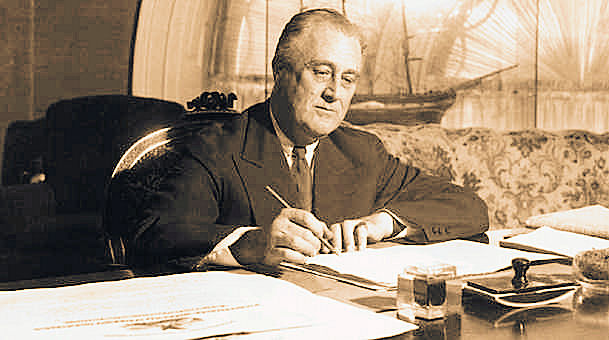
The political result was defeat of republicans and victory of Franklin. D. Roosevelt (democrat). The history seems being repeated again. This depression is also caused when Bush (republican) is in power. Will it pave way Obama to come to ‘White House’?
President Hoover had said just before the crisis ‘economy is fundamentally sound’ and similarly Mc Cain said ‘the fundamental of US economy is strong’, just before the crash of Lehman Brothers. The American’s ‘war on terror’ has increased the debt by about 79% and is putting enormous economic pressure on economies of many European coalition partners including UK and France. Nobel laureate Joseph Stieglitz say ‘the war on terror’ in an attempt to ‘export American type of democracy’ to the rest of world has cost 3 trillion dollar, three times the GDP of a country like India.
Churchill had said ‘if socialism suffers from vice of and equal sharing of misery, then capitalism is afflicted with the vice of an unequal sharing of affluence’. The continued inequalities in affluence worldwide cannot allow the ‘glass house’ to remain unbroken for longer period. 

The hard earned money of citizens of these countries has been thrown and pumped into the unending wars and thus it was bound to have repercussions like those which we see today. The US type of economy and US type of democracy have been exposed once again. How long the citadel of sand will withstand the onslaught of realities. The stock market economy is basically based on the jargons of figures appearing on the computer screens. The bookies and brokers play with the figures and sometimes with the sentiments of investors also. The unethical business tricks are praised as ‘Business mantras’. The wooden pot cannot be kept for long on fire. 
Signs of crisis have started making their presence felt everywhere including USA and India. According to the data released by the Labour Bureau of US, about 7, 60,000 jobs have been cut by now, 1, 59,000 in September itself. Results are devastating, American psyche has shaken, so did the essentials of the economy. The US administration hurriedly came out with a rescue package of 700 billion dollars. The troubled asset rescue plan (TARP) is introduced to save the economy. Other European as well as Asian countries have also come out with similar rescue or what they called ‘Bailout package’ plan to save the market and especially financial institutions. But there was no concerted and well-coordinated financial effort by the European Union as such. 
In fact, G-7 leader began a meeting in Washington late Friday, to find common solution and propose concerted and coordinated steps in order to fight the menace jointly on global level. But despite several rounds of talks, no consensus could be arrived at. The concept therefore; of a ‘politically and economically unified Europe’ collapsed like ‘wall of sand’ and ‘myth of liberal democracy and export of American democracy’ seems ceased to exist. 
Every individual European country was taking steps on its own and for its own. If total bailout packages are summed together, it comes nearly about 3 trillion dollar. See the chart-

Country Bailout package
USA 700 billion USD in one go, total 990 billion USD 
RUSSIA 86 billion USD
UK 32.5 billion USD, revised 876 billion USD
GERMANY 50 billion USD
BELGIUM 16 billion USD
IRELAND 752 billion USD
IRELAND 864 billion USD ten times its total GDP
FRANCE 237 billion pound 
INDIA More than 60,000 Crores in form of CRR cut by R.B.I.


But even after this heavy dose of financial injection into the ailing economy, after initial hiccups, these efforts to stem financial markets and specially Banks dipped in the quagmire of crisis. There is stampede everywhere and panic has gripped the entire globe. According to figures made available, the total amount involved in the rescue package in Europe and America only, is about 1.8 trillion dollars, which is almost equal to double the GDP of India, which is about 46, 93,602 crores. Magnitude of crisis is such that Iceland is in foreign debt ten times its GDP. Just imagine the madness on part of the governments, sheer madness. The mad rush for conspicuous consumption and show off tendencies destroys not only individuals but Nations also.
Well tide would pass after some time, but leave the scares of devastation in the psyche of millions of people across the Nations. Questions that should be asked now, that whose money is being ejected into the economy? Did the governments take mandate for this package? After all why the tax payer’s money would be pumped into the financial markets to save it from, what they call financial tsunami, a problem or a crime which someone else have created. Is it a bailout package for Nation of or bailing out some economic offenders? Does it not sound unjustifiable that, why innocent citizen pay for the offence he or she has not committed? Will it not set in a new but dangerous trend in the economy of the world? 
IMPACT ON INDIA- Man Mohan Singh said in Marseilles that Indian economy is not immune to world economic meltdown, but ours is strong fundamentals. Chidambaram also is in resonance with the PM. But the fear is visible. Market broke a news, though not confirmed by the authorities that ICICI Bank is facing acute ‘liquidity crunch’ and suddenly share showed the signs by being plunged. The Bank authorities were quick to comment, ‘we are having enough of liquid with us’. In India, we believe in reading in between the lines, when govt say they have the majority, we believe that there is serious problem with the govt, or else why should it shout like this. This is what seems to have had happened with this Bank, because last Friday its share fell and fell sharply. 
REASONS WHY INDIA WOULD GET AFFECTED-
1. With the globalised economy, the ripples in one part of the world are bound to create hiccups in other parts. The world is a global village and therefore; the Indian economy cannot remain immune to what it is happening in the other parts of the world.
2. IT-BPO sector of Indian Industry has emerged like world giants. Infosys, Wipro, TCS, HCL etc have made a room for themselves in the world market. Hyderabad, Gurgaon, Bangalore, Pune and a host of such cities have gradually metamorphosed into cyber cities. These cities are fast becoming out sourcing centres. According to one estimate, about 15% of the IT professionals in USA come from India. The cutting of jobs in this sector in Europe and America would have disastrous consequences in India also. IT and BPO are likely to be hit hard. ‘Guys on the bench’ are getting ‘pink slip’ by many MNCs in cities like Delhi, NOIDA, Bangalore, Pune, Hyderabad etc. India is becoming an attractive market of ‘soft ware outsourcing’ for many foreign companies. They get cheaper but decisively better ‘software guys’ to word quickly for them. IT-BPO revolution began in India somewhere in early 2000 and gradually changed the Indian face abroad. Over a period of time, the export of this sector increased by 33.5% amounting to 8.4 b USD in 2007-07, it is expected to reach 10-11 b USD by the end of 2007-08. According to National Association of Software and services Companies (NASSCOM), the number of employees working in BPO-IT sector in India is under-

Year Number of employees(IT-BPO)
2003-04 2,16,000
2004-05 3,16,000
2005-06 4,15,000
2006-07 5,53,000

The current figure is certainly much more and is increasing day by day. They were getting salaries worth 1 b USD during the year before last year and naturally it has increase substantially in 2008-09. According to one estimate, about 82% of US software companies prefer Indian software professionals for obvious reasons. The humungous fall in Wall Street leading to unprecedented panic and catastrophic consequences in American industries would certainly affect this boom. The exact figures would come only when this financial tsunami is over. Nonetheless, it would certainly mean job cuts and increase in unemployment rate.
3. Trade and commerce- USA is the largest trading partner of India. Share of USA in India’s export is 17%, and its monetary value is more than 100 billion USD. This economic meltdown would certainly adversely affect India’s export in general and export to USA in particular. According to Federation of Exporters Association (FOE), the exports from India are already showing signs of decline due to this slowdown syndrome. Figures suggest that it is experiencing a decline of more than 15%. According to one estimate, the NRIs remittances in India during 2004-05 had been about 22 b USD, out of which 60% comes from Europe and North America and rest 40% from Middle East. These remittances are definitely going to decelerate, if not stopped; contributing to depletion of FOREX which had reached all time high in recent years. The remittances coming into a country is a healthy sign and no country however strong it may be, would like it to grow substantially. If we look at this figure of inflow of foreign exchange flow into countries during three to four years ago, we can imagine that why and how our FOREX has swelled to nearly 
200 Billion USD. 


Countries FOREX( from IT-BPO)
India 21.7 billion USD
China 21.3 billion USD
Mexico 18.1 billion USD
France 12 billion USD
Philippines 12 billion USD
Pakistan 3.9 billion USD
Bangladesh 3.4 billion USD

4. This economic slowdown is not going to affect much more immediately to our overall economy but the consequential effect would manifest in deceleration of pace of economic after sometime. The Deputy Chairman of Planning Commission, Montek Singh has also apprehended that the growth rate would slow down to 7.5 and 8%. The industry and other sectors are also witnessing the same down ward trend. In fact Industrial growth slumps to 1.3%. There are some more perturbing figures in economic arena, but these after effects are not going to create situation like what it is in Europe or America.
5. The crash in stock market is very much perceptible. The BSE and NSE Sensex have fallen from more than 21000 in January to less than 11000 in September, 2008, registering a fall of more than 50%. As mentioned in earlier paragraphs, this fall has led to panic in financial markets. India stands at different platform vis-a-vis other economies following American type policy of lasez fairre in the sense that ours not a totally unregulated economy, even after we have eschewed the Nehruvian socialist economy in early 90s. As a matter fact, the total free and unbridled type of economy has resulted into this ‘financial catastrophe’. 
6. Stock markets constitute 15% of the total capital in India, therefore; this tsunami in the financial market worldwide is not going to be a contagion for all financial institutions including Banks. But if the situation is not handled with ‘utmost care’ it would infect ours also with greater degree of damage. 

WHY INDIA STANDS AT DIFFERENT FOOTING AS COMPARED WITH EUROPE AND AMERICA- 
When financial turmoil hit American followed by European economy, the anxiety in India was natural. The government acted swiftly as it should have acted. First thing which is very important under such situation is restoration of confidence and prevention of rumour mongering. Both PM and FM made calculated and balanced statements which was first right step in right direction. But unfortunately the rumour mongering has not yet stopped. Ours is not an unbridled and unregulated financial stock market. Moreover, the percentage of financial markets in the economy is 10-15% which is meager as compared to other sectors of the economy. Here are some constituents which make our economy different from many of others. Well, it would be a wrong and utopian proposition, therefore; only an etourdi can say India shall remain totally immune from this financial meltdown, but certainly the impact will never be of that magnitude as they are in the economies of laisez fairre. Reasons are obvious-
1- Indian economy is still agricultural based and the contribution of agriculture to GDP in India is decisively higher than any other countries in the world.
Countries % in GDP
INDIA 20-24
CHINA 13-14
BRAZIL 8-9
SPAIN 4-4.5
AUSTRALIA 3.8
MEXICO 4
S.KOREA 3.3
CANADA 2.2
FRANCE 1.0
ITALY 2.1
JAPAN 1.1
USA 1.0
GERMANY 0.9
UK 0.5
HONKONG 0.1

Thus it is clear that agriculture still contributes quarter of the GDP, rest 50% and 25% are contributed by services sector and industry sector respectively. This is perhaps one reason why PM, FM and RBI say that the fundamentals of our economy are strong. The upheavals in the financial markets have very little to do with rural economy.
2- Indian financial market especially Banks have always been under RBI scanner, even during normal times.

Banks % share
Public sector Banks 75%
Private Banks 18.2%
Foreign Banks 6.5%

Thus it is clear the role of private Banks as well as foreign Banks vis-à-vis Indian economy is very limited. Even the lending by these Banks has been dismal. In fact CD ratio of such Banks speaks that they are interested in deposits and not in lending. The 196 different Regional Rural Banks (RRBs) play a vital role in rural economy of India would remain by and large unaffected owing to this depression. We have a chain of banking system based still on concept of welfareism rather than profitism. The Urban (52) and State cooperative Banks (16) have been playing significant roles in making ‘fundamental our economy’ strong. We have had developed ‘a scientific fiscal mechanism of consistent monitoring’ system for our banking system which would keep our economy safe in extenso, when the world’s economy is in extremis.
3- Post offices are poor man’s Bank in India, started in 1850s still plays the role of ‘unsung heroes’ in capillaries of economy. The chain of more than 1, 50,000 post offices in India contributed to about 49.37% in overall revenues in 2004-05. What a significant role they are playing. Common men, pensioners and small domestic savings still prefer post offices for one simple reason, the high rates of interest rates in comparison with any other financial institutions. The government and RBI therefore; must nota bene on post offices and should not be swayed by media hypes on this issue. After all the 60,000 crore money that has been injected into the market, is the hard earned money of millions of tax payers, and why and how would they pay for economic offence, they never committed?
4- We have had developed an ‘iron jacket of social security system’ for the people sitting at fence, a step which Roosevelt took after ‘the great depression of 1930s’ in form of ‘ new deal’ and which many developed nation are taking as an emergency measures. Welfarism for us is a mission, for them it is fiction. Ours is a ‘democracy with humane face’ and not an ‘export brand democracy’, thus, it is a sermon also for those who want government to ‘throttle the accelerator of liberalization’ with much more intensity. It would cause, what economists say ‘overheating of economy’, bravo! We would certainly win the race. Don’t let loose the heart and patience.

DO WE NEED A NEW GLOBAL FINANCIAL ORDER?

                                                 ALL THAT GLITER IS NOT GOLD

NEED TO HAVE A NEW GLOBAL FINANCIAL ORDER-
The crisis at Wall Street has spread like a contagion and miseries are felt now within walls of each street in the world. Slum in bourses gradually travelled and crossed the ocean; the crisis is trans-continental. The economic slowdown is gradually metamorphosing into a ‘worldwide recession’. The architect of ‘economic and housing boom’, Allan Greenspan, former chairman of US Federal Reserve (1987-2006), has also candidly accepted ‘mistake’ in the free market ideology. Green span, hailed as the ‘genius of serial bubble maker’ and sometimes ‘harbinger of post-war economic boom’ has become villain now. The ‘housing bubble’ did burst, because financially, it was ‘inherently malicious’ based on ‘excessive fiscal leverage’ and ‘un-principled greed.’ Results, as we witness today, are devastating both in terms of money, morality and mundanely. The burst led to withdrawal spree, which Banks and other financial institutions failed to withstand against, culminated into bankruptcy of a number of Banks like Lehman Brothers, Stanley-Morgan, and Merrill Lynch etc. Most of the Banks in America by now had moved far away from the basic preamble of Glass-Steagall Act of 1933, which was the first legislation to keep the Banking industries away from the investment ventures. Even the ‘bailout packages’ have been misappropriated by many Banks, and reports suggest that Bankers might instead use this money in giving dividends and bonus to its executives, buying other banks etc. FBI is probing into the matter, it is also probing into the ‘mortgage fraud’ in general and role of Fannie Mae and Freddie Mac’, the mortgage giants of USA, vis-a-vis ‘burst of bubble’ in particular. It is important therefore to understand the workings of the Banking system of USA, because the collapse of the Banks was largely due to inherent weakness in the banking system itself. Here are some important bubbles in economic history of world-

NAME OF BUBBLE PERIOD
TULIP BUBBLE 1600
SOUTH SEA BUBBLE 1700
MISSISSIPPI BUBBLE 18TH CENTURY FRENCH STOCK MARKET CRASH
FLORIDA REAL ESTATE BUBBLE 1920s
GREAT DEPRESSION 1929
MARKET CRASH 1987
NIKKEI BUBBLE 1991
NASDAQ BUBBLE 2000

BANKING IN USA-

The Banking sector in America was initially based on ‘English Model’, which advocated for separation of Banking and investment. ‘Banks should not be allowed in Investment’, is the crux of this model. USA adopted this model in 1865 and passed one National Banking Act (NBA) of 1865. With passage of time, this system felt the strain of pro-investment lobby. In response to the growing competition from trust companies and the pressure of the lobby, state-chartered commercial Banks demanded additional powers from the state legislatures. By the early 1900s, legislatures granted most state banks many of the same powers to engage in investment activities already possessed by trust companies. National banks, however, were left out, and they sought justification for securities activities under the NBA. One of the first national banks to engage in underwriting activities was the First National Bank of New York. In 1908, in response to criticism from the comptroller concerning its securities dealings, the bank formed a securities affiliate, the First Security Company. The affiliate was incorporated under state law and was arguably free to conduct investment activities. In 1911 a second affiliate, National City Company, was organized, and by 1916 that affiliate was actively. 
Thus, it is clear that the restrictions imposed by NBA on Banks had by now eroded almost completely. Banks started full-fledged activities in securities and investments and had for all practical purposes, adopted ‘German Model’ which advocated for ‘Banks to venture in investments also’. 
As it always happens, unless you are ill, you are not diagnosed. Here came ‘great depression’ in 1930, and prescriptions were written to cure the ‘ailing economy’.
Roosevelt came and saved the economy by injecting small ample of ‘socialistic drugs’ into the ‘liberal democracy blended with Laissez-fairre’, in form of ‘New deal’. It was felt that Banking sector, which keeps deposits of millions of citizens and are ‘the pulmonary arteries of the economy’, should be protected against ‘unhygienic financial exposures of speculative stock markets’. In this background, the entire Banking sector was again overhauled. Senator Carter Glass brought a law called Glass-Stegall Act (GSA), 1933. This Act was based on twin features, firstly, it sought to insulate Bank’s depositors from risk involved when a bank deals in the securities and to prevent ‘Bank collapse’ like one happened in 1930. 
Secondly, it prohibited commercial Banks from owning full service brokerage firms. The GSA of 1933 remained guiding principle for the Banks, but it too, gradually faced rough weathers due to changing politico- economic milieu after 1990s. The ‘post war boom’ as evident from the USA’s share in global GDP (graph attached) necessitated some drastic changes in the Banking industry.


Increase in NNP and GDP in USA, during contemporary period emboldened the financial system of entire Europe and America, if not whole globe. Graph attached suggests that the wars in any part of the globe have by and large benefitted US economy. The post ‘first gulf war’ with Iraq has helped American economy to experience ‘boom’, which further instilled pseudo-confidence in the policy makers of entire western world. 
In fact, It is in this background, Bill Clinton got a legislation called Graham- Leach Bliley Act (GLBA) passed on 12 November, 1999, further unfettering the financial system to a ‘maximum level’. 


GLBA did away with most of the restrictions imposed on Banks by GSA and a ‘new era of freer and unbridled Banking industry’ ushered in. Here lies the difference between Indian and US banking.
INDIAN BANKING- RESERVE BANK OF INDIA (RBI) Act of 1934 is the corner stone of banking industry in India. Ours is also a democracy, but flavoured with a socialistic pattern.
Even in 1990s, when the Liberalisation, Privatisation and Globalisation (LPG), became new mantras of development, we did not let the Banks completely free from the clutches of the government. Narsimghan Committee formed to bring reforms in Banking sector gave its reports and the Cash reserve ratio (CRR) and statutory liquid ratio (SLR) were rescheduled. These jugglery (CRR AND SLR as per section 42 of RBI Act) for a common man is that the Banks have to keep a minimum cash with RBI and with themselves respectively, before lending and doing some other businesses. It ensures safety of depositor’s money, an element conspicuously absent in American Banks.
On contrary, in USA, the Banks can lend up to 8 dollars, as against 1 dollar deposit. Such is the risk and such is the unbridled state of affairs. This unjustifiable risk played a vital role in the ‘mortgage crisis,’ and banks after banks failed because every bank knew about other’s liquidity.
Nevertheless, this crisis came and came with great intensity. Some called it great depression, some economic tsunami and other economic slow or meltdown, but the after-effects and pains emanating from it, does not seem different owing to this different nomenclature. It would however be financially naive to prescribe remedies for what had happened, because, it is easy to write ‘prescription in retrospection’. But certainly, this does not mean that no inference is drawn from this ‘economic catastrophe’. 
It would be however be wastage of time to further analyse the causes and circumstances which led to this fiasco, but it would be great injustice to the economic history also, if some glaring aberrations and maladies of this financial order are not enunciated and diagnosed. ‘Crisis is the engine of change’; therefore, this crisis would also bring about changes in the global financial order, an order which came into existence after ‘Bretton-wood conference, It is therefore; when the global economy is facing the threat of recession and global financial order has failed, the demands are being made not only by the leaders of the developing nations but also by developed nations like UK and France to change the global financial order. 


‘Bretton Wood system’ of monetary management came into being after a meeting attended by 730 delegates from 44 allied Nations who gathered in Mount Washington Hotel in Bretton wood, New Hampshire on 22nd July, 1944. 
This agreement led to establishment of two important financial institutions viz IMF and IBRD. This ‘duo’ played very important roles with respect to economic and financial order of the world thereafter. Although, this system sought to establish a just and equitable global financial order, it was hijacked by US and some European countries right from the outset. The IMF and IBRD (it later became 5th Wing of World Bank) failed to serve the interests of the entire globe, especially poor and developing nations. The succession list of Managing Directors suggests that no Asian has ever been made MD of IMF. These figure suggests that how the IMF is working and how is the discrepancy.
MEMBER COUNTRIES OF IMF( total members are 185) VOTING RIGHTS IN % SPECIAL DRAWING RIGHTS (SDR) million US dollar (USD)
USA 16.77 37149.30
UK 4.86 
FRANCE 4.86 
CHINA 3.66 
INDIA 1.89 4158.20
GERMANY 5.88 
AFGANISTAN 0.08 
BRAZIL 1.38 
SOUTH AFRICA 0.85 

Similarly, World Bank also failed to represent the globe in real sense of term. See the figure-
NAME OF MEMBER COUNTRIES OF WORLD BANK PERCANTAGE OF VOTING RIGHTS
USA 16.41
UK 4.31
JAPAN 7.9
GERMANY 4.5
FRANCE 4.31

The workings of world Bank has always been under severe criticism, even the chief economist of this organisation Joseph Stieglitz criticised it by saying ‘so-called free market reform policy’ is often harmful for the developing nations’. It proved correct in this crisis also. Even the ‘President of the World Bank’ is nominated by US President and the world on the other hand, has no say whatsoever, on this issue. 
So far as the monetary policy adopted during the Bretton wood conference is concerned, it was agreed upon that all nations would adopt monetary policy that would maintain the exchange rate of its currency within a fixed value in terms of gold, but it 1971, US created a unique situation by resorting to suspension of convertibility from dollars to gold and made dollar as ‘reserve currency’. Today USD has become an undeclared ‘world currency’ so much so that monetary health and even budget statements of many countries of Asia, Africa and even Europe are explained in terms of USD. Such is financial hegemony on America. Until this crisis, world was apparently comfortable with dollars, but now situation has changed, although, US is trying to convince the world that ‘it shall again be comfortable with it’, but ‘much water seems to have spilled over’ and it is ‘too late’. Demand to have a new global financial order is being made surprisingly not by Asia but by the west, the ‘trusted economic satellites’ of US.
The ‘feeble hatred’ of west is not unfounded and the roots are lying in post gulf war situation. The post 2nd Gulf war situation slanted strategic balance of power towards US, and these international financial institutions came under almost total control of the US. The eclipse of USSR in the 1990s paved the way for unipolarisation of world both militarily and financially and the financial order slanted favourably towards US.
The American military, financial and economic hegemony were by now, established totally and unquestionably. The ‘first gulf war’, ‘which actually did not take place’ as coined by Baudrillard, a French philosopher, further encouraged America which resulted in 2nd Venture of US into Iraq by Junior Bush in 2002-03. This proved ‘too costly’ for America, because it increased the war debt by 79%. Grounds were being prepared for ‘this crisis’, which unfortunately, no one including US Federal reserve could understand. This graph suggests how Europe and America have made fortunes during concerned periods. 

The crisis has surfaced all the inherent weaknesses in the liberal democratic economies based on ‘unbridled and unfettered financial order’. Now the demand for a more just and equitable global financial order is not going to halt. Brown and Sarkozy have unambiguously raised this issue and called for a ‘global summit’ in New York to discuss and find solutions to this problem. The problem emanated from America, therefore; solutions should also be found here. Bush was virtually forced to accept this proposal. Europe is hobnobbing with powers of Asia to garner support and ASEM held in China may be seen from this angle also. The developing nations are also set to raise demands of their ‘due share’ in the ‘proposed financial order’. China, India, South Africa, Brazil, South Korea etc are poised for ‘take off’. IMF and World Bank, the engine of economic development, hitherto driven by west and America, need new co-drivers, because the drivers alone have failed to drive it smoothly.

SUGGESTED CHANGES IN PROPOSED NEW GLOBAL FINACIAL ORDER (PNGFO)

Now the wheel has turned and no one can prevent change of guard. Following changes can be made so that the PNGFO fulfils aspirations of billions of under-nourished and starved people across the world-
1. IMF and World Bank’s functioning should be overhauled to make them more democratic. Voting rights of member countries should be changed and ‘bossism’ of west should go. ‘Each Nation equal vote’ theory should be enshrined into.
2. Appointments in IMF especially on the post of Managing Director (MD) should be made in a more transparent manner so that poor nations should also get a ‘comfortable say’. The system of nomination to President of World Bank by US President should be done away with.
3. World Bank and its different organisations should also undergo radical changes. The basis of percentage of voting in World Bank should be changed so that developing nations should have a ‘greater say’ in fund distribution and other administrative matters. In nut shell steps to evolve mechanism of, what Dr. Man Mohan Singh says ‘substantial increase in multilateral institutional funding of economies’ should be taken. 
4. Some short of ‘global financial regulatory body’ may be set up to ensure proper monitoring of global monetary health and to ‘inject curative drugs’ when necessary. The fate of global market can no longer be left in the hands of elements of ‘excessive financial leverage enjoyed by greedy speculators and fund managers.’
5. United Bank of Switzerland (UBS) or Swiss Bank has been depository of hundreds of trillions dollars from across the world. Corrupt politicians and big business men have used ‘Banking Act, 1934 of Switzerland’ in their favour, because this law enables this Bank to maintain secrecy with respect to money deposited into it. Tons of gold deposited during ‘Nazi’s Nuremberg trial’ can play vital role in tiding over this crisis. Time has come to amend or repeal this law altogether, so that the ‘rich men from poor nations’ cannot drain the wealth and make the citizen to suffer. 
6. Radical changes are required in WTO also. Protectionism and favouritism should be done away with. The present food crisis is likely to be metamorphosed into ‘global food crisis’ if not addressed to immediately. The ‘bio fuel’ and US role on this issue is going to create an unprecedented situation in the world very soon. It is allowed to ‘go unabated’ will be more devastating that this economic crisis also. The humanity has to decide that whether ‘vehicles would be allowed to move at the cost of poor man’s stomach’.
7. The unequal distribution of wealth and prosperity has resulted into creation of a number of economic blocks in the world. SAFTA, NAFTA, IBRA, ASEAN, SAARC, OPEC, OIC, EU etc are manifestations of growing tendencies of groupism and blocism, which ultimately are proving hindrance to free flow of trade and commerce, harming the world at last. If PNGFO addresses all such issues, such groups and blocs would render useless and prosperity would transcend to all sections and all territories across the globe.
8. If we see the graph (GDP of India, China, America etc), we find that the 16th, 17th and even 18th centuries were the time of India and China, the Asian giants. Hopefully, history would repeat itself and ‘this duo’ would occupy the driving seat of the future ‘International financial institutions’. Permanent membership in Security Council to countries like India, Brazil, Japan and Germany should be given so that this world forum may not arbitrarily be used in one country’s favour and against other. 
9. The West’s honeymoon with ‘west type liberal and free economy and American type democracy’ seems to be on the verge of divorce, therefore; world is set to emerge with new set of ‘politico-strategic-economic ideologies’ based on weltgeist, which is more equitable and less discriminatory. Market is a good servant but bad master, therefore; regulation and restriction on servant is essential.
10. Prioritisation of development has to be rescheduled, after all in spite of all sorts of sky soaring achievements, Bread, Cloth and Shelter’ would remain on the top of the list. No civil society can afford to ignore the equitable distribution of ‘these basics’ otherwise, the social fabric will tatter like what is happening today.

WHO FIGHTING FOR ITS EXISTENCE: WILL IT TRIGGER NEW ERA OF CONFLICT? Politics and lust for power are not endemic of India only...