Showing posts with label law. Show all posts

Friday, August 28, 2009

WOMEN RESERVATION BILL FOR PRIS ON ANVIL

WOMEN RESERVATION IN PRIs; WHEN IN PARLIAMENT
The union government has decided to provide 50% reservations to the women in Panchayati Raj Institutions (PRIs). A proposal to give effect to this provision has been taken by the Cabinet, which met in New Delhi yesterday. The Bill, the government said, would be tabled in the coming session of Parliament. This would necessitate a constitutional amendment; therefore the proposed bill will be in a Constructional Amendment Bill form and would amend Article 243(D) of the constitution of India. This article provides for reservation of one third of seats in PRIs for the women.
It is being interpreted as a major step in the area of empowerment of women in the country. The 73rd Constitutional Amendment Act, which conferred constitutional status on the PRIs, brought in by Rajiv Gandhi was a land mark in the field of devolution of power at grass root level, and was regarded as the first serious attempt to visualize the dream of Gandhi. Although the framers of constitution had enshrined in the constitution, the directives principles of state policy, the devolution could not be made till the 73rd constitutional amendedment was brought in.
Bihar, under Nitish Kumar, became the first state to provide reservation up to half the total number of seats to the women by enacting a law called Bihar ‘Panchayati Raj Act’ in the year 2005 i.e. just after coming to power in the state. This legislation was hailed through out the length and breadth of the country by people across party lines and from different walks of life. Subsequently, two years after the huge success of this provision in terms of wider participation of women especially from Scheduled Castes (SCs,) Most Backward Castes (MBCs) and Other Back ward castes (OBCs) in the elections held, the Bihar government enacted similar legislations for providing reservation to women in Urban Local Bodies (ULBs) also. The Bihar model of reservation to the women in ULBs and PRIs paved way for many states to legislate on similar patterns. States like MP and UP have also made similar provisions.
Now with the proposed constitutional amendment, it would be mandatory on the part of all the federating units and UTs to legislate provisions for Women up to 50% in near future. This constitutional amendment will again bring to the fore, the Women’s reservation Bill, which has now gone in to oblivion. The civil society must rise above and exert pressure on the government to pass the legislation and cherish the goal of women empowerment. Bihar has played the role model now it is the turn of union to do the same.

Tuesday, August 25, 2009

Yahoo-Microsoft have to wait; Google goes unchalleged

JUST WAIT AND WATCH TILL NOD IS GIVEN
The deal which was struck between Yahoo and Microsoft last month in order to pose a united challenge to Google, the world’s largest search engine, may face some bumpy hurdles before getting it operationalised. The duo (Yahoo-Microsoft) had to pass the test of regulators in the USA which looks after the ‘Anti-trust provisions’ in matters of (acquisitions and mergers) A&M, tender offers and other such deals between two companies. This deal made headlines in media across the world because, for the first time, Google is likely to face serious business challenges since its inception.
But before Operationalisation of this huge deal, this has to be approved by Federal Trade commission and Attorney General of Anti-trust division of Justice Department in US administration. All these provisions have been made under a US law, the Hart-Scott-Rodino Anti-trust Improvements Act, 1976, popularly known as HSR Act. This law was drafted by Senators P.A.Hart and H.D. Scott and Representative Peter. W. Rodino to prevent violations of TRUSTS in business transactions like merger and tender offers etc.
Under the provision of the said Law, the concerned companies have to file detailed reports in prescribed manner with the federal regulators within 30 days of such transactions. Yahoo-Microsoft complied with this provision and filed information with the same. The law require filing details of all cash transactions in such deals within 15 days only. In nut shell, this law ensures that no secrecy is maintained which bolsters unhealthy competitions and in which trust is broken. The US’s justice department is empowered under this ACT to seek any further information which it deems necessary with respect to the deal, transactions, operations, partnerships etc and it is only after the approval of the Justice department, the deal can be operationalised. Title III of this HSR Act confers powers on the US justice department to sue any Inc which violates the ‘Trust’ of either the parties or any other stakeholders. The concerned companies can be sued on behalf on any American citizen also by the Justice department, if it feels that Trust of American has been broken.
In the case of this Microsoft-Yahoo deal, the Federal Trade Commission has sought certain more information which has been provided by the duo. The Federal Trade commission is processing the information and seeing to it that terms of agreements between Yahoo and Microsoft would not encourage unhealthy competition or break trust of any stakeholder. They have been kept on ‘stand by’ and are waiting for the results. The waiting period is likely to go up to September, this year and the deal can be made operational only when it is approved and ratified till then the Google will go unchallenged un-chased. The Microsoft-Yahoo thus is left with no option but to wait and watch and of course pray that US Justice department dispense justice with them and gives its nod to go ahead with their plans.

Thursday, July 2, 2009

DO INQUIRY COMMISSIONS SERVE ANY PURPOSE?

HOW LONG WILL IT STAND?

Justice M.S.Liberhan Commission, which was constituted on 16th December, 1992 to probe into demolition of Babri Masjid, has submitted its voluminous report to the Prime Minister after 17 years. About 90 Million rupees has been spent on it which saw 399 sittings and as many as 48 extensions. It was asked to give its report within 3 months.
The report now would be tabled on the floor of parliament and is likely to trigger a debate. Perhaps some more committees would be required to study thousand pages report and thus unending process of logical conclusion is likely to start. There is hardly any inquiry commission on the report of which concrete actions have so far been taken. The coming session of parliament will perhaps again witness uproar between treasury and opposition benches.
It is in this backdrop, an attempt has been made to understand intricacies and legal stand points of such Commissions in this article.
This issue has again come to fore that ‘Is Inquiry Commission a substitute of criminal prosecution? Do these Commissions serve any purpose? Is it not an eye wash? Are these Commissions able to bring culprits to book? Etc. After all, they are putting in enormous cost on public exchequer, the hard earned money of ours.
CONSTITUTIONAL AND LEGAL ASPECT-To understand the entire issue, one has to discuss the Commission of Inquiry Act, 1952 itself. Before this Act came into being, the Government used to order an inquiry by executive notifications under Public Service Inquiry Act, 1850. Sometimes, they used to enact adhoc and temporary legislations also. To meet the public demand for impartial and judicial inquiries, the Government thought to come out with a comprehensive legislation, which resulted into passage of this Commission of Inquiry Act, 1952 in 1952.
Since its enactment, the constitution of Inquiry Commissions has become a tool for the Government to white wash the public anger and delay and diverts the attention of both public as well as media.
Since Independence, more than a hundred Inquiry Commissions have been set up, but a very few have served the purpose. Reasons are obvious. First, the provisions enshrined in this Act are not of deterrent in nature and secondly, most of the time the Commissions are set up under retired Judges for obvious reasons. Section 4 the Act provides for powers and it is clear that the Commission has no power to compel a person to adduce before it and give evidence. It cannot pass verdicts or judgements which could be enforceable. The helplessness is such that when any offence is committed in view of or presence of Commission, the Commission shall forward the case to the Magistrate for trial as provided in Criminal Procedure code.
The appointment of retired Judges, as head of the Commission is very much suitable for the Government. It is not merely a chance that one Judge has headed more than one Commission. The public perception is such that these Inquiry Commissions are becoming post retirement placement schemes for the favourite retired Judges.
UNENDING LIST OF COMMISSIONS- We have a long list of such Commissions, which have made inordinate delay in submitting their reports. Many of them have taken decades in so called’ conducting inquiries’ and even then the report which was submitted were so voluminous that we required another committee to find out ways to implement the recommendations. For example, as many as ten Commissions or committees have so far been set up with regard to the anti-Sikh riots in Delhi after the assassination of Mrs Gandhi. First of all, Marvah Commission (Ved Marvah, Addl C.P.) was set up in November, 1984. The Commission was about to finish the assigned task, but it was abruptly wounded up in May, 1985 and a new Commission headed by Justice Rangnath Misra was constituted and was asked to carry out the further inquiry hitherto done by Marvah Commission. But surprisingly the terms of reference was, to find out whether this was an organised riot only? This Commission submitted its recommendations in August, 1986 and recommended for setting up of three committees to do further work. Therefore; Kapur-Mittal Committee in February, 1987, Jain-Banerjee Committee in November, 1987, Potti-Rosa Committee in March, 1990, Jain and Agarwal Committee in December, 1990, and finally Justice G.T. Nanavati Commission in 2000 were set up. Incidentally, the same Judge was made in charge to inquire into Godhara incident. Nanavati has submitted first part of the report and final report is yet to come. No one knows when this commission will complete its job and when entire truth and facts related to this incident would be made known to all.

It is needless to mention that what has happened to reports and how much amount have been spent on these exercises. Has any prominent leader been punished so far? Many persons, against whom levelled charges were being inquired into, have died. Such are the frustrating results of these Commissions and Committees.
Similarly, Justice B.N. Kripal Commission of inquiry was set up on 13th July, 1985 to probe into the bombing of Air India Flight 182 Boeing 747 on 23rd June 1985 which led to crash of this plane into Atlantic Ocean leaving 329 passengers including crew dead. The Commission submitted its report after extensive tours of countries like Canada, USA etc, but when the prosecution began, nothing could be proved and none could be punished. The entire ‘investigation and inquiry’ went in vain. It is needless again, to calculate the amount which was spent on such inquiries.
After ‘tehelka’ expose, one Phukan Commission was set up to look into it. Everyone saw the tape on television and the then Government just to avoid immediate legal course, set up this Commission. In May, 2005 the Newsweek reported that Justice Phukan along with his wife and eight officials used IAF plane and went to Pune- Mumbai and Shirdi. The Ministry later said that the Judge was not entitled to use the military plane and it was made available to him by the then government in order to influence the Judge. Such allegations and incidents definitely erode public faith in such Commissions. The situation is such every Government in power use this provision to oblige the retired judges.
In Bihar for example, one Justice Amir Das Commission was set up to probe into the alleged connections of political leaders with a banned outfit called Ranveer sena in 1997. After elapse of more than eight years, the Commission could hardly do anything except for some tours and recording of statements some leaders. It was finally wounded up in 2006. Similarly one Justice Ali Ahmed Commission was set up to look into excess withdrawal in 1996. What recommendations did it submit or what actions had been taken, hardly anyone knows.
Commission under Justice RCP Sinha and Justice Samsul was set up on Bhagalpur communal riot in 1989. Reports were submitted in 1995. But when the new Government came to power it set up NN Singh (retired Justice) Commission to re-investigate the matter again. In 2008 one Commission under retired judge Sadanand Mukherjee was set up to probe into the Kahalgaon police firing. This commission is still a non starter vis-a-vis investigation of the incidence.
When Kosi eastern embankment was breached on 18th August, 2008, there were lot of allegations and counter allegations. The Government constituted a Commission under Rajesh Walia, again a retired Judge to probe into it.
The question that every sensible citizen would like to ask is that, whether Commission is a substitute of criminal investigation? How can a Judge be better equipped to do forensic test, do scientific investigations than a professionally trained police officer? Has the Commission power to make arrests to the persons likely to tamper evidences? The effectiveness of the Commission or for that matter the Commission of Inquiry Act was looked into by two Judge commission, which was constituted in 1987, it gave its observations and said the Act as ‘ ineffective and toothless’.
COMMISSION AND INVESTIGATION-Ours is the criminal justice system, which is based on the twin pillars of investigation and dispensation of justice. How can the Judiciary be asked to do the work of investigation, which is the work of the State as enshrined the law of the land? The Criminal Procedure Code and for that matter entire Criminal Justice System is erected on this principle and perhaps it is due to this principle, that the Judiciary and Executive have been completely separated in 1973, when the Code of Criminal Procedure was amended. After almost every police firing or so called fake encounters, the government sets up Commissions of Inquiry and tends to defer the problem so years. The list of such commissions is long and still names are being added to it. Once the commission is set up, public tends to forget the real issue and Commission embarks on an unending process of investigation, inquiry and facts finding. It took years and years in submitting the reports, which are so voluminous that it again requires some committees to suggest measures to implements the recommendations. What is the use of such reports, which themselves are not obligatory and mandatory for the Government to implement. Millions and millions of rupees have so far been spent on these nearly futile exercises, but the investigating agencies are languishing in the same state for years. Instead of modernising and equipping the investigating agencies, we go on doing cosmetic make ups. Public perception is therefore that, if the Government wants to bury the truth, it sets up a Commission. Public memory is short and it tends to forget everything. In the mean time these Commissions are becoming a post retirement engagement for Judges. Ours is an independent Judiciary and that is why Article 220 provides for restriction on practise by the retired Judges. The idea is that there should not be any scope whatsoever, of favour or disfavour by the serving Judges. By appointing the retired Judges in these Commissions or for that matter in any other body is a clear cut violation of the spirit of the Constitution itself. This type of public perception is detrimental for our democracy as well as Judiciary also. Judges should perform the duty of dispensing judgments only and not do the work of investigation; otherwise the entire edifice of our institutions would start eroding and crumbling.

Sunday, May 31, 2009

RACIST ATTACKS; WHY INDIANS ONLY?


IS THIS A SIGN OF CULTURAL AND SOCIOLOGICAL SUPERIORITY?
The recent attacks on Indian students studying in Australia have attracted global attention. This rabid cultural and racial menace has attracted worldwide condemnation. One Sravan Kumar Theerthala was hit with Petrol bottles by some unidentified teens while he was reading book in his house at Melbourne. Balbjinder Singh another student from India studying in Melbourne was robbed and stabbed in his abdomen. Both are struggling for life in hospitals. Sravan’s condition is reported to be very critical, he is still in coma. In a separate incident, four students were attacked and burgled by racist elements in Australia. One Suketu Modi, a businessman from Surat was attacked in train by a group of students when he had gone there for IT business. According to student’s organisations, these racist attacks have been taking place in Australia for quite some time; most of them went unreported. According to one report about 20 racial attacks on Indian have taken place in Sydney alone previous month.
Australia interestingly is not the sole country where rabid faces of racism have been raising heads. Such dastardly incidents have been taking place in countries like UK, Germany, France and some African and Gulf countries also.
This incident has raised very perturbing question which every one of us would like to ponder about and like to find consolable if not acceptable answers.
REASONS OF SUCH ATTACKS-It is too a simplistic proposition to categorically brand them as acts of criminal or opportunistic activities as uttered by Australian High Commissioner and DCP Melbourne, John McCarthy, HC has however not denied that some racist elements might have been involved in what he called Shameful criminal acts.
If not the Global society, Indian civil society must quest reasons behind it; after all why Indians are being attacked everywhere? It seems that the existence of these vestigial racial elements even in cultural plural societies does have other hidden reasons apart from ostensible causes. Chagrin does not prevail in Australia; and even Australian media lamented only after vociferous diplomatic and societal protests at home.
• ECONOMIC- India has written stories of astounding success in economic fields; thanks to flooded brilliant young brains in fields of science and technology, management and other frontier areas. Our IITs, IIMs, and plethora of Business and other schools have produced best brains in the world. The campus selections by MNCs and TNCs over a couple of decades have caused many concerns to the students of those countries which have destinations of our ‘smart English speaking IT-BPO guys’ for obvious reasons. If is felt by many of them that their job opportunities are being eaten up by Indians. Many guys working in MNCs and TNCs in countries like USA, UK, Australia, Germany and a host of other such developed countries have faced similar acts of discrimination. Many of such incidents go unreported for simple reason; as to the victims have to run from pillar to post once FIR is registered. Student community particularly do not like to be involved in legal wrangles, because they think that they have come here not to fight legal battle but to complete their studies and make careers. They are also tormented by the lackesaidial, callous and sometimes, nocent attitude of Police. For instance in Australia, Police did not act till the matter was blown out of their capacity to hold. According to Forbes; about 13 billion USD is spent by Indian students abroad annually. Australia alone has a 15.5 billion dollar business with foreign students and as many as 1 lakh Indian students study in Australian at present. According to one estimate about 8.3 lakh Indian students are studying in countries like USA, UK, USSR, France, Australia etc. Needless to say that those going abroad for higher studies belong to affluent class of society. The number of HNI in India has swelled for some years. Like many other areas, the lopsided development in the field of education has created a dangerous in-equilibrium. The affluence of these students studying abroad or working guys who earns handsome salaries in MNCs betrays in their life styles and attracts opportunistic activities by teens who have been already suffering from a sense of inferiority complexes. These complexes find expression in such opportunistic acts blended with racism.
• SOCIOLOGICAL AND EDUCATIONAL- With the passage of time, the colonies have gained independence from colonial powers. The European Countries are finding their erstwhile colonies rubbing shoulders in gatherings at International forums. The sense of hatred which had these centuries been harbouring unconsciously precipitates in their mind and find expression in such abhorrable acts of racial attacks. History has tought us to be proud of our past. Their past had been excellent but future is full of intense competition which extra-individualism . In the present global financial regime, every one, may it be individual or Nation has to find a place for itself not on the basis of its past but on the basis of its present. The economic hegemony of USA is all set to nosedive. The American Tsardom in financial market is likely to over. The Global Financial Crisis (GFC) has bashed US, the pain of which is still emanating. Asian giant China has purchased 1.3 trillion USD worth US treasury bills, a sense of chagrin prevails in USA, what a travesty; once lender has become borrower. The Chinese export juggernaut into USA has changed the entire economic power structure. Protectionist measures taken by USA and host of developed nations have these social and psychological dimensions also. The sense of frustration is obvious in younger minds because their economic future is not as secure as it had been decades ago.
There is no denying the fact that economic development in India has changed our life styles and cultural traits to a great extent, still then our social, family, and religious ethos which have deep roots, have not eroded to the extent of disappearance. Religious tolerance and non-violence are still way of our lives. When our boys go abroad we preach them to be adherent to these ethos. In spite of state of attacks, Students in Australia have decided to take out a Peace March rather than taking to streets. Normally such incidents meet violent backlashes. But the kind of restraint which has been showed by Indians in Australia and abroad is suggestive of the fact that ethos of Non-Violence and Satyagraha are still alive in our soul and these preaching of Mahatma Gandhi are inculcated in our way of life.
These characteristics of ours have been taken by many a Nations as timidity and cowardice. After all what explains when two teen attacked four students and went un-retaliated, physically they could have not only been overpowered but thrashed also.
Progress and affluence of students studying abroad do manifest in their lifestyles which tempt these racist elements to attack which serve twin purpose; on the one hand these snatch something from them and on the other it satiates their hidden desire of inferiority complex.

• ROLE OF EMBASSIES- the role of embassies in this regard have particularly been callous. According to reports available in public domain, hundreds of such attacks have taken place on Indian students in different parts of world. When the students approach to authorities in embassies, they are treated with callous and cool attitude. This has emboldened the morale of such lumpen elements who are indulged in acts of such vandalism and at the same time, it leaves students at the mercy of their fate. In this case also, Indian Embassy could take up the issue only after matter was reported in Indian media and PM and MEA Minister talked to Kelvin Rudd and Julia Gillard in strongest possible diplomatic over tune and conveyed their frowning over the issue. This approach of our diplomatic babus needs to be changed.
To sum up, we can say that these incidents are rooted in sociological, economic, historical and ethical soil of developed cultural plural societies. The lasting and amicable solution therefore can only be found in the roots and not in stems.

Sunday, March 29, 2009

CODIFY THE MODEL CODE OF CONDUCT ITSELF


GIVE SOME TEETH IN ITS JAWS

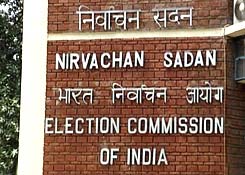
Constitution of India has bestowed the responsibility of conducting election on the Election Commission of India (ECI) under article 324. This article provides for ‘Superintendence, direction and control of elections to be vested in an Election Commission.—(1) The superintendence, direction and control of the preparation of the electoral rolls for, and the conduct of, all elections to Parliament and to the Legislature of every State and of elections to the offices of President and Vice-President held under this Constitution shall be vested in a Commission (referred to in this Constitution as the Election Commission)’
Thus the ECI has been given constitutional status so that it could conduct the election in a free, fair and peaceful manner. The independence of the Commission has been guaranteed under 324(5) of the constitution as it reads ‘Provided that the Chief Election Commissioner shall not be removed from his office except in like manner and on the like grounds as a Judge of the Supreme Court and the conditions of service of the Chief Election Commissioner shall not be varied to his disadvantage after his appointment.
Election is the pivot and corner stone of democracy; therefore it has to be conducted in a free, fair and peaceful manner. For this purpose, the Parliament enacted in 1951 the Representation of People Act and subsequently conduct of election rules to this effect was also framed in 1961.
India went on poll for the first time and it was a huge success both in terms voters turn out and peacefulness. India made tryst with destiny in the real sense of the term as dreamed by Nehru in his famous midnight speech on 14 August, 1947.
After few years, the ECI issued an order to regulate the activities of the political parties and their candidates and also to take punitive actions for violations if any. 
The ECI, in exercise of the powers conferred on it under article 324 of the Constitution, section 29A of the Representation of the People Act, 1951 (Act 43 of 1951) and rules 5 and 10 of the Conduct of Elections Rules, 1961 made an order called the Election Symbols(Reservation and Allotment) Order, 1968.
This step of ECI was a milestone in the electoral history of Indian democracy in the sense that it laid the foundation stone of model code of conduct. After every election, parliamentary or state legislative, the ECI felt the need to add more teeth into its jaw and gradually some sort of a set of regulatory guidelines with regard to political parties especially those in power and ministers, officers etc was required to be framed.
First step towards evolution of a set of code to regulate and monitor the activities related to the process of election was taken by T.N. Seshan in 1991, when he issued a set of instructions called Model code of conduct or MCC. Although this set of instructions did not have any legal or statutory backing, it was advisable on part of political parties, particularly those in power, officials related to conduct of poll etc to adhere to these instructions. This is how the seed of the present day model code of conduct or MCC was sown. There was a lot of hue and cry as to whether or not ECI or for that matter CEC can issue such advisory or instruction or not and if whether it can have some statutory effect at all.
Legal luminaries may be divided on this issue but the ruling of Apex court in this regard is worth mentioning.
In 1978 itself five Judges constitutional bench of the Supreme Court held in Mahinder Singh Gill versus CEC AIR 1978 ‘ the constitution contemplates a free and fair election and vests comprehensive responsibilities of superintendence, direction and control of the conduct of elections in the election commission. This responsibility may cover powers, duties and functions of many sorts, administrative or other, depending on the circumstances.’
Thus the apex court cleared all doubts whatsoever with regards to the powers and functions of the ECI in matters of conduction of a free and fair election. It is perhaps due this fact the framers of the constitution have made provisions in article 329 of the constitution for debarment from interference by courts in matters of elections. 
Even then the matters of dispute did arise especially when Sehan played tough on the political parties. Keeping in view of the growing tendencies of parties in power to take undue advantage of being in power, the ECI inserted in 1994 (Notification. No. O.N. 42(E) 18th February, 1994). a new section called section 16A in the Election Symbols (Reservation and Allotment) Order, 1968. In fact the insertion of this new section marked the beginning of the process of giving statutory and legal touch to the Model Code of Conduct or MCC. By virtue this section, the ECI assumed power to withdraw recognition of a recognised political party for its failure to observe model code of conduct or follow lawful directions and instructions of the commission. This is how the model code of conduct in its present form came into being.
Even after insertion of the above provision in the Election Symbols (Reservation and Allotment) Order, 1968, the model code of conduct could not be made a statute, perhaps because the said order itself in a way was an executive order issued by the ECI by virtue of powers conferred on it by article 324 and Acts enacted therein. 
In fact, the notification issued to this effect itself says ‘in exercise of the powers conferred by article 324 of the Constitution 1[read with section 29A of the Representation of the People Act, 1951 (43 of 1951) and rules 5 and 10] of the Conduct of Elections Rules, 1961.

This MCC therefore, remained exposed to judicial scanning. The first legal opportunity to examine this code came in 1997, when a petition was filed in Punjab and Haryana HC challenging the EC powers which it drew by inserting section 16A in the Election Symbols (Reservation and Allotment) Order, 1968. The Court dismissed the petition and upheld the validity of the amendment made in the said order. The court observed that EC can issue directions to the govt and ask them to follow the Model Code of conduct. The court further said that the EC is entitled to take such steps for the conduct of free and fair election. Clarifying the confusion as to what would be the date from which the MCC would come into vogue; the court said the commission can invoke this MCC even before the issuance of notification of dates of polls also.

In 2000, the Union govt moved to the Apex court against the ruling of the EC regarding the date of Model code of conduct coming in force after the above order of Punjab and Haryana High court, and sought a favourable decision from the apex court. The legal battle went on between the govt and the ECI. In the mean time a compromise was reached between the EC and Union govt with regards to the date from which the MCC to come in force and eventually the Union govt withdrew the application from the apex court.
As per this compromise reached between the Union govt and EC, it was agreed upon that the EC would announce the poll schedule two weeks prior to the notification of the election and the code will came into force from the date the EC announces the schedule.
After this arrangement the model code of conduct comes in force with immediate effect after the announcement of schedule of polls.

CATEGORIES OF MODEL CODE OF CONDUCT- the model code of conduct thus is a compendium of circulars and instructions issued by EC invariably before every election and contain dos and don’ts. It is generally categorised into General conduct, Meetings, Processions, poll day, Polling Booth, Observers, Parties in power and some questionnaire. 
Although model Code of conduct as such is not enforceable as it lacks any legal vertebra, it directs the officials especially DEOs to lodge FIRs as and when instructions under this code are violated. The ECI directs the concerned authorities to lodge cases under different penal provisions of prevailing national or local laws.

MODEL CODE OF CONDUCT AND IPC- In Indian Penal Code (IPC) for instance, a separate chapter IX A has been inserted in 1920 by Election Laws ( amendment) Act, 1920 (Act 30 of 1920). This chapter contains section 171 only but over a period of time, depending upon exigencies; sub-sections have been added to it time to time. As on now, this section 171 contains nine (9) sub-sections i.e. 171-A- 171-I. Two amendments have so far been made, one in 1975 adding clause(a) and (b) in sub-section A of section 171 and other in 2003 wherein a provision in section 171-D was made to enable duly authorised persons to cast proxy votes.
Thus for most of the violations of MCC, cases are registered under the provisions of this chapter of IPC.

Similarly violating prohibitory orders invoked under section 144 of Criminal Procedure Code of 1974, cases under section 188 of IPC are registered which is a cognizable but bailable offence. This law has become almost toothless and people make mockery of it because even if you violate the prohibitory orders, police would have to set you free as soon as you are taken into custody. In fact cases are registered under this section 188 for any kind of act of disobedience of order issued by a public servant who is legally authorised to promulgate such orders. Therefore, technically speaking, if the model code of conduct is violated, FIRs can be lodged u/s 188 of IPC also because the ECI is empowered to issue or promulgate such instructions by virtue of powers conferred on it under Article 234 of Indian Constitution.
Apart from above mentioned sections, cases are also registered for violating model code of conduct in sections other than chapter IX of this code depending upon the nature of offence.

WALL PANTING AND POSTER PASTING- The wall panting or poster and pamphlet pasting on walls are also prohibited as per the instructions of MCC subject to certain conditions. Raising hoarding and banners are also prohibited. If such things come to the notice of the concerned authorities cases are required to be registered. Problem sometimes arises that under which law and sections do these cases be registered? The EC has furnished a list that instances for which cases under Defacement of Public Property Act should be registered. This is a local law and almost every state govt has its own law related to defacement of property. For instance in Delhi there is one Delhi Prevention of Defacement Act, 2007, in W.B there is one W.B Defacement of Property Act, 1976, in Bihar we have Bihar Prevention of Defacement of Property Act, 1985 etc. Thus, for every state there is a separate law. In some states it is cognizable and non-bailable whereas in others it is bailable and non-cognizable. It causes lots of technical problems for the ECI to issue one uniform direction to all the States. Similarly for use of laud speakers, we have a plethora of Acts and rules. Almost every state has a separate law or rule regarding the use of laud speakers. 
Under the above circumstances the enforcement of MCC in letters and spirits often becomes difficult. The officials have to use discretion and it is rightly said that discretion begets discrimination. 

MODEL CODE OF CONDUCT AND RP ACT 1951- in order to help ECI to conduct a free and fair election as enshrined in article 324 of the constitution, the parliament enacted a comprehensive law called Representation of People Act, 1951. In fact it contains provisions to regulate the activities and conduct of both political parties as well as poll officials. It is therefore can be said the precursor of MCC. If a glance at this law is made, it clearly stipulates the provisions related to violation of MCC. These provisions are inserted in PART VII and titled as CORRUPT PRACTICES AND ELECTORAL OFFENCES. The chapter-I of this Part contains provisions related to Corrupt Practices and has one section 123 only. CHAPTER-III of part-VII of this Act is titled ‘Electoral Offences’ and contains sections like 125-Promoting enmity between classes in connection with election, 125A- Penalty for filing false affidavit, etc., 126-Prohibition of public meetings during period of forty—eight hours ending with hour fixed for conclusion of poll, section 127-Disturbances at election meetings, section 127A-Restrictions on the printing of pamphlets, posters, etc., section 128-Maintenance of secrecy of voting.
Last but not the least is section 8 of RP Act which deals in disqualification on conviction for certain offences. Sub-section 3 of this section says ‘ A person convicted of any offence and sentenced to imprisonment for not less than two years [other than any offence referred to in sub-section (1) or sub-section (2) shall be disqualified from the date of such conviction and shall continue to be disqualified for a further period of six years since his release.’
Sub sections (1) and (2) of section 8 contain a list of offences in which quantum of punishments is less than two years but still then the convicted persons are liable to be disqualified. 

NEED OF A COMPREHENSIVE ELECTION LAW ENLISTING MCC- In the above mentioned situations, the RP Act of 1951 has become almost obsolete especially due to amendment made in section 41 of Criminal Procedure Code which now prohibits arrests for an offence, the quantum of punishment for which is less than seven years. The plethora of penal laws, rules and orders with regard to violation of MCC has become a vexed problem both for the election related officials as well as for the political persons. Many a time acts of disobedience are committed due to non-acquaintance of laws pertaining to a particular action. Moreover what is the use of such directions or code which themselves are not codified. It is therefore advisable on part of the govt as well as ECI to take steps in this regard and enact a comprehensive legislation incorporating therein all relevant provisions connected with entire gamut of election processes.

Till date, all offences related to violation of model code of conduct are dealt in accordance with the provisions of Criminal Procedure Code, it therefore take very long time in reaching a case to the logical conclusion. The proposed legislation as discussed in above paragraphs, therefore should be enforced by a special rule also. Meaning thereby that special processes and special courts should be evolved so that these offences are tried and reached to logical legal conclusion. The present day scenario is that everyone believes that nothing happens in such cases. Even the officials are of the view that file some cases to escape the apprehended wrath of the ECI, once the election process is over everyone tends to forget about these cases. In fact, this notion about the ECI and cases of violation of its directions are very detrimental to our democracy and therefore this state of affairs must be changed. The concept of 'speedy trial' in some selected cases has been a very successful exercise in the state of Bihar.The percentage of conviction in relation to the national average has gone up in a short span of time. The cases under Arms Act, 1956 and Prevention of Corruption Act are being disposed off at a fast pace. The number of convictions in Bihar has risen to a spectacular proportion. This concept can be utilised in this matter also. After all, elections and democracy are the twin pillars of our political institutions which ought to be protected against any decay and degeneration.

Sunday, March 8, 2009

TECHNOLOGY AND FIGHT AGAINST TERRORISM,INSURGENCY AND NAXALISM


(SECURITY IS NO MORE SECURED BY GUN ONLY)

INTRODUCTION- When we say internal security we are referring to an overall security situation prevailing in the country. Although it refers to the internal situation and it depends largely on the internal factors, though with the changing strategic-security environment around the region, it affects situations inside the country also. The balance of power in the geo-political region profoundly affects the security situation in any country. It is therefore; any change in power equation in the South-Asian, South-Eastern Asian or South-Pacific region tends to improvement or deterioration in the internal security scenario in India.
Thus the Internal security has twin dimensions; internal and external, and therefore; any study or any strategy to reshape it requires taking of cognizance of both the factors.
In recent times the mechanism and modes of operation of terrorists, extremists and insurgents have undergone metamorphosis. The use of sophisticated technology in terms strike and intelligence areas by these out fits needs to taken into account before formulating any strategy in tackling the problems of Internal Security. 

AREAS AND ASPECTS WHICH AFFECT INTERNAL SECURITY- Broadly Internal security can be divided into major areas for discussion point of views, otherwise it would be strategically and tactically blunder to treat them all at different footing. 


A- INSURGENCY
B- TERRORISM
C- NAXALISM
D- LOW INTENSITY WAR
E- ORGANISED CRIME INCLUDING CYBER CRIME
F- GENERAL LAW AND ORDER
G- COMMUNAL AND CASTE VIOLENCE 


A- INSURGENCY AND NAXALISM- The country faced another Internal Security problem in form of insurgency from the very outset. The Naga leadership under Z.A. Phizo had challenged their integration into Indian Union even before India became Independent. The Naga insurgency started way back in 1950s and as a matter of fact Mr. Z.A. Phizo had founded Naga National Council in 1947 itself. There are regional variations in the causes, forms and social chemistry of these insurgencies. Some fight on ethnic ground, whereas; others on linguistic and regional basis. Their demands and principles are also different from each other. The geo-strategic location of North-Eastern States is also congenial for such movements. These states are linked to the rest of the country through a narrow strip of land, sometimes referred as ‘chicken neck strip’. The lack of physical, cultural and emotional proximity with these states has also augmented the feeling of alienation of tribal and other people living in these states. The Natto-friendly countries bordering these states also encourage secessionist activities by way of providing arms, ammunitions and shelters to these insurgents. It is an established fact, that many insurgent and secessionist groups are running training camps in these Natto-friendly countries.

With the Sheikh Hasina becoming PM of Bangladesh, the situation in the North-Eastern States have started showing signs of improvement. The Country is no longer a safe heaven for the insurgent groups who are operating in these states. That is why, initially, I said that external factors and changing geo-political situation in neighbourhood do affect security in other country. The abortive coup attempt in Bangladesh by BDRs are, according to some experts is due to this reason. The Islamic fundamentalist and Jehadi-jamat elements in the BDR do not like the situation in India to improve.
Although almost all the north-eastern states face insurgency, the chemistry and geography of all the insurgent groups vary from each other. Insurgency is basically a situation of war, mostly guerrilla, which is aimed at liberating that particular area or region from the country. It is different from Naxalism or for that matter terrorism in the sense that Naxalism’s concept is based on the overthrow of the establishment itself through people’s armed movement and it does not advocates for secession. Terrorism, on the other hand, is aimed at spreading terror and hatred sometimes without any clear cut ideology. The ideology of terrorism is blurred but mechanism is organised, whereas; in insurgency, both ideology as well as mechanism of warfare are better organised. It is perhaps due to this reason the terrorism dies early and not the insurgency. Terrorism don’t tend to go in hibernation, whereas; insurgency often goes in hibernation especially when the time is not favourable.
The organisational hierarchy of these organisations are very well defined and well trained and their mode of operation is very hi-tech. Sometimes their hierarchical structure and strike capabilities are unmatched with the security agencies.

STRATEGIES TO TACKLE INSURGENCY AND NAXALISM-

There is no denying the fact that these problems have germinated out of political garbage and have assumed enormous proportions, therefore the long lasting solutions to these menaces also lie in political theraphy. At the same time, till then, they cannot be allowed to devastate and tatter our social and economic fabric. The strategies, therefore; let the political process of reconciliation proceed and at the same time activities of such elements in terms of attacks and disruption are checked and foiled effectively.
Here lies the importance of technology in general and use of Information Technology in particular. These outfits have grown at a rocketing pace in terms of their equipment with latest warfare technology. Unfortunately on establishment side the same did not advance with corresponding velocity. The result is devastating and catastrophic. If the number of terrorist and insurgent incidents is taken into account, the figure available with the ministry of MHA suggests that up to Nov, 2007, there have been 266 incidents resulting in killing of 43 civilians. The corresponding figures for 2006 were 282 incidents and killing of 28 civilians. According to the information made available by the MHA, 1591 incidents of naxal attacks took place in 2008 in which 231 security personnel and 490 civilians were dead. Highest number of incidents took place in Chhattisgarh followed by Jharkhand and Bihar. In most of these attacks Naxalites and such outfits use land mines and improved electronic device (IED) which causes maximum causalities to the security forces. 
We have provided some anti-land mine vehicles to the infested areas; but it is very costly as well as very heavy. Carrying such vehicle is expensive as well as herculean also. It cannot be taken to difficult terrain; a place where combing operations take place.

(a) DEVELOPMENT OF ANTI-LAND MINE APPARATUS-The DFID’s conflict and Humanitarian Affairs department is working on research and development of cheap, handy and small anti-land mine devices. It includes invention of a torch called dragon which would throw light and detonate the mine and remove the obstacles. The R&D is based on twin objective of small cost and easily manufacturing techniques. The experiences across the world suggest that maximum number of causalities to the security forces have been caused due to use these land mines. If this technology is successfully implemented, it will bring down the causalities drastically.

India has a vast infrastructure of R&D. We have DRDO, TERI etc. we can develop our own technology also. The figure suggests that we have spent more on hardware like purchase of arms and ammunition as but spent scanty amount on R&D in this area. India can learn lot in anti-land mine sphere from countries like Israel and Lebanon. Even countries like Sri Lanka have also vast experience of dealing with the anti-land mine problems.

(b)LAND MINE IN C0ASTAL AREAS- The land mines in surface area is considered less lethal as compared to those planted on the sea shore. These sea-mines, as it is called, do not get defused themselves and can explode even after hundred years. It is becoming gradually more and more challenging for internal security. Personnels and experts are of the opinion that maritime terrorism is of more far reaching consequences.


(c)ANTI AMBUSH AND ANTI-GUERRILLA WARFARE STRATEGIES- In insurgency operations, maximum causalities occur in ambush by the insurgents. In north-east states, insurgent organisations like PLA NSCN, ULFA, BLACK WIDOW, ALL BODO STUDENTS UNION, NLFB, TLF, Kanleipak communist party (KCP),Kanglei Yawol Kanna Lup (KYKL),Manipur people’s Liberation Front (MPLF),United National Liberation Front (UNLF),Hmar People’s Convention- Democracy (HPC-D),Kuki Liberation Army (KLA),Kuki National Army (KNA),Kuki Revolutionary Army (KRA),Zomi Revolutionary Army (ZRA),Chin Kuki Revolutionary Front (CKRF),Hmar People’s Convention(HPC),Indigenous People’s Revolutionary Alliance(IPRA),Iripak Kanba Lup (IKL),Islamic Revolutionary Front (IRF),Kuki Defence Force (KDF),Kom Rem People’s convention (KRPC),Manipur Liberation Tiger Army (MLTA) and a host of other such insurgent groups are adept in ambush attacks. They have taken hundreds of lives of security and civilians. Till date we have not been able to evolve an effective anti-ambush strategy. The use of technology can play a vital role vis-a-vis combating these warfare techniques. The use of age old weapons is unmatched with those of these outfits. The night vision goggles, night vision weapons and laser beam fitted rifles can enhance the strike capabilities of our security forces.

Although the basics of combating insurgency remained the same, it has to be blended with latest technology to upgrade the strike capability. The basic tactics is called tactic’s technique and procedure (TTP). It consists of suppress, breach, attack, assault and defend. 

USE OF TECHNOLOGY TO ENHANCE TTP- There is an old saying, offence is the best defence. To pre-empt, you require advance information which comes from intelligence and intelligence is purely a professional and technical dimension. The more sophisticated the gadget you have, of course manned by dedicated and highly trained personnel, would equip the establishment with advance warning or movements of the enemies. What we have seen in several attacks in many parts of the country, are the examples of weak and inefficient intelligence system. Contrary to the popular assumptions, the use of technology is cheaper than the conventional way of gathering information. Just by installing certain CCTv and footage regularly monitored and analysed by computers can not only save life of hundreds of people but relieve of dozens of police men doing duty in scorching sun and chilling nights.


B- TERRORISM, LOW INTENSITY CONFLICT AND ORGANISED CRIME-

These are the modern day phenomenon. The 2nd half of 20th century has ushered in these deadly and ghostly ideologies. Without going into the jargon of definition of terrorism, we need to discuss steps to improve our response mechanism. As far as its terminology is concerned, the term ‘Terrorism’ comes from the Latin word ‘terrere’, which means to frighten. There are hundreds of different definitions of the word “Terrorism”; therefore, universal definition of this word is nearly impossible. For example, the US Army has counted as many as 109 definitions of Terrorism in 22 different countries. It is therefore, needless to discuss upon it. Low intensity conflict or LIC is nothing but a corollary of the terrorism. The situation where the military force is used selectively to enforce compliance with a political motive is called LIC. Pakistan, when was routed in two successive wars against India, resorted to this tactics. This LIC is still continuing in J&K. It is a kind of prolonged engagement without official pronouncement or declaration of all out war. It is stressful and painful.
It drains immense resources both in terms of men and money. The use of sophisticated IT in this arena can reverse the results. The modus operandi of both terrorist attacks and LIC has under gone huge change, so should have been our tactics.
It is said that the wars are fought as per prevailing weapons of contemporary time. In ancient period they used to be fought by crude weapons but gradually modes changed and elephants, cavalry, gunpowder and canons became weapons and modes of winning combination. British came and it changed the warfare; the naval boats gave superiority to the Britishers over Indian rulers. The first world wars proved that the navy was still a force to reckon with. 2nd World War, for the first time, changed the entire paradigm of warfare and fighter planes changed the polity and geography of the region. The advent of 21st century has again brought in a new concept and now the superiority of a nation depends on information technology. Paul Bracken, an American strategic expert, use a term ‘information dominance’, meaning thereby that the more sophisticated is the IT, the more powerful is the nation.

INADEQUATE SCIENTIFIC APPARATUS AT BORDERS AND AIR PORTS (BORDER MANAGEMENT) - India has 4095 Kilometres porous border with Bangladesh and 1850 Kilometres with Nepal. The Indo-Pak border is 3323 Kilometres whereas; Indo-China border is 3428 Kilometres. Our border management in the above borders needs to be strengthened vigorously. We do not have ultra-modern scientific equipments on the checkpoints. For instance the Indo-Nepal border has several transit points like Raxaul, Jogbani, sandhauli, Birpur etc. The intelligence reports suggest that these borders are frequently used by the drug peddlers, arms dealers and terrorists and large scale smuggling takes place here.

The kinds of equipment which are installed here are far from satisfactory and cannot detect the movement of goods or arms and ammunitions. These borders require installations of highly sophisticated equipments so that the security agencies can detect and identify the saboteurs. Each day hundreds of thousands of vehicles including trucks loaded with huge containers pass through these borders and therefore it is virtually impossible to check these vehicles with the help of obsolete and outdate manual gadgets by few dozen customs and excise or police officials. Till date they act on specific tip off and check specific vehicle. Even then long queues of vehicles are lined up causing immense hardships to the commuters. 
The concept of Integrated Check Posts (ICP) has been mooted few years ago to overcome this problem but the pace of its implementation is very slow. The airports have also been used by the terrorists over the years. Although the security at airports is far more modern and tighter than the border, it needs to the further sensitised. 
The detection of liquid explosives and suicidal bombs has been a major headache for the agencies. Use of Acetone Peroxide (TATP) and HMDT, the liquid explosives has become favourites of the terrorists. ‘Raman Spectroscopy’, a device are being used by some advanced countries to detect these explosives. We can use it on wider scale.
Human suicide bombs are said to be a ‘Zero Failure Technique (ZFT)’ for the terrorists. Countries like Israel, Iraq, Afghanistan, Pakistan, Sri Lanka, India and even some European Countries are the worst hits and the largest suffers.
England is claimed to have developed a device based on ‘Nano Technology’ which would detect without fail the human suicide bombers. They claim that this technology would provide security cover over the entire city or coastal areas. IIT is also working on some R&D to develop anti-human suicide bombers device. It is required to be accelerated. Technology saves time and money and achieves target with more precision.

BORDER MANAGEMENT- India can learn much from Israel regarding border management. We have signed one MOU with them. Unfortunately much headway has not been made due to political reasons. Keeping watch over thousands of Kilo-meters international border without eye to eye ball contact of soldiers is not an easy task. It cannot be achieved without use of hi-tech and ultra modern scientific equipments. The unmanned aircrafts fitted with electronic and IT gadgets are being use by a number of developed countries to keep watch over enemies of nation, it can be imitated here also. Any cost is cheaper than blood our soldiers.

The primitive way of putting fence across the border is not a plausible proposition. It is very cumbersome, costly, time taking and ineffective also. In spite of about 70% of fencing across Indo-Bangladesh border, the influx of illegal immigrants into India is unabated.

INTERNET AND TERRORISM-

The internet upsurge has changed the globe and so has the mechanism of the terrorists. Internet has brought the entire globe to your mouse command. Gone are the days when some organisations had to resort to phone calls and hardcopy communications to reach out their viewers,followers and sympathisers. According to many reports published across the world, the terrorists have become internet savvy and have been using internet to communicate with their members, command them, instruct and guide them on net. They have started hatred campaign against their enemies by using their own websites and blogs. According to one estimate at present there are about 1 billion bloggers are across the world. The distance has minimised to zero level in terms of time. It has posed a serious challenge before our internal security also. We do have advantage also. India is perhaps one of the most developed nations in terms of software engineers and programmers. We have best brains available which can be used in evolution of anti-terror software strategies. We can develop programmes to hack the terrorist’s communication and disrupt their nefarious designs. Policies have to be framed so that Indian citizen could be involved in this tirade against the enemies of mankind. I.T. laws have been amended more than twice; we require a comprehensive and deterrent law to tackle this menace.

(C)-GERERAL LAW AND ORDER AND COMMUNAL AND CASTE CLASHES-

Policing in India is a British legacy and the hierarchical structures as well as legal frame work still persist with certain changes here and there. We have still 148 years Police Act prevalent in many parts of the country. IPC of 1860 still reminds us that we have not yet been able to codify our own penal codes in congruent and in commensurate with changing pace of times. 1871 Indian Evidence Act still does not allow many IT materials as clinching evidence. Narco-tests are not admissible in the court of law as solitary and conclusive evidence. The situation needs to be changed because they have direct bearing on the internal security situation in our country. Supreme Court of India has ruled in (CIVIL ORIGINAL JURISDICTION) WRIT PETITION (CIVIL) No. 310 OF 1996 I. A. No. 3 of 1999 Prakash Singh v/s union of India that the investigation and law and order be separated. The idea is to improve the quality of investigation and bring more judiciously culprits to book.
Here lies the crux of the problem. The unscientific and colonial way of retrieval of information many times amounts to violation of human rights and vitiates the entire procedure of law. The introduction of hi-technology in matters of investigations will held a lot in improving the internal security scenario. 
The FIRs are required to be put on local area network of the police department. The data base of criminals, terrorists, extremists and naxalites along with their photographs be made available so that SHO sitting in a remote area can have the information of the whereabouts and activities of such elements. Generally these elements escape and sneak into countryside and go in hibernation. The lack of effective information system help these elements escape from the eyes of the local police. 
Police stations are the corner stone of the entire security structure. Unfortunately, over a period of time the emphasis has shifted from this basic structure and we went on creating parallel organisations with conflicting and intersecting jurisdiction causing more harm than good. There anomalies are required to be rectified.
The general law and order and other communal and caste violent clashes sometimes snowball into serious problems for internal security. With the introduction of latest technologies in this area, the situation can be improved in a big way.Some of the important suggested measures are (a) access control system/ equipment (b) information encryption (c) air port and multimode protective security, interceptors. (d) anti-riot equipment,(e) armour personal body (e) lab for testing (f) audio surveillance equipment (g) mobile communication (h) bio-metric system (i) model for encryption (j) bomb detection equipment (k) micro-wave communication (l) bomb disposal equipment (m) passenger screening and searching equipment (n) cyber crime surveillance system (o) anti-riot and other specialist vehicle etc.

Saturday, March 7, 2009

WHO WILL BRING THE LAWYERS TO AMBIT OFLAW?

                                     WHO WILL WATCH THE WATCH DOG?

The unprecedented acts of hooliganism and vandalism done by a group of lawyers of the Madras High court in the court premises itself has raised the issue that as Policing the Police is becoming gradually difficult, similarly bringing lawyers to the ambit of law is becoming an arduous task.

The lawyers were protesting against an attempt by the police to arrest some accused in connection with a complaint lodged by Subramanyam Swami. The lawyers turned violent and started attacking the police. They set ablaze some vehicles parked in the campus. In a way the acts of violence provoked the police to resort to tough measures. Subsequently the Police also resorted to lathi charge and beat lawyers mercilessly.

The lawyers went on strike and demanded action against, what they call, the brutal actions of the police. The repeated requests by the Supreme Court to the lawyers to call off their strike went unheeded. The strike is still going on the process of law is severly hindered.

The apex court appointed one man panel to probe into this episode headed by retired SC Judge B.N.Srikrishna. The panel submitted its 22 page report to the court and was read out in the court by some senior advocates before the CJI.

The report has deplored and condemned the incident which took place on 19th February in the court premises of Madras HC. J.Srikrishna has termed the actions and behaviours of some of the advocates as ‘hooligans and miscreants’. The group of lawyers were behaving like unruly and rioting mob. It is shame on our judicial system and is an stigma on Judicial history of our country . Lawyers are the part and parcel of the entire criminal justice system and the courts cannot function without the participation of the advocates.

In recent times, a section of lawyers have formed an idea that they can take law in their hands and will go unscathed because they are under illusion that they are running the courts and the courts will not take action or allow any action to be taken against them. The report has rightly indicted the acting Chief Justice of Madras High Court because his infirm and indecisive attitude allowed the situation to go from bad to worse. 

Few days ago, similar incident, though of smaller magnitude and intensity took place inside the court room at Patna High Court. The Judge Mr. D.D. Jha was force to withdraw his order of making arrest of a lawyer for his act of contempt of the court. The said advocate shouted at the highest pitch and called all his companion lawyers. They started slogans inside the court room before the Judge and the Judge could not nothing accept left the chair helplessly and withdrew his order. Only few days before this incident, a section of lawyers and lawyer’s clerk raised slogans against the Chief Justice because the Chief Justice had issued one direction which necessitated the lawyers or the lawyers clerks to verify the stamps, they are furnishing with. This order was made in view of detection of a racket which had been using fake stamps inside the court itself. In this scam, the police said that the involvement of some advocates was allegedly possible. Any way the entire stalemate could only be resolved when this order was withdrawn.Such types of infirm and indecisive attitudes of the court have emboldened the lawyers who have started taking law in their hands.

Rising cases of so called judicial activism, according to some luminaries, are the root cause of such trends. The frequent physical appearance of senior police and civil officers in the courts due to orders of courts have left an impression that the lawyers can teach any officer a lesson if their dictates are not complied with.
Lawyer’s hooliganism and acts of vandalism have also been witnessed in Allahabad HC for more than one occasion. Few months back, a group of lawyers thrashed Pandher and Surendra Kohli, the accused of Nithari massacre, in the premises of Ghaziabad court. Such incidents are common place in our country and thus are a matter of serious concerns. Such types of infirm and indecisive attitudes of the court have emboldened the lawyers who have started taking law in their hands.

Honorable Supreme Court of India has ruled in the famous case of Praveen Bhai Togadi versus State of Karnataka that ‘COURTS SHOULD NOT NORMALLY INTERFERE WITH MATTERS RELATING TO LAW AND ORDER WHICH IS PRIMARILY THE DOMAIN OF THE CONCERNED ADMINISTRATIVE AUTHORITIES. THEY ARE BY AND LARGE THE BEST TO ASSESS AND TO KNOWLEDGE. THE COURT CANNOT IN SUCH MATTERS SUBSTITUTE ITS VIEW FOR THAT OF THE COMPETENT AUTHORITY’{ AIR 2004 SC 2081;(2004)4 SCC 684}. In spite of this the trend of judicial activism in matters of enforcement of law and order continue to show upward direction. Justice Katju has several times has come down heavily against such trend and has preached the judiciary to do the real work of dispensation of justice rather than being swayed by public and media hype.


The report of Justice Shri Krishna has rightly sought the intervention of the apex court. The panel has also suggested framing of certain guide lines for the bar. In fact there is no rule whatsoever in this matter and it is the bar council which regulates the activities of the advocates in India. Bar Councils of states and Bar Council of India themselves are formed in accordance with section 3 and 4 ofAdvocates Act, 1961.Although this Act was amended in 2003, it fail to incorporate provisions therein to regulate the actions of the advocates. Thus at present these bar councils are the only bodies which gives certain broader guide lines to the lawyers, they are becoming ineffective.The bar councils sometimes succumbs to the pressures of the lawyers and thus they are finding themselves not in a position to tame the lawyers

The Parliament should, now come up to take up and tackle this dangerous trends which is spreading like a pandemic contagion in Indian Judiciary. The time has come to frame a strict, elaborate and comprehensive law is enacted in order to ensure that such ailment is cured, and cured forever.

Friday, March 6, 2009

ANOTHER JOLT FOR CENTRAL INFORMATION COMMISSION


                           WHO WILL ADJUDICATE THE JUSTICE?

Delhi High Court stayed the order of CIC on 4th March, 2009, in which the CIC had asked the govt to disclose all the concerned papers related to the appointment of Chief Justice of Himachal Pradesh High Court and make these papers available to the petitioner. The CIC had passed this order on January 19th this year and asked the central govt to disclose all the correspondence including the noting on that file which was returned by the then President APJ Abdul Kalam regarding the appointment of Jagdish Balla as the Chief Justice of Himachal Pradesh High Court in 2006.

It was only after the return of the concerned file by the then President, the matter came in controversy and the news of Bhalla's alleged involvement in some misconduct during his tenure as judge in Allahabad HC could came in public domain.

The order of the CIC in this regard was of much embarassement for the govt and the Central govt was quick to file an appeal before the HC at Delhi. This stayal is seen as a major relief for the govt but at the same time it is another jolt for the CIC as well as the activists who are fighting against secrecy and confidentiality in the establishement.

Technically speaking, there is no provision of an appeal against the order of the CIC and it is final as per section 19(7) of the RTI Act,2005. The aggrieved party may however, file Writs in HCs or SC as enshrined in the Constitution, on the grounds of infringement of Fundamental Rights. It is being observed, and idea is being formed in the public at large, that in many cases the govt or the public authorities file an appeal before the HC or SC and in most of such cases, the order of the Information commissions are stayed. Many activists fighting for free flow of information raise serious apprehensions on the motive of the govt vis-a-vis transparency and claim that the govt hides the information and thereby nip the growth of right to freedom of free flow of information in the public domain.

Section 9 of the said Act provides for exemptions from disclosure and schedule 2 of the Act enlists 18 organisations which are entitled to exemptions. When two years back the govt sought to ammend this law to bring more exemptions into it, was vehemently opposed by the activists. The media criticised bitterely and govt bowed down and subsequently this proposal was withdrawn.

Wednesday, March 4, 2009

SOP ON ANVIL TO TACKLE TERRORIST ATTACKS


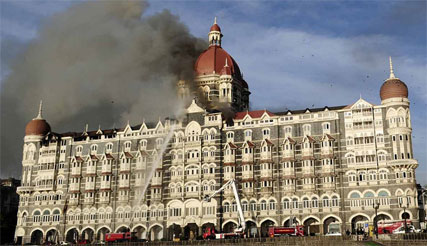
(BURNING OF TAJ;ATTACK ON INDIAN PSYCHE)

The Ministry of Home Affairs (MHA) is all set to implement a Standard Operating Procedure (SOP) for tackling terrorists’ crimes and attacks in the country from 31st May of this year.

This SOP has been prepared after 100 days exercise by a group of experts in security matters set up by the MHA after the fiasco of tackling the Mumbai attacks on 26/11 last year. The manner, in which the whole operation was carried out, exposed the lack of proper coordination amongst the security agencies and also witnessed almost total collapse of command and control system, at least in the important initial phase of operation. 

The above Mumbai attacks and subsequent response by the Crisis Management Group in MHA was highly criticized in the media as well as in public domain especially on the point of delayed dispatch and airdropping of NSG Commandos to the site. There was a total confusion on the site of operation and the securities forces were at a loss on the point of taking commands.

In the above circumstances, the MHA had setup a group of experts which after long and arduous deliberations, prepared a Standard Operating Procedure (SOP) for the security agencies tackling the terrorist crimes. This SOP contains list of does and don’ts, it would be followed by all concerned central and state security agencies as well as the external and internal intelligence agencies like I.B. and R.A.W. 
It is pertinent to mention here that the central as well as state security agencies do have the list of does and don’ts and SOP for Anti-Naxal operations.
This is the third important decision in the MHA after Mumbai attacks, first and second being establishment of National Investigation Agency (NIA) and amendment to the Unlawful Activities (Prevention) Act, 1967 respetively. Many experts in security and strategic matters believe that clear cut command and control mechanism and zero response time are the keys to success in tackling terrorist attacks. The kind of reflex in the rescue team which the entire world watched when a passenger plane had to make an emergency landing in the Hudson river in USA set an example for many countries including India. We, over a period of time, have created a plethora of security and intelligence agencies, but failed to evolve a scientific, coordinated and coherent system of command and controll. When tragedy occurs, the agencies bestowed on the responsibilities to carry our operations, get themselves at a loss, They usually take more than required time to respond. The recent incidents of narrow escape of President's helicopter at Mumbai air port during the visit was another example of lack of coordinationa command and control mechanism in some areas, which is matter of grave concern. Hopefully, this SOP would be able to eliminate or atleast minimise the chances of such fiasco which we unfortunately watched and experienced during Mumbai attacks.
Discussions are also going to amend the rules related to Media also, so that the entire area, where the operation is to carried out, could be cordoned off. During the Mumbai attacks, some of the electronic media (TV channels) acted in a most irresponsible manner and telecasted live the operation of the securities forces. This has proved disastrous in terms of relayed information to the terrorists inside the hotel as well as their masterminds stationed somewhere else. The amendment in the existing law will enable security agencies to disallow such things to occur.

Friday, February 27, 2009

NEW ERA TO USHER IN JAMMU & KASHMIR


ERA OF NEW HORIZON AND NEW HOPES WAIT TO USHER IN IN JAMMU AND KASHMIR

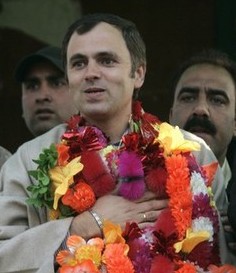
Omar Abdullah has hinted to repeal J&K Disturbed areas Act,1992 and Armed forces (special powers)Act 1958 very soon. It is pertinent to note that both these laws were enacted in order to tackle the terrorist activities in this disturbed state.

The successful election in the state in terms of high voters turn out and lesser incidents of violence have changed the political and social mileu in the state and has instilled confidence in the 'strathclyde scotland educated' and youngest CM, who in turn wants to fulfill the promises he had made to the people during his election campaign.

It should be noted that the above two laws are enacted by the Parliament, but the state govt can repeal it under the powers conferred to it vide Article 370 of the Indian Constitution and article 246(schedule-7 state list) of the constitution which gives state almost exclusive powers to the state govt in matters related to law and order.

Since these two laws give ample powers to the security forces with respect to arrests, search and firing, many human rights activists and political parties also call these laws 'draconian' and have been demanding their repeal since its enactment and application.

The withdrawal of these laws will certainly help win the good will and confidence of the people which have fast depleted over few years. But on the other hand ,it will curtail the powers of the security forces in dealing with the terrorists, which may hamper the peace process to further and normalcy to return.

Some experts in security matters are however of the opinion that constitution of National Investigationg Agency and amendment to Unlawful activities( prevention)
Act 1967 have rendered J&K Disturbed areas Act, 1992 and Armed forces (special powers)Act 1958 useless because the aforesaid law(Unlawful activities( prevention) Act 1967) and NIA are able to tackle the terrorists activities in far more effective and scientific manner.

By doing so the government can send a message of good will and kind gesture to the people of this state at large, now it is up to them to reciprocate in the same fashion.

It should be bone in mind that the local people irrespective of political affiliations have been highly critical of these, what they call'draconian and anti- kashmiri laws', therefore its repealment would usher in an era of new horizon and new hopes. This opportunity could be used to fill confidence and restore peace here in the valley,

Hopefully this step would also help in restoring peace in this strife torn territory of the Indian republic. Paksitan must also share the good gesture and reciprocate because playing with fire burns your own hands too, history has given us this lesson. All what is happening in Pakistan including in swat valley of FATA and elsewhere in this country are the fruits pakistan have sown over the years.

Tuesday, February 17, 2009

GOVERNMENT GOES TOUGH ON CORRUPTION


HARBINGER OF HOPES IN THE TATTERED STATE

Site Meter


Government of Bihar is coming out with a comprehensive legislation to confiscate assets of the public servants against whom case (s) of ‘Disproportionate Assets’ have been filed and charge-sheets have been submitted in the court of law. A bill in this regard is likely to be tabled in the forthcoming budget session of the State Legislative assembly itself.

While speaking on a seminar organised by DFID, the CM reiterated his commitment to weed out corruption from governance and hinted at this move. He has geared up the vigilance sleuths in the state and the number of trap cases by the state vigilance bureau has increased many folds. As many as 60 trap case with 68 arrests in 2006, 29 trap cases with 37 arrests in 2007, more than 60 trap case with 70 arrests in 2008 and 7 trap cases with equal number of arrests have been made in 2009. Subsequently cases of Disproportionate Assets are launched but thanks to the slow pace of trial a very few could actually be convicted. Apart from this bureau, one Special Vigilance Unit (SVU) has been set up to take anti- corruption measures against high officials. This Unit has also made some headway with respect to recover huge amount of wealth from the possession of officials including several IAS and IPS officers. Their assets could not be confiscate due to non-availability of any specific law in this regard. To sort out this problem, special courts are to be set up and speedy trial would be started, hinted the sources at the state secretariat.

On the other hand, rules are also likely to be amended and the power of making appointments of Teachers would be snatched from the Panchayats and ULBs representatives very soon. The CM received innumerable complaints of corruption and nepotism during his Vikas Yatras against the Local representatives especially Mukhiyas of the Panchayats. Two years back, the CM had formulated the policy of appointment of Teachers (Bihar Panchayat and Nagar Nikaya shikshak niukti niyamabali’) by Panchayati Raj and ULBs representatives with a utopian idea of devolution of powers to lower level of functionaries as enshrined in the constitution. But this effort has failed miserably due to rampant corruption in the panchayati raj and ULBs institutions. Many academicians are of the opinion that the qualities of the ‘appointed teachers under this scheme’ are hopelessly poor because it is based on ‘counselling’ and not on ‘tests’, which has given ample opportunities to the representatives to play foul in this game. This has adversely affected the qualities of primary education, many people lament.

Thursday, February 5, 2009

ROW IN ELECTION COMMISSION OF INDIA TAKES POLITICAL TUNE


The row in Election Commission of India (ECI) has taken a political tune as all the major political parties are playing their own lyrics orchestrated by political music. The inside bickering in ECI is not new and has been occurring time and again. The first major controversy arose during T.N. Seshan’s regime when Seshan and Krishnamurti, one of the then EC locked their horns in order to establish their own hegemony and run their own writs. 
The present row originated owing to the letter which the CEC, has written to the President of India recommending the removal of Navin Chawala, the EC for his alleged acts of commission and omission under article 324 (5) of Indian Constitution. This letter sparked off a major political controversy because the BJP has come openly in rescue of N. Gopalswami, whereas; Congress and other UPA constituents have pledged their support to Navin Chawala. This controversy has incited a debate also in legal luminaries and judicial domain. The issue which has again come to fore is that whether or not the CEC can suo motto initiate inquiry and recommend the removal of the other ECs? The question has become vexed also because the provisions of the Constitution in this regard are somewhat translucent on this issue. Article 324 of the Indian constitution provides for the superintendence, direction and control of election to be vested in the Election commission. Clause 5 of this Article provides for ‘the Subject to the provisions of any law made by the Parliament, the conditions of service and tenure of office of the Election Commissioners and the Regional Commissioners shall be such as the President may by rule determine:
Provided that the Chief Election Commissioner shall not be removed from his office except in like manner and on the like grounds as a Judge of the Supreme Court and the conditions of service of the Chief Election Commissioner shall not be varied to his disadvantage after his appointment:
Provided further that any other Election Commissioner or a Regional Commissioner shall not be removed from office except on the recommendation of the Chief Election Commissioner. 
The above provision makes it amply clear that the ECs can be removed by the President, the appointing authority, but the CEC can only be removed by a process of impeachment similar to that of a Supreme Court Judge. The message is clear; the father of constitution has conferred on adequate amount of independence on the ECI and also has guaranteed protection to it against any undue political and executive interference. It is also a fact that the CEC and ECs are equal, CEC being the first among the equals, this however do not bring all the ECs at par with the CEC.It seems that the principle of check and balance as well as superiority and subordination blended with administrative hierarchical concept has been enshrined in the above provisions of the constitution. The Criminal Procedure Code (Cr.P.C.) of 1973 can be taken into account to explain above principle. Section 20 of this code provides for appointment of Executive Magistrates and the District Magistrates. It speaks of the principle that District Magistrate is also an executive magistrate and all executive magistrates are equal, but the district magistrate is first among the equals. Further section 21, 22 and 23 make it clear that the executive magistrates,including the SDM, who is also an executive magistrate are subordinate to the district magistrate. Some may take it as an absurd comparison, but the principle of the same administrative hierarchical concept has been applied in the Election Commission also. 
Now coming to the question which remained unanswered is that whether the CEC can recommend suo-motu to the President the removal of ECs without the Presidential Reference? The Constitutional bench of the Supreme Court has ruled in the famous T.N. Seshan Vs Union of India in 1995 {5 SC, 337;(1995)4 SCC 611} that if power were to be exercisable by the CEC as per his whim and caprice, the CEC himself would become an instrument of oppression and would destroy the independence of the ECs if they are required to function under the threat of the CEC recommending their removal. This judgment is said to be landmark vis-a-vis the functioning of the ECI. The Supreme Court was of the opinion that the in-dependence of ECI is more important than the supremacy of CEC. In fact the fathers of our Constitution had rightly infused a large amount of independence and sanctity in the ECI which is also a custodian of the Constitution. Dr Bhim Rao Ambedkar, the father of Indian Constitution, had said in the constituent assembly that the removal of CEC should be done only through a process of impeachment. The idea was the same, to confer independence to the Commission. But unfortunately over a period of time certain amount of aberration has crept into this constitutional body and has turned it into a hub of hobnobbing and bickering. 
So far as the grounds for inquiry against Navin Chawla and subsequent recommendation to his removal is concerned, the matter goes back to 2006 when L.K.Advani along with 204 other MPs submitted a petition to the President of India seeking removal of Navin Chawla for his alleged acts of commission and omission during emergency and his alleged proximity to the ruling Congress Party. The same petition was forwarded to the CEC for necessary action. It is in this context the CEC asked explanation from Navin Chawla and after being ‘unsatisfied’ from the Chawla’s answer, CEC made this recommendation to the President. The entire legal fraternity divided over this issue. One school of opinion says that the CEC can recommend removal of any EC suo-motu, whereas other opines that the CEC can only act when he is sought to do so by the president. Coming to the issue of taking action on the recommendation, some stalwarts say that the recommendation is binding on the government, whereas many other do not subscribe to this view and suggest that the government has every right to reject the recommendation.
But it seems that if the CEC is not empowered to make a suo-motu recommendation, and can act only on the presidential reference, then how can the independence of Election Commission and its insulation from government’s interference be kept intact? It appears that misreading in between the lines is being done by many of us. If the CEC is supposed to act only when he is asked to do so, then why is this provision made in the constitution stating therein that the ECs can be removed only the recommendation of the CEC? 
We are non-deliberately skipping the core issue that, why after all such bickering and quarrelling are taking place in this august institution of sublime importance? The very practice of appointing very senior bureaucrats to the post CEC and EC just after their retirement is the crux of all the problems. The senior most bubus sitting at the helm of affairs can hardly remain apolitical and in a bid to get some post retirement placement, they start lobbying in the power lobby. Many of them get reward and those who are left start criticising the government in hope of winning over the sympathy of parties in opposition so that they can be compensated when these parties return to power. N. Gopalswamy had served as home secretary under Advani, similarly Chawla had been secretary to Lt. Governor during emergency. Gopalswamy was made EC just after his retirement by the NDA government, whereas Chawla was handpicked and rewarded by the Congress. Naturally their loyalties shall be put to a litmus test.

M.S.Gill has been made Rajya Sabha MP after his retirement as CEC, he was subsequently made a state minister in the union cabinet. This step is going to have profound impact on the functioning of EC, as every outgoing EC or CEC would be lured by such rewards which they may get if they pursue the interest of parties in power. 
Remedies: - Mr. B.B. Tandon the then CEC had made certain recommendations with regard to the long overdue reforms in the EC. These recommendations are eating dust in the labyrinth of power and politics. Here are some suggestions which can be incorporated while taking steps in cleansing and reforming the commission. 

1. Rules can be framed that no bureaucrat shall be appointed, nominated or given any office within three years after their retirement. 
2. Bureaucrats and judges should not be allowed to join any political party or fight election within three years after th.eir retirement. 
3. The selection and appointment procedures for the high offices like EC, NHRC, CIC, other commissions etc. should be made transparent and institutionalised so that the possibility of hand picking is diminished to a zero level
4. A national panel may be prepared for such appointment so that principle of equality and openness is followed. 
5. Law can also be framed so that no one is appointed to any constitutional post twice. This would help minimise the chances of doing favour of disfavour by these persons

WHO FIGHTING FOR ITS EXISTENCE: WILL IT TRIGGER NEW ERA OF CONFLICT? Politics and lust for power are not endemic of India only...