Showing posts with label governance. Show all posts

Thursday, June 11, 2009

REFORMS CIVIL SERVICES; NEED OF HOUR

PRODUCING CIVIL SERVANTS OR PUBLIC SERVANTS ?
Central Civil Services in India is all set to become ebonite coated so that it is insulated from undue political interference as a bill in this regard is likely to be tabled in this session of Parliament itself. Reforms in Central Civil Services have been on the government’s priorities. In fact an Administrative Reforms Commission (ARC) had been constituted under Veerappa Moily to look into the entire gamut and recommend reforms in administration. Selection of new DGPs and Chief Secretaries by new government at State has always been a matter of debate. Similarly appointments of key functionaries at Centre like Cabinet Secretary, Home Secretary and Principal Secretary to PM by govt have also been under scanner of opposition. Need has been felt for few years to evolve a transparent and an institutional system in such appointments. The proposed legislation is perhaps aimed at addressing these core issues.
Proposed Bill is bound to trigger a National debate because Civil Service, in spite of Liberalisation, Privatisation and Globalisation (LPG), has still been embedded into the socio-economic, political and almost every walk of life with varied degree of penetration.
Government said it would bring a Bill just after the Budget. The proposed Bill seeks to constitute Central Civil Services Authority (CCSA) consisting of 3-5 members headed by a Chairman who would be selected by a committee of PM, Judge of Supreme Court, and leader of opposition in Lok Sabha. The Chairman would be placed at par with Chief Election Commission (CEC), that means his mode of appointment, service conditions, tenure and procedure of removal etc will be similar to that of CEC.
Many State governments have raised voices of concerns on the pretext of, what they call undue interference of Union Government in State’s matters. It is a scathing attack on, what they call, on the federal structure of government as enshrined in the Constitution. States are particularly averse to the provision in which consent of leader of opposition in matters of appointments of DGP and CS would be must. However one can hardly deny the fact that Civil Services in India do require some sort of overhauling and revamping in view of changing socio-economic, politico-administrative and global milieu.
Civil Service in India is a British legacy and still continue to exist with least metamorphosis. In fact posts of Collectors were created as early as in 1773 itself by the British. The Regulating Act of 1773, which was perhaps the first legislation of British in India to extend, consolidate and institutionalise British Raj created these posts. But it is only from 1853 when Civil Servants began to be selected through a competitive examination in which Indians were deprived from appearing into. Post of Divisional Commissioners (DC) and Sub-divisional Officers (SDO) were later created by governor general Lord William Bentick to lessen enormous powers of Collectors. Even after Independence this structure remained so strong that even Nehru called ICS as steel frame of India.
This steel frame work of India now requires anti-corrosion treatment to make it more resilient and vibrant so that it can suit and adapt according to the needs of our people. The PM has taken the initiative, but a lot of other provisions are required to be made to rejuvenate, revitalise and renovate this institution. The indolent and battered bureaucracy is urgently required undergo some drastic changes keeping in mind the contemporary socio-economic and politico- administrative situation of country. We have to ruthlessly trash vestiges from this structure, which is eating up vitals of our system, without fear and affection. Bureaucracy has become inured to miseries of people, therefore it has to be sensitised. We must not forget that there is an intense rancour in masses against the indifferent, lackesaidial and insensible approach of most of civil servants in our country.
The proposed move is plausible, but only cosmetic surgery and its insulation from political interference would not do। Here are some changes would should be made to make Civil Services more sensible, vibrant, accommodative, responsive, responsible and public servant rather than govt servant.

1. The entry into Central Civil Services should be from intermediate level rather than graduation। It would help diminish the chances of entry of huge number of engineers, doctors and professionals including from IITs, IIMs. Civil Services are generalist job and Civil Servants from engineers and doctors community virtually have no use of their studies in this career. Moreover technical education in our country is still highly subsidised and public money is spent on them and in a way when these students enter into Civil Services, the cost incurred on them by government goes futile. It is therefore prudent to discourage such entries. By making Intermediate as entry level into Central Civil Services we can help eradicate this trend.

2. Period in field posting should be enhanced and the officers especially IAS and IPS should have longer years in fields on sub ordinate posts. At present IAS and IPS become DMs and SPs within 3-4 years time and therefore have little experience in grass root level problems. We should not forget that we are not producing Corporate Managers in UPSC; rather we are producing public servants. Longer duration in fields especially in rural areas would enable them to understand Bharat i.e. rural India in much big and better way. IPS officers become SP even less than one year. Thus the posting profile should undergo structural and functional change to make them understand the problem in bigger way.

3. Concept of fixed term is a welcome idea, but it should not be linked with extensions। In fact the very practise of giving extensions to favourite officers has lured the Civil Servants to do act of favouritism in order to win over their political masters. At the same time it discourages officers of next junior batch because it mars their chances of coming to top posts. For instance if the serving Chief Secretary, Cabinet Secretary or Home Secretary is given extension, the just junior batch officer will be left with no motivation because by the time the officers whose service has been extended would retire, the most of the officers of just junior batch would also retire. The fact of the matter is that the practise of giving extensions have helped germination of resentment and created aberrations also. This practise should therefore be discontinued immediately.

4. These days post retirement assignments are being offered to most of the top bureaucrats। Many retired IAS especially at secretary level in govt of India get assignments immediately after their retirement. Post of CEC, CIC, Member Planning commission, Advisors in different ministries, RBI governor, governors of states, and a host of such posts almost invariably go to retired Civil Servants. There is no denying the fact that officers of huge administrative experience should be tapped for country’s welfare, but such trend helps develop tendency and chances of nepotism, favouritism and other such ‘ism’ which in long run are detrimental and deleterious for our politico-administrative tapestry. Provisions should therefore be made that no officer shall be given post retirement assignment before three years after their retirement. Not only that persons retiring from posts like Judge, CEC, CIC, governor etc should not be given any post whatsoever because it is affecting the system very adversely.

It is happy to see that Civil Services are being insulated from political interference but at the same time it should also be ensured that such immunities are utilised for good of democracy, federalism, welfarism and politico-administrative structure rather than protecting non-performance and lobbyism. Merely providing security in term and conditions may make them more obstinate and non-performing because they still have enough protection in Constitution (Article 311).

Sunday, March 8, 2009

TECHNOLOGY AND FIGHT AGAINST TERRORISM,INSURGENCY AND NAXALISM


(SECURITY IS NO MORE SECURED BY GUN ONLY)

INTRODUCTION- When we say internal security we are referring to an overall security situation prevailing in the country. Although it refers to the internal situation and it depends largely on the internal factors, though with the changing strategic-security environment around the region, it affects situations inside the country also. The balance of power in the geo-political region profoundly affects the security situation in any country. It is therefore; any change in power equation in the South-Asian, South-Eastern Asian or South-Pacific region tends to improvement or deterioration in the internal security scenario in India.
Thus the Internal security has twin dimensions; internal and external, and therefore; any study or any strategy to reshape it requires taking of cognizance of both the factors.
In recent times the mechanism and modes of operation of terrorists, extremists and insurgents have undergone metamorphosis. The use of sophisticated technology in terms strike and intelligence areas by these out fits needs to taken into account before formulating any strategy in tackling the problems of Internal Security. 

AREAS AND ASPECTS WHICH AFFECT INTERNAL SECURITY- Broadly Internal security can be divided into major areas for discussion point of views, otherwise it would be strategically and tactically blunder to treat them all at different footing. 


A- INSURGENCY
B- TERRORISM
C- NAXALISM
D- LOW INTENSITY WAR
E- ORGANISED CRIME INCLUDING CYBER CRIME
F- GENERAL LAW AND ORDER
G- COMMUNAL AND CASTE VIOLENCE 


A- INSURGENCY AND NAXALISM- The country faced another Internal Security problem in form of insurgency from the very outset. The Naga leadership under Z.A. Phizo had challenged their integration into Indian Union even before India became Independent. The Naga insurgency started way back in 1950s and as a matter of fact Mr. Z.A. Phizo had founded Naga National Council in 1947 itself. There are regional variations in the causes, forms and social chemistry of these insurgencies. Some fight on ethnic ground, whereas; others on linguistic and regional basis. Their demands and principles are also different from each other. The geo-strategic location of North-Eastern States is also congenial for such movements. These states are linked to the rest of the country through a narrow strip of land, sometimes referred as ‘chicken neck strip’. The lack of physical, cultural and emotional proximity with these states has also augmented the feeling of alienation of tribal and other people living in these states. The Natto-friendly countries bordering these states also encourage secessionist activities by way of providing arms, ammunitions and shelters to these insurgents. It is an established fact, that many insurgent and secessionist groups are running training camps in these Natto-friendly countries.

With the Sheikh Hasina becoming PM of Bangladesh, the situation in the North-Eastern States have started showing signs of improvement. The Country is no longer a safe heaven for the insurgent groups who are operating in these states. That is why, initially, I said that external factors and changing geo-political situation in neighbourhood do affect security in other country. The abortive coup attempt in Bangladesh by BDRs are, according to some experts is due to this reason. The Islamic fundamentalist and Jehadi-jamat elements in the BDR do not like the situation in India to improve.
Although almost all the north-eastern states face insurgency, the chemistry and geography of all the insurgent groups vary from each other. Insurgency is basically a situation of war, mostly guerrilla, which is aimed at liberating that particular area or region from the country. It is different from Naxalism or for that matter terrorism in the sense that Naxalism’s concept is based on the overthrow of the establishment itself through people’s armed movement and it does not advocates for secession. Terrorism, on the other hand, is aimed at spreading terror and hatred sometimes without any clear cut ideology. The ideology of terrorism is blurred but mechanism is organised, whereas; in insurgency, both ideology as well as mechanism of warfare are better organised. It is perhaps due to this reason the terrorism dies early and not the insurgency. Terrorism don’t tend to go in hibernation, whereas; insurgency often goes in hibernation especially when the time is not favourable.
The organisational hierarchy of these organisations are very well defined and well trained and their mode of operation is very hi-tech. Sometimes their hierarchical structure and strike capabilities are unmatched with the security agencies.

STRATEGIES TO TACKLE INSURGENCY AND NAXALISM-

There is no denying the fact that these problems have germinated out of political garbage and have assumed enormous proportions, therefore the long lasting solutions to these menaces also lie in political theraphy. At the same time, till then, they cannot be allowed to devastate and tatter our social and economic fabric. The strategies, therefore; let the political process of reconciliation proceed and at the same time activities of such elements in terms of attacks and disruption are checked and foiled effectively.
Here lies the importance of technology in general and use of Information Technology in particular. These outfits have grown at a rocketing pace in terms of their equipment with latest warfare technology. Unfortunately on establishment side the same did not advance with corresponding velocity. The result is devastating and catastrophic. If the number of terrorist and insurgent incidents is taken into account, the figure available with the ministry of MHA suggests that up to Nov, 2007, there have been 266 incidents resulting in killing of 43 civilians. The corresponding figures for 2006 were 282 incidents and killing of 28 civilians. According to the information made available by the MHA, 1591 incidents of naxal attacks took place in 2008 in which 231 security personnel and 490 civilians were dead. Highest number of incidents took place in Chhattisgarh followed by Jharkhand and Bihar. In most of these attacks Naxalites and such outfits use land mines and improved electronic device (IED) which causes maximum causalities to the security forces. 
We have provided some anti-land mine vehicles to the infested areas; but it is very costly as well as very heavy. Carrying such vehicle is expensive as well as herculean also. It cannot be taken to difficult terrain; a place where combing operations take place.

(a) DEVELOPMENT OF ANTI-LAND MINE APPARATUS-The DFID’s conflict and Humanitarian Affairs department is working on research and development of cheap, handy and small anti-land mine devices. It includes invention of a torch called dragon which would throw light and detonate the mine and remove the obstacles. The R&D is based on twin objective of small cost and easily manufacturing techniques. The experiences across the world suggest that maximum number of causalities to the security forces have been caused due to use these land mines. If this technology is successfully implemented, it will bring down the causalities drastically.

India has a vast infrastructure of R&D. We have DRDO, TERI etc. we can develop our own technology also. The figure suggests that we have spent more on hardware like purchase of arms and ammunition as but spent scanty amount on R&D in this area. India can learn lot in anti-land mine sphere from countries like Israel and Lebanon. Even countries like Sri Lanka have also vast experience of dealing with the anti-land mine problems.

(b)LAND MINE IN C0ASTAL AREAS- The land mines in surface area is considered less lethal as compared to those planted on the sea shore. These sea-mines, as it is called, do not get defused themselves and can explode even after hundred years. It is becoming gradually more and more challenging for internal security. Personnels and experts are of the opinion that maritime terrorism is of more far reaching consequences.


(c)ANTI AMBUSH AND ANTI-GUERRILLA WARFARE STRATEGIES- In insurgency operations, maximum causalities occur in ambush by the insurgents. In north-east states, insurgent organisations like PLA NSCN, ULFA, BLACK WIDOW, ALL BODO STUDENTS UNION, NLFB, TLF, Kanleipak communist party (KCP),Kanglei Yawol Kanna Lup (KYKL),Manipur people’s Liberation Front (MPLF),United National Liberation Front (UNLF),Hmar People’s Convention- Democracy (HPC-D),Kuki Liberation Army (KLA),Kuki National Army (KNA),Kuki Revolutionary Army (KRA),Zomi Revolutionary Army (ZRA),Chin Kuki Revolutionary Front (CKRF),Hmar People’s Convention(HPC),Indigenous People’s Revolutionary Alliance(IPRA),Iripak Kanba Lup (IKL),Islamic Revolutionary Front (IRF),Kuki Defence Force (KDF),Kom Rem People’s convention (KRPC),Manipur Liberation Tiger Army (MLTA) and a host of other such insurgent groups are adept in ambush attacks. They have taken hundreds of lives of security and civilians. Till date we have not been able to evolve an effective anti-ambush strategy. The use of technology can play a vital role vis-a-vis combating these warfare techniques. The use of age old weapons is unmatched with those of these outfits. The night vision goggles, night vision weapons and laser beam fitted rifles can enhance the strike capabilities of our security forces.

Although the basics of combating insurgency remained the same, it has to be blended with latest technology to upgrade the strike capability. The basic tactics is called tactic’s technique and procedure (TTP). It consists of suppress, breach, attack, assault and defend. 

USE OF TECHNOLOGY TO ENHANCE TTP- There is an old saying, offence is the best defence. To pre-empt, you require advance information which comes from intelligence and intelligence is purely a professional and technical dimension. The more sophisticated the gadget you have, of course manned by dedicated and highly trained personnel, would equip the establishment with advance warning or movements of the enemies. What we have seen in several attacks in many parts of the country, are the examples of weak and inefficient intelligence system. Contrary to the popular assumptions, the use of technology is cheaper than the conventional way of gathering information. Just by installing certain CCTv and footage regularly monitored and analysed by computers can not only save life of hundreds of people but relieve of dozens of police men doing duty in scorching sun and chilling nights.


B- TERRORISM, LOW INTENSITY CONFLICT AND ORGANISED CRIME-

These are the modern day phenomenon. The 2nd half of 20th century has ushered in these deadly and ghostly ideologies. Without going into the jargon of definition of terrorism, we need to discuss steps to improve our response mechanism. As far as its terminology is concerned, the term ‘Terrorism’ comes from the Latin word ‘terrere’, which means to frighten. There are hundreds of different definitions of the word “Terrorism”; therefore, universal definition of this word is nearly impossible. For example, the US Army has counted as many as 109 definitions of Terrorism in 22 different countries. It is therefore, needless to discuss upon it. Low intensity conflict or LIC is nothing but a corollary of the terrorism. The situation where the military force is used selectively to enforce compliance with a political motive is called LIC. Pakistan, when was routed in two successive wars against India, resorted to this tactics. This LIC is still continuing in J&K. It is a kind of prolonged engagement without official pronouncement or declaration of all out war. It is stressful and painful.
It drains immense resources both in terms of men and money. The use of sophisticated IT in this arena can reverse the results. The modus operandi of both terrorist attacks and LIC has under gone huge change, so should have been our tactics.
It is said that the wars are fought as per prevailing weapons of contemporary time. In ancient period they used to be fought by crude weapons but gradually modes changed and elephants, cavalry, gunpowder and canons became weapons and modes of winning combination. British came and it changed the warfare; the naval boats gave superiority to the Britishers over Indian rulers. The first world wars proved that the navy was still a force to reckon with. 2nd World War, for the first time, changed the entire paradigm of warfare and fighter planes changed the polity and geography of the region. The advent of 21st century has again brought in a new concept and now the superiority of a nation depends on information technology. Paul Bracken, an American strategic expert, use a term ‘information dominance’, meaning thereby that the more sophisticated is the IT, the more powerful is the nation.

INADEQUATE SCIENTIFIC APPARATUS AT BORDERS AND AIR PORTS (BORDER MANAGEMENT) - India has 4095 Kilometres porous border with Bangladesh and 1850 Kilometres with Nepal. The Indo-Pak border is 3323 Kilometres whereas; Indo-China border is 3428 Kilometres. Our border management in the above borders needs to be strengthened vigorously. We do not have ultra-modern scientific equipments on the checkpoints. For instance the Indo-Nepal border has several transit points like Raxaul, Jogbani, sandhauli, Birpur etc. The intelligence reports suggest that these borders are frequently used by the drug peddlers, arms dealers and terrorists and large scale smuggling takes place here.

The kinds of equipment which are installed here are far from satisfactory and cannot detect the movement of goods or arms and ammunitions. These borders require installations of highly sophisticated equipments so that the security agencies can detect and identify the saboteurs. Each day hundreds of thousands of vehicles including trucks loaded with huge containers pass through these borders and therefore it is virtually impossible to check these vehicles with the help of obsolete and outdate manual gadgets by few dozen customs and excise or police officials. Till date they act on specific tip off and check specific vehicle. Even then long queues of vehicles are lined up causing immense hardships to the commuters. 
The concept of Integrated Check Posts (ICP) has been mooted few years ago to overcome this problem but the pace of its implementation is very slow. The airports have also been used by the terrorists over the years. Although the security at airports is far more modern and tighter than the border, it needs to the further sensitised. 
The detection of liquid explosives and suicidal bombs has been a major headache for the agencies. Use of Acetone Peroxide (TATP) and HMDT, the liquid explosives has become favourites of the terrorists. ‘Raman Spectroscopy’, a device are being used by some advanced countries to detect these explosives. We can use it on wider scale.
Human suicide bombs are said to be a ‘Zero Failure Technique (ZFT)’ for the terrorists. Countries like Israel, Iraq, Afghanistan, Pakistan, Sri Lanka, India and even some European Countries are the worst hits and the largest suffers.
England is claimed to have developed a device based on ‘Nano Technology’ which would detect without fail the human suicide bombers. They claim that this technology would provide security cover over the entire city or coastal areas. IIT is also working on some R&D to develop anti-human suicide bombers device. It is required to be accelerated. Technology saves time and money and achieves target with more precision.

BORDER MANAGEMENT- India can learn much from Israel regarding border management. We have signed one MOU with them. Unfortunately much headway has not been made due to political reasons. Keeping watch over thousands of Kilo-meters international border without eye to eye ball contact of soldiers is not an easy task. It cannot be achieved without use of hi-tech and ultra modern scientific equipments. The unmanned aircrafts fitted with electronic and IT gadgets are being use by a number of developed countries to keep watch over enemies of nation, it can be imitated here also. Any cost is cheaper than blood our soldiers.

The primitive way of putting fence across the border is not a plausible proposition. It is very cumbersome, costly, time taking and ineffective also. In spite of about 70% of fencing across Indo-Bangladesh border, the influx of illegal immigrants into India is unabated.

INTERNET AND TERRORISM-

The internet upsurge has changed the globe and so has the mechanism of the terrorists. Internet has brought the entire globe to your mouse command. Gone are the days when some organisations had to resort to phone calls and hardcopy communications to reach out their viewers,followers and sympathisers. According to many reports published across the world, the terrorists have become internet savvy and have been using internet to communicate with their members, command them, instruct and guide them on net. They have started hatred campaign against their enemies by using their own websites and blogs. According to one estimate at present there are about 1 billion bloggers are across the world. The distance has minimised to zero level in terms of time. It has posed a serious challenge before our internal security also. We do have advantage also. India is perhaps one of the most developed nations in terms of software engineers and programmers. We have best brains available which can be used in evolution of anti-terror software strategies. We can develop programmes to hack the terrorist’s communication and disrupt their nefarious designs. Policies have to be framed so that Indian citizen could be involved in this tirade against the enemies of mankind. I.T. laws have been amended more than twice; we require a comprehensive and deterrent law to tackle this menace.

(C)-GERERAL LAW AND ORDER AND COMMUNAL AND CASTE CLASHES-

Policing in India is a British legacy and the hierarchical structures as well as legal frame work still persist with certain changes here and there. We have still 148 years Police Act prevalent in many parts of the country. IPC of 1860 still reminds us that we have not yet been able to codify our own penal codes in congruent and in commensurate with changing pace of times. 1871 Indian Evidence Act still does not allow many IT materials as clinching evidence. Narco-tests are not admissible in the court of law as solitary and conclusive evidence. The situation needs to be changed because they have direct bearing on the internal security situation in our country. Supreme Court of India has ruled in (CIVIL ORIGINAL JURISDICTION) WRIT PETITION (CIVIL) No. 310 OF 1996 I. A. No. 3 of 1999 Prakash Singh v/s union of India that the investigation and law and order be separated. The idea is to improve the quality of investigation and bring more judiciously culprits to book.
Here lies the crux of the problem. The unscientific and colonial way of retrieval of information many times amounts to violation of human rights and vitiates the entire procedure of law. The introduction of hi-technology in matters of investigations will held a lot in improving the internal security scenario. 
The FIRs are required to be put on local area network of the police department. The data base of criminals, terrorists, extremists and naxalites along with their photographs be made available so that SHO sitting in a remote area can have the information of the whereabouts and activities of such elements. Generally these elements escape and sneak into countryside and go in hibernation. The lack of effective information system help these elements escape from the eyes of the local police. 
Police stations are the corner stone of the entire security structure. Unfortunately, over a period of time the emphasis has shifted from this basic structure and we went on creating parallel organisations with conflicting and intersecting jurisdiction causing more harm than good. There anomalies are required to be rectified.
The general law and order and other communal and caste violent clashes sometimes snowball into serious problems for internal security. With the introduction of latest technologies in this area, the situation can be improved in a big way.Some of the important suggested measures are (a) access control system/ equipment (b) information encryption (c) air port and multimode protective security, interceptors. (d) anti-riot equipment,(e) armour personal body (e) lab for testing (f) audio surveillance equipment (g) mobile communication (h) bio-metric system (i) model for encryption (j) bomb detection equipment (k) micro-wave communication (l) bomb disposal equipment (m) passenger screening and searching equipment (n) cyber crime surveillance system (o) anti-riot and other specialist vehicle etc.

Friday, March 6, 2009

ANOTHER JOLT FOR CENTRAL INFORMATION COMMISSION


                           WHO WILL ADJUDICATE THE JUSTICE?

Delhi High Court stayed the order of CIC on 4th March, 2009, in which the CIC had asked the govt to disclose all the concerned papers related to the appointment of Chief Justice of Himachal Pradesh High Court and make these papers available to the petitioner. The CIC had passed this order on January 19th this year and asked the central govt to disclose all the correspondence including the noting on that file which was returned by the then President APJ Abdul Kalam regarding the appointment of Jagdish Balla as the Chief Justice of Himachal Pradesh High Court in 2006.

It was only after the return of the concerned file by the then President, the matter came in controversy and the news of Bhalla's alleged involvement in some misconduct during his tenure as judge in Allahabad HC could came in public domain.

The order of the CIC in this regard was of much embarassement for the govt and the Central govt was quick to file an appeal before the HC at Delhi. This stayal is seen as a major relief for the govt but at the same time it is another jolt for the CIC as well as the activists who are fighting against secrecy and confidentiality in the establishement.

Technically speaking, there is no provision of an appeal against the order of the CIC and it is final as per section 19(7) of the RTI Act,2005. The aggrieved party may however, file Writs in HCs or SC as enshrined in the Constitution, on the grounds of infringement of Fundamental Rights. It is being observed, and idea is being formed in the public at large, that in many cases the govt or the public authorities file an appeal before the HC or SC and in most of such cases, the order of the Information commissions are stayed. Many activists fighting for free flow of information raise serious apprehensions on the motive of the govt vis-a-vis transparency and claim that the govt hides the information and thereby nip the growth of right to freedom of free flow of information in the public domain.

Section 9 of the said Act provides for exemptions from disclosure and schedule 2 of the Act enlists 18 organisations which are entitled to exemptions. When two years back the govt sought to ammend this law to bring more exemptions into it, was vehemently opposed by the activists. The media criticised bitterely and govt bowed down and subsequently this proposal was withdrawn.

Wednesday, March 4, 2009

SOP ON ANVIL TO TACKLE TERRORIST ATTACKS


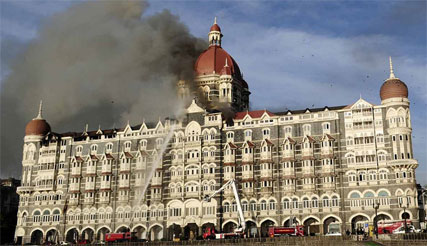
(BURNING OF TAJ;ATTACK ON INDIAN PSYCHE)

The Ministry of Home Affairs (MHA) is all set to implement a Standard Operating Procedure (SOP) for tackling terrorists’ crimes and attacks in the country from 31st May of this year.

This SOP has been prepared after 100 days exercise by a group of experts in security matters set up by the MHA after the fiasco of tackling the Mumbai attacks on 26/11 last year. The manner, in which the whole operation was carried out, exposed the lack of proper coordination amongst the security agencies and also witnessed almost total collapse of command and control system, at least in the important initial phase of operation. 

The above Mumbai attacks and subsequent response by the Crisis Management Group in MHA was highly criticized in the media as well as in public domain especially on the point of delayed dispatch and airdropping of NSG Commandos to the site. There was a total confusion on the site of operation and the securities forces were at a loss on the point of taking commands.

In the above circumstances, the MHA had setup a group of experts which after long and arduous deliberations, prepared a Standard Operating Procedure (SOP) for the security agencies tackling the terrorist crimes. This SOP contains list of does and don’ts, it would be followed by all concerned central and state security agencies as well as the external and internal intelligence agencies like I.B. and R.A.W. 
It is pertinent to mention here that the central as well as state security agencies do have the list of does and don’ts and SOP for Anti-Naxal operations.
This is the third important decision in the MHA after Mumbai attacks, first and second being establishment of National Investigation Agency (NIA) and amendment to the Unlawful Activities (Prevention) Act, 1967 respetively. Many experts in security and strategic matters believe that clear cut command and control mechanism and zero response time are the keys to success in tackling terrorist attacks. The kind of reflex in the rescue team which the entire world watched when a passenger plane had to make an emergency landing in the Hudson river in USA set an example for many countries including India. We, over a period of time, have created a plethora of security and intelligence agencies, but failed to evolve a scientific, coordinated and coherent system of command and controll. When tragedy occurs, the agencies bestowed on the responsibilities to carry our operations, get themselves at a loss, They usually take more than required time to respond. The recent incidents of narrow escape of President's helicopter at Mumbai air port during the visit was another example of lack of coordinationa command and control mechanism in some areas, which is matter of grave concern. Hopefully, this SOP would be able to eliminate or atleast minimise the chances of such fiasco which we unfortunately watched and experienced during Mumbai attacks.
Discussions are also going to amend the rules related to Media also, so that the entire area, where the operation is to carried out, could be cordoned off. During the Mumbai attacks, some of the electronic media (TV channels) acted in a most irresponsible manner and telecasted live the operation of the securities forces. This has proved disastrous in terms of relayed information to the terrorists inside the hotel as well as their masterminds stationed somewhere else. The amendment in the existing law will enable security agencies to disallow such things to occur.

Friday, February 27, 2009

NEW ERA TO USHER IN JAMMU & KASHMIR


ERA OF NEW HORIZON AND NEW HOPES WAIT TO USHER IN IN JAMMU AND KASHMIR

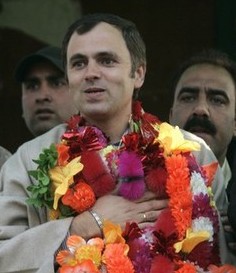
Omar Abdullah has hinted to repeal J&K Disturbed areas Act,1992 and Armed forces (special powers)Act 1958 very soon. It is pertinent to note that both these laws were enacted in order to tackle the terrorist activities in this disturbed state.

The successful election in the state in terms of high voters turn out and lesser incidents of violence have changed the political and social mileu in the state and has instilled confidence in the 'strathclyde scotland educated' and youngest CM, who in turn wants to fulfill the promises he had made to the people during his election campaign.

It should be noted that the above two laws are enacted by the Parliament, but the state govt can repeal it under the powers conferred to it vide Article 370 of the Indian Constitution and article 246(schedule-7 state list) of the constitution which gives state almost exclusive powers to the state govt in matters related to law and order.

Since these two laws give ample powers to the security forces with respect to arrests, search and firing, many human rights activists and political parties also call these laws 'draconian' and have been demanding their repeal since its enactment and application.

The withdrawal of these laws will certainly help win the good will and confidence of the people which have fast depleted over few years. But on the other hand ,it will curtail the powers of the security forces in dealing with the terrorists, which may hamper the peace process to further and normalcy to return.

Some experts in security matters are however of the opinion that constitution of National Investigationg Agency and amendment to Unlawful activities( prevention)
Act 1967 have rendered J&K Disturbed areas Act, 1992 and Armed forces (special powers)Act 1958 useless because the aforesaid law(Unlawful activities( prevention) Act 1967) and NIA are able to tackle the terrorists activities in far more effective and scientific manner.

By doing so the government can send a message of good will and kind gesture to the people of this state at large, now it is up to them to reciprocate in the same fashion.

It should be bone in mind that the local people irrespective of political affiliations have been highly critical of these, what they call'draconian and anti- kashmiri laws', therefore its repealment would usher in an era of new horizon and new hopes. This opportunity could be used to fill confidence and restore peace here in the valley,

Hopefully this step would also help in restoring peace in this strife torn territory of the Indian republic. Paksitan must also share the good gesture and reciprocate because playing with fire burns your own hands too, history has given us this lesson. All what is happening in Pakistan including in swat valley of FATA and elsewhere in this country are the fruits pakistan have sown over the years.

Tuesday, February 17, 2009

GOVERNMENT GOES TOUGH ON CORRUPTION


HARBINGER OF HOPES IN THE TATTERED STATE

Site Meter


Government of Bihar is coming out with a comprehensive legislation to confiscate assets of the public servants against whom case (s) of ‘Disproportionate Assets’ have been filed and charge-sheets have been submitted in the court of law. A bill in this regard is likely to be tabled in the forthcoming budget session of the State Legislative assembly itself.

While speaking on a seminar organised by DFID, the CM reiterated his commitment to weed out corruption from governance and hinted at this move. He has geared up the vigilance sleuths in the state and the number of trap cases by the state vigilance bureau has increased many folds. As many as 60 trap case with 68 arrests in 2006, 29 trap cases with 37 arrests in 2007, more than 60 trap case with 70 arrests in 2008 and 7 trap cases with equal number of arrests have been made in 2009. Subsequently cases of Disproportionate Assets are launched but thanks to the slow pace of trial a very few could actually be convicted. Apart from this bureau, one Special Vigilance Unit (SVU) has been set up to take anti- corruption measures against high officials. This Unit has also made some headway with respect to recover huge amount of wealth from the possession of officials including several IAS and IPS officers. Their assets could not be confiscate due to non-availability of any specific law in this regard. To sort out this problem, special courts are to be set up and speedy trial would be started, hinted the sources at the state secretariat.

On the other hand, rules are also likely to be amended and the power of making appointments of Teachers would be snatched from the Panchayats and ULBs representatives very soon. The CM received innumerable complaints of corruption and nepotism during his Vikas Yatras against the Local representatives especially Mukhiyas of the Panchayats. Two years back, the CM had formulated the policy of appointment of Teachers (Bihar Panchayat and Nagar Nikaya shikshak niukti niyamabali’) by Panchayati Raj and ULBs representatives with a utopian idea of devolution of powers to lower level of functionaries as enshrined in the constitution. But this effort has failed miserably due to rampant corruption in the panchayati raj and ULBs institutions. Many academicians are of the opinion that the qualities of the ‘appointed teachers under this scheme’ are hopelessly poor because it is based on ‘counselling’ and not on ‘tests’, which has given ample opportunities to the representatives to play foul in this game. This has adversely affected the qualities of primary education, many people lament.

Wednesday, February 11, 2009

CABINET IN VILLAGE;BIHAR CREATES HISTORY IN GOVERNANCE

GOVERNANCE AT THE DOOR STEP; WILL IT DELIVER?

Nitish Kumar, the CM of Bihar created history on10th February, 2009 when he chaired a full-fledged cabinet meeting in Barbighi village of Begusarai district. The entire ministers of his cabinet as well as important and concerned secretaries/Principal secretaries were also present in the village. This is the first cabinet meeting ever held in any village in India. Nitish Kumar is known for his innovative and self styled functioning. Few days back he had launched one “Vikash Yatra” in which he along with his ministers and officials stay at night in tents in village itself and take stock of feedbacks of the people vis-a-vis performance of his govt.
Raffled by his growing popularity, the opposition rebukes him of being extravagant and making futile expenditure of public money on what they call ‘political gimmicks’ and settling political agenda.
He is killing two birds with a single stone in the sense that on the one hand he is campaigning for the ensuing parliamentary election and on the other reviewing the on-going developmental projects and schemes across the state that too on govt expenditure.
Yesterday in the Cabinet meeting held at the village, he took several decisions like upgrading 1350 High Schools into intermediate college, approving 30.54 crore for panchyat building in naxal affected districts, purchasing vehicles for police and conferment of Nagar Parishad status to Hilsa Nagar panchyat.
A large number of people are turning to these Vikas yatras with litany of their complaints regarding various problems.
The people are levelling serious charges of corruption not only against Mukhiyas, Local officials, police but against the MLAs also. It is, however, not known that to what extent the CM would act against those against whom complaints are being levelled because many of them are allegedly said to be close to ruling parties. The CM, nevertheless say that the law would takes its own course. He seems, as per his unrelenting records,not ready to bow down before any one whosoever comes in his way of his much publisized ' susashan'.

Friday, January 30, 2009

BIHAR GETS GOLD IN E-GOVERNANCE ON ' JANKARI' CALL CENTRE


Bihar govt gets e-governance award for its noble initiative of setting up call centre on Right to Information ‘Jankari’
Bihar govt’s initiative for giving free access to citizens, the information through call centre ‘ jankari’ has started bearing fruits as it has been selected for being awarded as ‘National award’ in e-governance for the year 2008-09 by Union govt (DoPT). This award would be conferred on it in a function scheduled to be held in Goa on 12-13 February, 2009.
Giving this information in Patna, IT secretary, C.K.Misra said that the establishment of ‘Jankari’, the call centre for giving information to the information seeker under the provisions of RTI Act,2005 has been widely appreciated across the Nation. Giving details, he said that any Indian National can receive information just by dialling a toll free number in the call centre and after a brief formality, the information seeker would get the information just by paying Rs/-10 as the cost. In 2008, about 16,000 calls were received by this call centre Misra added.
But so far as computerisation of other departments is concerned, it is not moving at desired pace. The target of making Finance department a paperless one by the end of 31 March, 2008 could not be achieved. The introduction of Sec-LAN in the state’ secretariat is yet to come in practise and babus still rely on tiring hard copy file work.
It is pertinent to mention here that Sonia Gandhi, the chairperson of UPA had praised this move and had advised all the CMs of cong ruled states to take similar steps so that the ideals and ethos enshrined in the noble RTI Act,2005 are achieved.

TASKS AHEAD- The commission has miles to go before it could achieve the noble and lofty ideals enshrined in this people centric Act. The State Information Commission has to be debureaucratised, because it has become a post retirement placement bureau. The funcioning of this commission has to be made more people friendly, because if visits this commission, he gets a vestige of Courts room discipline, total undesirable and uncongenial. 

INFORMATION COMMISSION VS COURTS- One can draw a comparison between America and India. On the one hand Obama voluntarily signed an executive order making it mandatory for the US administration to make accessible all the documents pertaining policy decisons and any other decison to the public domain. Whereas in India, the Supreme court itself makes an appeal before its subordinate Delhi High court against the order of the CIC, what a paradox. It is easy preach than done. CJI says that the provisions of the RTI are not applicable to the Judges because they, what he said, are constitutional authority. The people sitting at the higher echelon should set examples in the public life. They should have the audacity to abide voluntarily to the provisions of the law of land.

Tuesday, January 13, 2009

THE NATIONAL INVESTIGATION AGENCY


The Mumbai attack by international terrorist organisations shook the psyche of every Indian including the political leaders.The kind of public outcry which erupted was unprecedented both in terms of number and intensity. The Govt lost no time and threw away the wardrob boy, Home Minister quickly and undertook a number of measures. It included establishment of much talked and needed Federal Investigating Agency with more sharp incisors and canine in the Jaws. It is in this perspective, the Parliament has passed the NIA bill and thus the NIA came into being. Simultaneously the Unlawful Activities (Prevention) Amendment Bill was also passed. It gives extra leverage to the law enforcing agencies in dealing with the acts of terror and related organised crime and low intensitly war which is going on for more than decades after the Indo- Pakistan war of 1971. 

HERE IS THE TEXT OF THE ACT WHICH THE PARLIAMENT HAS PASSED-

THE NATIONAL INVESTIGATION AGENCY ACT, 2008
CHAPTER I

PRELIMINARY

1. (1) This Act may be called the National Investigation Agency Act, 2008.
(2) It extends to the whole of India and it applies also—
(a) to citizens of India outside India;
(b) to persons in the service of the Government wherever they may be; and
(c) to persons on ships and aircrafts registered in India wherever they may be.


2. (1) In this Act, unless the context otherwise requires,—
(a) “Agency” means the National Investigation Agency constituted under section 3 ;
(b) “Code” means the Code of Criminal Procedure 1973;
(c) “High Court” means the High Court within whose jurisdiction the Special Court is situated;
(d) “prescribed” means prescribed by rules;
(e) “Public Prosecutor” means a Public Prosecutor or an Additional Public Prosecutor or a Special Public Prosecutor appointed under section 15;
(f) “Schedule” means Schedule to this Act;
(g) “Scheduled Offence” means an offence specified in the Schedule;
(h) “Special Court” means a Special Court constituted under section 11 or, as the
case may be, under section 21;
(i) words and expressions used but not defined in this Act and defined in the Code shall have the meanings respectively assigned to them in the Code.

(2) Any reference in this Act to any enactment or any provision thereof shall, in
relation to an area in which such enactment or such provision is not in force, be construed as a reference to the corresponding law or the relevant provision of the corresponding law, if any, in force in that area.

CHAPTER II

NATIONAL INVESTIGATION AGENCY
3. (1) Notwithstanding anything in the Police Act, 1861, the Central Government mayconstitute a special agency to be called the National Investigation Agency for investigation and prosecution of offences under the Acts specified in the Schedule.

(2) Subject to any orders which the Central Government may make in this behalf,officers of the Agency shall have throughout India in relation to the investigation of scheduled offences and arrest of persons concerned in such offences, all the powers, duties, privileges and liabilities which police officers have in connection with the investigation of offences committed therein.

(3) Any officer of the Agency of or above the rank of Sub-Inspector may, subject to any orders which the Central Government may make in this behalf, exercise throughout India, any of the powers of the officer-in-charge of a police station in the area in which he is present for the time being and when so exercising such powers shall, subject to any such orders as aforesaid, be deemed to be an officer-in-charge of a police station discharging the functions of such an officer within the limits of his station.

4. (1) The superintendence of the Agency shall vest in the Central Government.
(2) The administration of the Agency shall vest in an officer designated as the Director-General appointed in this behalf by the Central Government who shall exercise in respect of the Agency such of the powers exercisable by a Director-General of Police in respect of the police force in a State, as the Central Government may specify in this behalf.

5. Subject to the provisions of this Act, the Agency shall be constituted in such
manner as may be prescribed and the conditions of service of persons employed in the
Agency shall be such as may be prescribed.

Definitions.
Constitution of National Investigation Agency.
5 of 1861.
Superintendence of National investigation Agency.
Manner of constitution of Agency and conditions of service of members.
2 of 1974.

CHAPTER III

INVESTIGATION BY THE NATIONAL INVESTIGATION AGENCY

6. (1) On receipt of information and recording thereof under section 154 of the Code
relating to any Scheduled Offence the officer-in-charge of the police station shall forward the report to the State Government forthwith.

(2) On receipt of the report under sub-section (1), the State Government shall forward the report to the Central Government as expeditiously as possible.

(3) On receipt of report from the State Government, the Central Government shall
determine on the basis of information made available by the State Government or received from other sources, within fifteen days from the date of receipt of the report, whether the offence is a Scheduled Offence or not and also whether, having regard to the gravity of the offence and other relevant factors, it is a fit case to be investigated by the Agency.

(4) Where the Central Government is of the opinion that the offence is a Scheduled
Offence and it is a fit case to be investigated by the Agency, it shall direct the Agency to investigate the said offence.

(5) Notwithstanding anything contained in this section, if the Central Government is
of the opinion that a Scheduled Offence has been committed which is required to be
investigated under this Act, it may, suo motu, direct the Agency to investigate the said offence.

(6) Where any direction has been given under sub-section (4) or sub-section (5), the
State Government and any police officer of the State Government investigating the offence shall not proceed with the investigation and shall forthwith transmit the relevant documents and records to the Agency.

(7) For the removal of doubts, it is hereby declared that till the Agency takes up the investigation of the case it shall be the duty of the officer-in-charge of the police station to continue the investigation.

7. While investigating any offence under this Act, the Agency, having regard to the
gravity of the offence and other relevant factors, may—
(a) if it is expedient to do so, request the State Government to associate itself
with the investigation; or
(b) with the previous approval of the Central Government transfer the case to the
State Government for investigation and trial of the offence.

8. While investigating any Scheduled Offence the Agency may also investigate any
other offence which the accused is alleged to have committed if the offence is connected with the Scheduled Offence.

9. The State Government shall extend all assistance and co-operation to the Agency
for investigation of the Scheduled Offences.
10. Save as otherwise provided in this Act, nothing contained in this Act shall affect the powers of the State Government to investigate and prosecute any Scheduled Offence or other offences under any law for the time being in force.

Investigation of Scheduled Offences. Power to transfer investigation to State Government. Power to investigate connected offences. State Government to extend assistance to National Investigation Agency. Power of State Government to investigate Scheduled Offences.

CHAPTER IV
SPECIAL COURTS

11. (1) The Central Government shall by notification in the Official Gazette, for the trial of Scheduled Offences, constitute one or more Special Courts for such area or areas, or for such case or class or group of cases, as may be specified in the notification.

(2) Where any question arises as to the jurisdiction of any Special Court, it shall be referred to the Central Government whose decision in the matter shall be final.

(3) A Special Court shall be presided over by a judge to be appointed by the Central
Government on the recommendation of the Chief Justice of the High Court.

(4) The Agency may make an application to the Chief Justice of the High Court for
appointment of a Judge to preside over the Special Court .

(5) On receipt of an application under sub-section (4), the Chief Justice shall, as soon as possible and not later than seven days, recommend the name of a judge for being appointed to preside over the Special Court.

(6) The Central Government may, if required, appoint an additional judge or additional judges to the Special Court, on the recommendation of the Chief Justice of the High Court.

(7) A person shall not be qualified for appointment as a judge or an additional judge of a Special Court unless he is, immediately before such appointment, a Sessions Judge or an Additional Sessions Judge in any State.

(8) For the removal of doubts, it is hereby provided that the attainment by a person
appointed as a judge or an additional judge of a Special Court of the age of superannuation under the rules applicable to him in the service to which he belongs shall not affect his continuance as such judge or additional judge and the Central Government may by order direct that he shall continue as judge until a specified date or until completion of the trial of the case or cases before him as may be specified in that order.

(9) Where any additional judge or additional judges is or are appointed in a Special
Court, the judge of the Special Court may, from time to time, by general or special order, in writing, provide for the distribution of business of the Special Court among all judges including himself and the additional judge or additional judges and also for the disposal of urgent business in the event of his absence or the absence of any additional judge.

12. A Special Court may, on its own motion, or on an application made by the Public
Prosecutor and if it considers it expedient or desirable so to do, sit for any of its proceedings at any place other than its ordinary place of sitting.

13. (1) Notwithstanding anything contained in the Code, every Scheduled Offence
investigated by the Agency shall be tried only by the Special Court within whose local jurisdiction it was committed.

(2) If, having regard to the exigencies of the situation prevailing in a State if,—
(a) it is not possible to have a fair, impartial or speedy trial; or 
(b) it is not feasible to have the trial without occasioning the breach of peace or
grave risk to the safety of the accused, the witnesses, the Public Prosecutor or a judge of the Special Court or any of them; or

(c) it is not otherwise in the interests of justice,the Supreme Court may transfer any case pending before a Special Court to any other Special Court within that State or in any other State and the High Court may transfer any case pending before a Special Court situated in that State to any other Special Court within the State.

Power of Central Government to constitute Special Courts. Place of sitting. 
Jurisdiction of Special Courts.

(3) The Supreme Court or the High Court, as the case may be, may act under this
section either on the application of the Central Government or a party interested and any such application shall be made by motion, which shall, except when the applicant is the Attorney-General for India, be supported by an affidavit or affirmation.

14.(1) When trying any offence, a Special Court may also try any other offence with
which the accused may, under the Code, be charged at the same trial if the offence is connected with such other offence.

(2) If, in the course of any trial under this Act of any offence, it is found that the accused person has committed any other offence under this Act or under any other law, the Special Court may convict such person of such other offence and pass any sentence or award punishment authorised by this Act or, as the case may be, under such other law.

15.(1) The Central Government shall appoint a person to be the Public Prosecutor and
may appoint one or more persons to be the Additional Public Prosecutor or Additional 
Public Prosecutors:Provided that the Central Government may also appoint for any case or class or group of cases a Special Public Prosecutor.

(2) A person shall not be qualified to be appointed as a Public Prosecutor or an Additional Public Prosecutor or a Special Public Prosecutor under this section unless he has been in practice as an Advocate for not less than seven years or has held any post, for a period of not less than seven years, under the Union or a State, requiring special knowledge of law.

(3) Every person appointed as a Public Prosecutor or an Additional Public Prosecutor
or a Special Public Prosecutor under this section shall be deemed to be a Public Prosecutor within the meaning of clause (u) of section 2 of the Code, and the provisions of the Code shall have effect accordingly.

16. (1) A Special Court may take cognizance of any offence, without the accused being
committed to it for trial, upon receiving a complaint of facts that constitute such offence or upon a police report of such facts.

(2) Where an offence triable by a Special Court is punishable with imprisonment for a
term not exceeding three years or with fine or with both, the Special Court may, notwithstanding anything contained in sub-section (1) of section 260 or section 262 of the Code, try the offence in a summary way in accordance with the procedure prescribed in the Code and the provisions of sections 263 to 265 of the Code, shall so far as may be, apply to such trial: Provided that when, in the course of a summary trial under this sub-section, it appears to the Special Court that the nature of the case is such that it is not desirable to try it in a summary way, the Special Court shall recall any witnesses who may have been examined and proceed to re-hear the case in the manner provided by the provisions of the Code for the trial of such offence and the said provisions shall apply to and in relation to a Special Court as they apply to and in relation to a Magistrate: Provided further that in the case of any conviction in a summary trial under this section, it shall be lawful for a Special Court to pass a sentence of imprisonment for a term not exceeding one year and with fine which may extend to five lakh rupees. 

(3) Subject to the other provisions of this Act, a Special Court shall, for the purpose of trial of any offence, have all the powers of a Court of Session and shall try such offence as if it were a Court of Session so far as may be in accordance with the procedure prescribed in the Code for the trial before a Court of Session.

(4) Subject to the other provisions of this Act, every case transferred to a Special Court under sub-section (2) of section 13 shall be dealt with as if such case had been transferred under section 406 of the Code to such Special Court.Powers of Special Courts with respect to other offences.

Public Prosecutors.Procedure and powers of Special Courts.

(5) Notwithstanding anything contained in the Code, but subject to the provisions of
section 299 of the Code, a Special Court may, if it thinks fit and for reasons to be recorded by it, proceed with the trial in the absence of the accused or his pleader and record the evidence of any witness, subject to the right of the accused to recall the witness for cross-examination. 

17. (1) Notwithstanding anything contained in the Code, the proceedings under this
Act may, for reasons to be recorded in writing, be held in camera if the Special Court so desires. 

(2) On an application made by a witness in any proceeding before it or by the
Public Prosecutor in relation to such witness or on its own motion, if the Special Court is satisfied that the life of such witness is in danger, it may, for reasons to be recorded in writing, take such measures as it deems fit for keeping the identity and address of such witness secret.

(3) In particular, and without prejudice to the generality of the provisions of subsection 
(2), the measures which a Special Court may take under that sub-section may include—
(a) the holding of the proceedings at a place to be decided by the Special Court;
(b) the avoiding of the mention of the names and addresses of the witnesses in
its orders or judgments or in any records of the case accessible to public;
(c) the issuing of any directions for securing that the identity and address of the
witnesses are not disclosed; 
(d) a decision that it is in the public interest to order that all or any of the
proceedings pending before such a Court shall not be published in any manner.

(4) Any person who contravenes any decision or direction issued under sub-section(3) shall be punishable with imprisonment for a term which may extend to three years and
with fine which may extend to one thousand rupees.

18. The trial under this Act of any offence by a Special Court shall be held on day-today basis on all working days and have precedence over the trial of any other case against the accused in any other court (not being a Special Court) and shall be concluded in preference to the trial of such other case and accordingly the trial of such other case shall, if necessary, remain in abeyance.

19. Where, after taking cognizance of any offence, a Special Court is of the opinion
that the offence is not triable by it, it shall, notwithstanding that it has no jurisdiction to try such offence, transfer the case for the trial of such offence to any court having jurisdiction under the Code and the Court to which the case is ransferred may proceed with the trial of the offence as if it had taken cognizance of the offence.

20. (1) Notwithstanding anything contained in the Code, an appeal shall lie from any
judgment, sentence or order, not being an interlocutory order, of a Special Court to the High Court both on facts and on law.

(2) Every appeal under sub-section (1) shall be heard by a bench of two Judges of the
High Court and shall, as far as possible, be disposed of within a period of three months from the date of admission of the appeal.

(3) Except as aforesaid, no appeal or revision shall lie to any court from any judgment,sentence or order including an interlocutory order of a Special Court.

(4) Notwithstanding anything contained in sub-section (3) of section 378 of the Code,
an appeal shall lie to the High Court against an order of the Special Court granting or refusing bail.

(5) Every appeal under this section shall be preferred within a period of thirty days
from the date of the judgment, sentence or order appealed from:
Protection of witnesses. Trial by Special Court to have precedence.
Power to transfer cases to regular courts.

Appeals.

Provided that the High Court may entertain an appeal after the expiry of the said
period of thirty days if it is satisfied that the appellant had sufficient cause for not preferring the appeal within the period of thirty days:Provided further that no appeal shall be entertained after the expiry of ninety days.

21. (1) The State Government may constitute one or more Special Courts for the trial of offences under any or all the enactments specified in the Schedule.

(2) The provisions of this Chapter shall apply to the Special Courts constituted by the State Government under sub-section (1) and shall have effect subject to the following modifications, namely—
(i) references to “Central Government” in sections 11 and 15 shall be construed
as references to State Government;

(ii) reference to “Agency” in sub-section (1) of section 13 shall be construed as
a reference to the “investigation agency of the State Government”;

(iii) reference to “Attorney-General for India” in sub-section (3) of section 13
shall be construed as reference to “Advocate-General of the State”.

(3) The jurisdiction conferred by this Act on a Special Court shall, until a Special Court is constituted by the State Government under sub-section (1) in the case of any offence punishable under this Act, notwithstanding anything contained in the Code, be exercised by the Court of Session of the division in which such offence has been committed and it shall have all the powers and follow the procedure provided under this Chapter.

(4) On and from the date when the Special Court is constituted by the State Government the trial of any offence investigated by the State Government under the provisions of this Act, which would have been required to be held before the Special Court, shall stand transferred to that Court on the date on which it is constituted.

CHAPTER V
MISCELLANEOUS

22. The High Court may, by notification in the Official Gazette, make such rules, as it may deem necessary for carrying out the provisions of this Act relating to Special Courts within its territory.

23. (1) If any difficulty arises in giving effect to the provisions of this Act, the Central Government may, by order published in the Official Gazette make such provisions, not inconsistent with the provisions of this Act, as may appear to it to be necessary or expedient for removing the difficulty:Provided that no order shall be made, under this section after the expiration of two years from the commencement of this Act.

(2) Every order made under this section shall be laid, as soon as may be after it is made, before each House of Parliament.

24. (1) The Central Government may, by notification in the official Gazette, make rules for carrying out the provisions of this Act.

(2) In particular, and without prejudice to the generality to the foregoing power, such rules may provide for all or any of the following matters, namely:—

(a) the manner of constitution of the Agency and the conditions of service of
persons employed in the Agency under section 5; Power of State Government to institute Special Courts. Power of High Courts to make rules.
Power to remove difficulties.
Power to make rules.

(b) any other matter which is required to be, or may be, prescribed.

25. Every rule made by the Central Government under this Act shall be laid, as soon as may be after it is made, before each House of Parliament, while it is in session, for a total period of thirty days which may be comprised in one session or in two or more successive sessions, and if, before the expiry of the session immediately following the session or the successive sessions aforesaid, both Houses agrees in making any modification in the rule or both Houses agree that the rule should not be made, the rule shall thereafter have effect only in such modified form or be of no effect, as the case may be; so, however, that any such modification or annulment shall be without prejudice to the validity of anything previously done under that rule.

Laying of rules.

THE SCHEDULE
[See section 2(1)(f)]

बिहार में स्ट्राइक; कितना उचित?


THE indefinite strike of Non-gazetted employees (NGE) of the state govt entered 7th day today. All efforts of the govt so far has failed to yield any positive results and all the govt offices right from state secretariat to block look deserted. Strike sponsored by Bihar State Non-Gazetted Employees Federation (BSNGEF),(BSNGEF) Gope group, Bihar State Secretariat Services Association (BSSA) and a host of similar organisations began on 7th January has brought the state’s machinery to a grinding halt.

Majority of the departments are already lagging behind the target in spending the ‘Plan head’ allotment. In fact, up to 31st October, average percentage of expenditure in ‘Plan head’ is only 31.91%. Some of the key departments like IT, Commercial taxes, sugar cane transport and Excise have failed to make any expenditure and it is hopelessly zero percent. The ongoing strike has made the task of achieving target by end of this fiscal, almost impossible.
Some people say that had the govt formed ‘fitment committee’ somewhere in sep-October of the previous month; this strike could have been averted. The outspoken ministers issued statements in the press that the govt is willing to announce 6th pay panel on the eve of dussehra but the govt did not announce anything even in the last week of December, therefore the employees got impatient.

On the other hand the govt is in tight financial position. According to the state govt’s budget estimate, state’s own revenue generation for current fiscal is 5680.71 crore, whereas; the state’s share in central taxes is 19094.31 crores. The govt’s plan expenditure is 135000 crore (it includes central grants and central sponsored schemes also). The govt has to make about Rs/-8000 crore expenditure on pay and 2000 crores on pension.

The govt has already accepted to pay the employees according to 6th pay panel report, which would add about 30% to the state’s coffer increasing the expenditure by about 3000 crore annually.

The present hitch is about the payment of arrears. The govt wants to give it from 1st April, 2007, whereas; the agitating employees demand it from 1st January, 2006. If the govt accepts this demand, it would have to make an additional about 2000 crore payment. Thus the govt will be left with a very meagre amount for the developmental as well as other plan and non-plan expenditure for the state.
Some senior officer on the condition of anonymity said that had IAS, IPS and IFS officers not taken their arrears from 1st January, 2006, the NGE unions would have not resorted to strikes, because the leaders of the NGE say that if the state’s coffer is not in a happy position, why did Babus take arrears from 1st January, 2006. They further say that if these babus refund the arrears, they would call off their strikes.
WHAT GOVERNMENT SHOULD DO
The government must come up with a transparent and lucid statement before the public at large and should tell them what the govt is doing. The IAS and IPS and other all India class I officer should voluntarily eschew their claim of arrears from January the 1st,2006, and tell the govt to re-fund back their payment. This would give a very good signal to the denizens of the state. It apparently looks discriminatory if they withdraw arrears from January 2006 and ask other to do the same from April,2007. We all know that the state is under tremendous financial constrainsts. On the one hand the millions of people are half fed and we demand for extra. Is it fair. We all should contribute to the economic development of the state. The CM is desperately trying to move things in good direction, we all , therefore should help him in this effort

WHO FIGHTING FOR ITS EXISTENCE: WILL IT TRIGGER NEW ERA OF CONFLICT? Politics and lust for power are not endemic of India only...