Showing posts with label judiciary. Show all posts

Thursday, June 11, 2009

REFORMS CIVIL SERVICES; NEED OF HOUR

PRODUCING CIVIL SERVANTS OR PUBLIC SERVANTS ?
Central Civil Services in India is all set to become ebonite coated so that it is insulated from undue political interference as a bill in this regard is likely to be tabled in this session of Parliament itself. Reforms in Central Civil Services have been on the government’s priorities. In fact an Administrative Reforms Commission (ARC) had been constituted under Veerappa Moily to look into the entire gamut and recommend reforms in administration. Selection of new DGPs and Chief Secretaries by new government at State has always been a matter of debate. Similarly appointments of key functionaries at Centre like Cabinet Secretary, Home Secretary and Principal Secretary to PM by govt have also been under scanner of opposition. Need has been felt for few years to evolve a transparent and an institutional system in such appointments. The proposed legislation is perhaps aimed at addressing these core issues.
Proposed Bill is bound to trigger a National debate because Civil Service, in spite of Liberalisation, Privatisation and Globalisation (LPG), has still been embedded into the socio-economic, political and almost every walk of life with varied degree of penetration.
Government said it would bring a Bill just after the Budget. The proposed Bill seeks to constitute Central Civil Services Authority (CCSA) consisting of 3-5 members headed by a Chairman who would be selected by a committee of PM, Judge of Supreme Court, and leader of opposition in Lok Sabha. The Chairman would be placed at par with Chief Election Commission (CEC), that means his mode of appointment, service conditions, tenure and procedure of removal etc will be similar to that of CEC.
Many State governments have raised voices of concerns on the pretext of, what they call undue interference of Union Government in State’s matters. It is a scathing attack on, what they call, on the federal structure of government as enshrined in the Constitution. States are particularly averse to the provision in which consent of leader of opposition in matters of appointments of DGP and CS would be must. However one can hardly deny the fact that Civil Services in India do require some sort of overhauling and revamping in view of changing socio-economic, politico-administrative and global milieu.
Civil Service in India is a British legacy and still continue to exist with least metamorphosis. In fact posts of Collectors were created as early as in 1773 itself by the British. The Regulating Act of 1773, which was perhaps the first legislation of British in India to extend, consolidate and institutionalise British Raj created these posts. But it is only from 1853 when Civil Servants began to be selected through a competitive examination in which Indians were deprived from appearing into. Post of Divisional Commissioners (DC) and Sub-divisional Officers (SDO) were later created by governor general Lord William Bentick to lessen enormous powers of Collectors. Even after Independence this structure remained so strong that even Nehru called ICS as steel frame of India.
This steel frame work of India now requires anti-corrosion treatment to make it more resilient and vibrant so that it can suit and adapt according to the needs of our people. The PM has taken the initiative, but a lot of other provisions are required to be made to rejuvenate, revitalise and renovate this institution. The indolent and battered bureaucracy is urgently required undergo some drastic changes keeping in mind the contemporary socio-economic and politico- administrative situation of country. We have to ruthlessly trash vestiges from this structure, which is eating up vitals of our system, without fear and affection. Bureaucracy has become inured to miseries of people, therefore it has to be sensitised. We must not forget that there is an intense rancour in masses against the indifferent, lackesaidial and insensible approach of most of civil servants in our country.
The proposed move is plausible, but only cosmetic surgery and its insulation from political interference would not do। Here are some changes would should be made to make Civil Services more sensible, vibrant, accommodative, responsive, responsible and public servant rather than govt servant.

1. The entry into Central Civil Services should be from intermediate level rather than graduation। It would help diminish the chances of entry of huge number of engineers, doctors and professionals including from IITs, IIMs. Civil Services are generalist job and Civil Servants from engineers and doctors community virtually have no use of their studies in this career. Moreover technical education in our country is still highly subsidised and public money is spent on them and in a way when these students enter into Civil Services, the cost incurred on them by government goes futile. It is therefore prudent to discourage such entries. By making Intermediate as entry level into Central Civil Services we can help eradicate this trend.

2. Period in field posting should be enhanced and the officers especially IAS and IPS should have longer years in fields on sub ordinate posts. At present IAS and IPS become DMs and SPs within 3-4 years time and therefore have little experience in grass root level problems. We should not forget that we are not producing Corporate Managers in UPSC; rather we are producing public servants. Longer duration in fields especially in rural areas would enable them to understand Bharat i.e. rural India in much big and better way. IPS officers become SP even less than one year. Thus the posting profile should undergo structural and functional change to make them understand the problem in bigger way.

3. Concept of fixed term is a welcome idea, but it should not be linked with extensions। In fact the very practise of giving extensions to favourite officers has lured the Civil Servants to do act of favouritism in order to win over their political masters. At the same time it discourages officers of next junior batch because it mars their chances of coming to top posts. For instance if the serving Chief Secretary, Cabinet Secretary or Home Secretary is given extension, the just junior batch officer will be left with no motivation because by the time the officers whose service has been extended would retire, the most of the officers of just junior batch would also retire. The fact of the matter is that the practise of giving extensions have helped germination of resentment and created aberrations also. This practise should therefore be discontinued immediately.

4. These days post retirement assignments are being offered to most of the top bureaucrats। Many retired IAS especially at secretary level in govt of India get assignments immediately after their retirement. Post of CEC, CIC, Member Planning commission, Advisors in different ministries, RBI governor, governors of states, and a host of such posts almost invariably go to retired Civil Servants. There is no denying the fact that officers of huge administrative experience should be tapped for country’s welfare, but such trend helps develop tendency and chances of nepotism, favouritism and other such ‘ism’ which in long run are detrimental and deleterious for our politico-administrative tapestry. Provisions should therefore be made that no officer shall be given post retirement assignment before three years after their retirement. Not only that persons retiring from posts like Judge, CEC, CIC, governor etc should not be given any post whatsoever because it is affecting the system very adversely.

It is happy to see that Civil Services are being insulated from political interference but at the same time it should also be ensured that such immunities are utilised for good of democracy, federalism, welfarism and politico-administrative structure rather than protecting non-performance and lobbyism. Merely providing security in term and conditions may make them more obstinate and non-performing because they still have enough protection in Constitution (Article 311).

Saturday, March 7, 2009

WHO WILL BRING THE LAWYERS TO AMBIT OFLAW?

                                     WHO WILL WATCH THE WATCH DOG?

The unprecedented acts of hooliganism and vandalism done by a group of lawyers of the Madras High court in the court premises itself has raised the issue that as Policing the Police is becoming gradually difficult, similarly bringing lawyers to the ambit of law is becoming an arduous task.

The lawyers were protesting against an attempt by the police to arrest some accused in connection with a complaint lodged by Subramanyam Swami. The lawyers turned violent and started attacking the police. They set ablaze some vehicles parked in the campus. In a way the acts of violence provoked the police to resort to tough measures. Subsequently the Police also resorted to lathi charge and beat lawyers mercilessly.

The lawyers went on strike and demanded action against, what they call, the brutal actions of the police. The repeated requests by the Supreme Court to the lawyers to call off their strike went unheeded. The strike is still going on the process of law is severly hindered.

The apex court appointed one man panel to probe into this episode headed by retired SC Judge B.N.Srikrishna. The panel submitted its 22 page report to the court and was read out in the court by some senior advocates before the CJI.

The report has deplored and condemned the incident which took place on 19th February in the court premises of Madras HC. J.Srikrishna has termed the actions and behaviours of some of the advocates as ‘hooligans and miscreants’. The group of lawyers were behaving like unruly and rioting mob. It is shame on our judicial system and is an stigma on Judicial history of our country . Lawyers are the part and parcel of the entire criminal justice system and the courts cannot function without the participation of the advocates.

In recent times, a section of lawyers have formed an idea that they can take law in their hands and will go unscathed because they are under illusion that they are running the courts and the courts will not take action or allow any action to be taken against them. The report has rightly indicted the acting Chief Justice of Madras High Court because his infirm and indecisive attitude allowed the situation to go from bad to worse. 

Few days ago, similar incident, though of smaller magnitude and intensity took place inside the court room at Patna High Court. The Judge Mr. D.D. Jha was force to withdraw his order of making arrest of a lawyer for his act of contempt of the court. The said advocate shouted at the highest pitch and called all his companion lawyers. They started slogans inside the court room before the Judge and the Judge could not nothing accept left the chair helplessly and withdrew his order. Only few days before this incident, a section of lawyers and lawyer’s clerk raised slogans against the Chief Justice because the Chief Justice had issued one direction which necessitated the lawyers or the lawyers clerks to verify the stamps, they are furnishing with. This order was made in view of detection of a racket which had been using fake stamps inside the court itself. In this scam, the police said that the involvement of some advocates was allegedly possible. Any way the entire stalemate could only be resolved when this order was withdrawn.Such types of infirm and indecisive attitudes of the court have emboldened the lawyers who have started taking law in their hands.

Rising cases of so called judicial activism, according to some luminaries, are the root cause of such trends. The frequent physical appearance of senior police and civil officers in the courts due to orders of courts have left an impression that the lawyers can teach any officer a lesson if their dictates are not complied with.
Lawyer’s hooliganism and acts of vandalism have also been witnessed in Allahabad HC for more than one occasion. Few months back, a group of lawyers thrashed Pandher and Surendra Kohli, the accused of Nithari massacre, in the premises of Ghaziabad court. Such incidents are common place in our country and thus are a matter of serious concerns. Such types of infirm and indecisive attitudes of the court have emboldened the lawyers who have started taking law in their hands.

Honorable Supreme Court of India has ruled in the famous case of Praveen Bhai Togadi versus State of Karnataka that ‘COURTS SHOULD NOT NORMALLY INTERFERE WITH MATTERS RELATING TO LAW AND ORDER WHICH IS PRIMARILY THE DOMAIN OF THE CONCERNED ADMINISTRATIVE AUTHORITIES. THEY ARE BY AND LARGE THE BEST TO ASSESS AND TO KNOWLEDGE. THE COURT CANNOT IN SUCH MATTERS SUBSTITUTE ITS VIEW FOR THAT OF THE COMPETENT AUTHORITY’{ AIR 2004 SC 2081;(2004)4 SCC 684}. In spite of this the trend of judicial activism in matters of enforcement of law and order continue to show upward direction. Justice Katju has several times has come down heavily against such trend and has preached the judiciary to do the real work of dispensation of justice rather than being swayed by public and media hype.


The report of Justice Shri Krishna has rightly sought the intervention of the apex court. The panel has also suggested framing of certain guide lines for the bar. In fact there is no rule whatsoever in this matter and it is the bar council which regulates the activities of the advocates in India. Bar Councils of states and Bar Council of India themselves are formed in accordance with section 3 and 4 ofAdvocates Act, 1961.Although this Act was amended in 2003, it fail to incorporate provisions therein to regulate the actions of the advocates. Thus at present these bar councils are the only bodies which gives certain broader guide lines to the lawyers, they are becoming ineffective.The bar councils sometimes succumbs to the pressures of the lawyers and thus they are finding themselves not in a position to tame the lawyers

The Parliament should, now come up to take up and tackle this dangerous trends which is spreading like a pandemic contagion in Indian Judiciary. The time has come to frame a strict, elaborate and comprehensive law is enacted in order to ensure that such ailment is cured, and cured forever.

Friday, March 6, 2009

ANOTHER JOLT FOR CENTRAL INFORMATION COMMISSION


                           WHO WILL ADJUDICATE THE JUSTICE?

Delhi High Court stayed the order of CIC on 4th March, 2009, in which the CIC had asked the govt to disclose all the concerned papers related to the appointment of Chief Justice of Himachal Pradesh High Court and make these papers available to the petitioner. The CIC had passed this order on January 19th this year and asked the central govt to disclose all the correspondence including the noting on that file which was returned by the then President APJ Abdul Kalam regarding the appointment of Jagdish Balla as the Chief Justice of Himachal Pradesh High Court in 2006.

It was only after the return of the concerned file by the then President, the matter came in controversy and the news of Bhalla's alleged involvement in some misconduct during his tenure as judge in Allahabad HC could came in public domain.

The order of the CIC in this regard was of much embarassement for the govt and the Central govt was quick to file an appeal before the HC at Delhi. This stayal is seen as a major relief for the govt but at the same time it is another jolt for the CIC as well as the activists who are fighting against secrecy and confidentiality in the establishement.

Technically speaking, there is no provision of an appeal against the order of the CIC and it is final as per section 19(7) of the RTI Act,2005. The aggrieved party may however, file Writs in HCs or SC as enshrined in the Constitution, on the grounds of infringement of Fundamental Rights. It is being observed, and idea is being formed in the public at large, that in many cases the govt or the public authorities file an appeal before the HC or SC and in most of such cases, the order of the Information commissions are stayed. Many activists fighting for free flow of information raise serious apprehensions on the motive of the govt vis-a-vis transparency and claim that the govt hides the information and thereby nip the growth of right to freedom of free flow of information in the public domain.

Section 9 of the said Act provides for exemptions from disclosure and schedule 2 of the Act enlists 18 organisations which are entitled to exemptions. When two years back the govt sought to ammend this law to bring more exemptions into it, was vehemently opposed by the activists. The media criticised bitterely and govt bowed down and subsequently this proposal was withdrawn.

Thursday, February 5, 2009

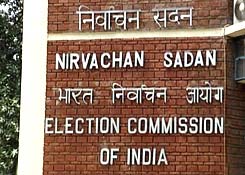
ROW IN ELECTION COMMISSION OF INDIA TAKES POLITICAL TUNE


The row in Election Commission of India (ECI) has taken a political tune as all the major political parties are playing their own lyrics orchestrated by political music. The inside bickering in ECI is not new and has been occurring time and again. The first major controversy arose during T.N. Seshan’s regime when Seshan and Krishnamurti, one of the then EC locked their horns in order to establish their own hegemony and run their own writs. 
The present row originated owing to the letter which the CEC, has written to the President of India recommending the removal of Navin Chawala, the EC for his alleged acts of commission and omission under article 324 (5) of Indian Constitution. This letter sparked off a major political controversy because the BJP has come openly in rescue of N. Gopalswami, whereas; Congress and other UPA constituents have pledged their support to Navin Chawala. This controversy has incited a debate also in legal luminaries and judicial domain. The issue which has again come to fore is that whether or not the CEC can suo motto initiate inquiry and recommend the removal of the other ECs? The question has become vexed also because the provisions of the Constitution in this regard are somewhat translucent on this issue. Article 324 of the Indian constitution provides for the superintendence, direction and control of election to be vested in the Election commission. Clause 5 of this Article provides for ‘the Subject to the provisions of any law made by the Parliament, the conditions of service and tenure of office of the Election Commissioners and the Regional Commissioners shall be such as the President may by rule determine:
Provided that the Chief Election Commissioner shall not be removed from his office except in like manner and on the like grounds as a Judge of the Supreme Court and the conditions of service of the Chief Election Commissioner shall not be varied to his disadvantage after his appointment:
Provided further that any other Election Commissioner or a Regional Commissioner shall not be removed from office except on the recommendation of the Chief Election Commissioner. 
The above provision makes it amply clear that the ECs can be removed by the President, the appointing authority, but the CEC can only be removed by a process of impeachment similar to that of a Supreme Court Judge. The message is clear; the father of constitution has conferred on adequate amount of independence on the ECI and also has guaranteed protection to it against any undue political and executive interference. It is also a fact that the CEC and ECs are equal, CEC being the first among the equals, this however do not bring all the ECs at par with the CEC.It seems that the principle of check and balance as well as superiority and subordination blended with administrative hierarchical concept has been enshrined in the above provisions of the constitution. The Criminal Procedure Code (Cr.P.C.) of 1973 can be taken into account to explain above principle. Section 20 of this code provides for appointment of Executive Magistrates and the District Magistrates. It speaks of the principle that District Magistrate is also an executive magistrate and all executive magistrates are equal, but the district magistrate is first among the equals. Further section 21, 22 and 23 make it clear that the executive magistrates,including the SDM, who is also an executive magistrate are subordinate to the district magistrate. Some may take it as an absurd comparison, but the principle of the same administrative hierarchical concept has been applied in the Election Commission also. 
Now coming to the question which remained unanswered is that whether the CEC can recommend suo-motu to the President the removal of ECs without the Presidential Reference? The Constitutional bench of the Supreme Court has ruled in the famous T.N. Seshan Vs Union of India in 1995 {5 SC, 337;(1995)4 SCC 611} that if power were to be exercisable by the CEC as per his whim and caprice, the CEC himself would become an instrument of oppression and would destroy the independence of the ECs if they are required to function under the threat of the CEC recommending their removal. This judgment is said to be landmark vis-a-vis the functioning of the ECI. The Supreme Court was of the opinion that the in-dependence of ECI is more important than the supremacy of CEC. In fact the fathers of our Constitution had rightly infused a large amount of independence and sanctity in the ECI which is also a custodian of the Constitution. Dr Bhim Rao Ambedkar, the father of Indian Constitution, had said in the constituent assembly that the removal of CEC should be done only through a process of impeachment. The idea was the same, to confer independence to the Commission. But unfortunately over a period of time certain amount of aberration has crept into this constitutional body and has turned it into a hub of hobnobbing and bickering. 
So far as the grounds for inquiry against Navin Chawla and subsequent recommendation to his removal is concerned, the matter goes back to 2006 when L.K.Advani along with 204 other MPs submitted a petition to the President of India seeking removal of Navin Chawla for his alleged acts of commission and omission during emergency and his alleged proximity to the ruling Congress Party. The same petition was forwarded to the CEC for necessary action. It is in this context the CEC asked explanation from Navin Chawla and after being ‘unsatisfied’ from the Chawla’s answer, CEC made this recommendation to the President. The entire legal fraternity divided over this issue. One school of opinion says that the CEC can recommend removal of any EC suo-motu, whereas other opines that the CEC can only act when he is sought to do so by the president. Coming to the issue of taking action on the recommendation, some stalwarts say that the recommendation is binding on the government, whereas many other do not subscribe to this view and suggest that the government has every right to reject the recommendation.
But it seems that if the CEC is not empowered to make a suo-motu recommendation, and can act only on the presidential reference, then how can the independence of Election Commission and its insulation from government’s interference be kept intact? It appears that misreading in between the lines is being done by many of us. If the CEC is supposed to act only when he is asked to do so, then why is this provision made in the constitution stating therein that the ECs can be removed only the recommendation of the CEC? 
We are non-deliberately skipping the core issue that, why after all such bickering and quarrelling are taking place in this august institution of sublime importance? The very practice of appointing very senior bureaucrats to the post CEC and EC just after their retirement is the crux of all the problems. The senior most bubus sitting at the helm of affairs can hardly remain apolitical and in a bid to get some post retirement placement, they start lobbying in the power lobby. Many of them get reward and those who are left start criticising the government in hope of winning over the sympathy of parties in opposition so that they can be compensated when these parties return to power. N. Gopalswamy had served as home secretary under Advani, similarly Chawla had been secretary to Lt. Governor during emergency. Gopalswamy was made EC just after his retirement by the NDA government, whereas Chawla was handpicked and rewarded by the Congress. Naturally their loyalties shall be put to a litmus test.

M.S.Gill has been made Rajya Sabha MP after his retirement as CEC, he was subsequently made a state minister in the union cabinet. This step is going to have profound impact on the functioning of EC, as every outgoing EC or CEC would be lured by such rewards which they may get if they pursue the interest of parties in power. 
Remedies: - Mr. B.B. Tandon the then CEC had made certain recommendations with regard to the long overdue reforms in the EC. These recommendations are eating dust in the labyrinth of power and politics. Here are some suggestions which can be incorporated while taking steps in cleansing and reforming the commission. 

1. Rules can be framed that no bureaucrat shall be appointed, nominated or given any office within three years after their retirement. 
2. Bureaucrats and judges should not be allowed to join any political party or fight election within three years after th.eir retirement. 
3. The selection and appointment procedures for the high offices like EC, NHRC, CIC, other commissions etc. should be made transparent and institutionalised so that the possibility of hand picking is diminished to a zero level
4. A national panel may be prepared for such appointment so that principle of equality and openness is followed. 
5. Law can also be framed so that no one is appointed to any constitutional post twice. This would help minimise the chances of doing favour of disfavour by these persons

Monday, February 2, 2009

RIGHT TO INFORMATION;INDIA AND USA


RIGHT TO INFORMATION A COMPARISON BETWEEN INDIA AND USA

Chief Justice of India’s reluctance to disclose the details of assets to the petitioner under RTI Act, 2005 has incited a debate on transparency versus privacy and confidentiality in Indian Public domain. 

The Central Information Commission (CIC) passed an order on the petition of one Subhash Agarwal filed u/s 6 of the Act, and asked all the Judges including CJI of the Supreme Court to make available the required information relating to their assets and properties to the petitioner. The order was taken aback by the Judiciary, because hitherto it is only they who used to get their dictates obeyed. This time the matter was reverse.

Immediately after getting the order from the CIC, the Supreme Court filed an appeal before the Delhi High Court through its Registrar against the order of the CIC. It is worth mentioning here that the order of Information Commission is final and binding as provided in section 19 (7) of the RTI Act, 2005. The aggrieved persons or the parties may however approach the High courts or the Supreme Court under Article 226 and 32 of Indian Constitution respectively in form of Writs, if they feel that their fundamental rights as enshrined in the Constitution are violated. 
In this case, it is beyond the imagination of a common man as how this said order of CIC was infringing upon the fundamental rights of the Judges, which forced CJI to go to the Delhi High Court against the said order.

This is not the first instance when Judiciary has retaliated against imposition of law on them or tried to resist any move towards greater amount of transparency being brought into the judiciary. It is rightly said that it is easy preaching than done.

Few months back, while speaking in a seminar in Delhi, the CJI said that the provisions of RTI do not apply on them because they are the Constitutional Authorities. Did he mean that the provisions of RTI Act do not apply on PM, Ministers, CEC, Speakers of Legislatures and MPs and MLAs because they are also constitutional authorities? 

This statement was also rebuked in the media; he thereafter tried to pacify the people by giving effete arguments. The CJI said that since there is no provision of disclosure of properties by the Judges of Higher Judiciary in any law or conduct rules for them, the Judges are not obliged to disclose the same. It is true, that such provisions are laid down in Government servants conduct Rules which are not applicable on the Judges of the higher judiciary.

Nonetheless, it should be borne in mind that the provisions of the RTI are overriding in effect, meaning thereby that all other laws if contrary to the provisions of RTI would be overridden (Section 22 of RTI Act). It is true that there are no service conduct rules for the Judges in higher judiciary, but at the same time there is no law also which provides immunity to the judges against disclosing their properties, after all what and why to hide?
In the mean time similar attempts to thwart the People centric ethos of the Act are being made in none other than the PMO itself. The same Subhash Agarwal has filed petition before the Public Information Officer (PIO) of the Cabinet Secretariat seeking information about the assets of the Union Ministers. The petition was thereafter sent to the PIO of PMO as per Section 6(3) of the Act. Initially, the PMO was willing to make available the required information to the information seeker, but subsequently, it sought to withhold the information on the pretext of the provisions of exemptions enshrined in Section 8(1)(e) and (j). 
It sounds funny to learn that the aforesaid provisions are invoked to deny the petitioner disclosure of the sought information. The Section 8(1) (e) says ‘the information available to a person in his fiduciary relationship, unless the competent authority is satisfied that the larger public interest warrants the disclosure of such information’. Undoubtedly the disclosure of the assets of the ministers does not fall in this category.
Similarly, the section 8(1) (j) says that if the sought information is not related to public activity or public interest or which would cause unwarranted invasion of the privacy of the individual, the information can be denied.
The pertinent question here obviously rises that what kind of privacy is involved in the disclosure of the assets of Ministers? How can the property acquired by a Minister while serving the ministry be not related to public activity or public interest? Moreover, the Supreme Court has ruled in 1997 and made it mandatory on part of the MPs to disclose their assets. The Election Commission of India subsequently issued circulars and made it obligatory for the contesting candidates to file an affidavit declaring all the moveable and immoveable properties along with the nomination papers. Thus if the said information relating to the ministers are disclosed, it would be of great help to the India citizen because one could then easily find out by calculating the amount of wealth the minister has amassed during the tenure by just deducting the wealth declared by them at the time of filing nominations. 
It appears that higher Judiciary as well as higher executive both want to withhold the free flow of information and are against the transparency. They talk very tall from public platform but when it comes to their turn, they provide justification of exemptions thoroughly unpalatable to the public. People as higher echelon must set examples of high standard of public life and morality. They are the role models of the society and the democracy. The kind of public outcry which was witnessed after Mumbai attack was just a trailer, it was suggestive of the fact that what kind of public perception is there in the mind of the pubic at larger for the politicians. 

One can draw a distinction between India and USA with respect to transparency in public life. In America one Freedom of Information Act, 1966 is enacted and is in vogue since 1967. George Bush had issued an executive order enabling the Ex. Presidents and Vice Presidents to sit indefinitely on potentially embarrassing records that belong to public domain. Barrack Obama showing his uncompromising commitment to transparency and openness undid the order and issued a fresh executive order making it mandatory on the part of the US administration to make available to people at large, all the documents related to any decision taken by the administration which belong to public domain.
Obama’s decision to undo the executive order of his predecessor is an important decision because under Section 4(F) (1) gives the president such power to issue an executive order to be kept secret in the interest of the national defense or foreign policy etc. It means that had the President wanted to hide any document; he would have taken the help of this provision and denied the emanation of information in the name of national defense. He did not wish to withhold the free flow of information in the garb of law, rather preferred to undo it and set an example, conspicuously absent in Indian politicians. This is what is called transparency, openness and democracy. But here in our case, provisions of laws and rules are interpreted in one’s own interests and not in the wider interest of the public at large

Tuesday, January 13, 2009

THE NATIONAL INVESTIGATION AGENCY


The Mumbai attack by international terrorist organisations shook the psyche of every Indian including the political leaders.The kind of public outcry which erupted was unprecedented both in terms of number and intensity. The Govt lost no time and threw away the wardrob boy, Home Minister quickly and undertook a number of measures. It included establishment of much talked and needed Federal Investigating Agency with more sharp incisors and canine in the Jaws. It is in this perspective, the Parliament has passed the NIA bill and thus the NIA came into being. Simultaneously the Unlawful Activities (Prevention) Amendment Bill was also passed. It gives extra leverage to the law enforcing agencies in dealing with the acts of terror and related organised crime and low intensitly war which is going on for more than decades after the Indo- Pakistan war of 1971. 

HERE IS THE TEXT OF THE ACT WHICH THE PARLIAMENT HAS PASSED-

THE NATIONAL INVESTIGATION AGENCY ACT, 2008
CHAPTER I

PRELIMINARY

1. (1) This Act may be called the National Investigation Agency Act, 2008.
(2) It extends to the whole of India and it applies also—
(a) to citizens of India outside India;
(b) to persons in the service of the Government wherever they may be; and
(c) to persons on ships and aircrafts registered in India wherever they may be.


2. (1) In this Act, unless the context otherwise requires,—
(a) “Agency” means the National Investigation Agency constituted under section 3 ;
(b) “Code” means the Code of Criminal Procedure 1973;
(c) “High Court” means the High Court within whose jurisdiction the Special Court is situated;
(d) “prescribed” means prescribed by rules;
(e) “Public Prosecutor” means a Public Prosecutor or an Additional Public Prosecutor or a Special Public Prosecutor appointed under section 15;
(f) “Schedule” means Schedule to this Act;
(g) “Scheduled Offence” means an offence specified in the Schedule;
(h) “Special Court” means a Special Court constituted under section 11 or, as the
case may be, under section 21;
(i) words and expressions used but not defined in this Act and defined in the Code shall have the meanings respectively assigned to them in the Code.

(2) Any reference in this Act to any enactment or any provision thereof shall, in
relation to an area in which such enactment or such provision is not in force, be construed as a reference to the corresponding law or the relevant provision of the corresponding law, if any, in force in that area.

CHAPTER II

NATIONAL INVESTIGATION AGENCY
3. (1) Notwithstanding anything in the Police Act, 1861, the Central Government mayconstitute a special agency to be called the National Investigation Agency for investigation and prosecution of offences under the Acts specified in the Schedule.

(2) Subject to any orders which the Central Government may make in this behalf,officers of the Agency shall have throughout India in relation to the investigation of scheduled offences and arrest of persons concerned in such offences, all the powers, duties, privileges and liabilities which police officers have in connection with the investigation of offences committed therein.

(3) Any officer of the Agency of or above the rank of Sub-Inspector may, subject to any orders which the Central Government may make in this behalf, exercise throughout India, any of the powers of the officer-in-charge of a police station in the area in which he is present for the time being and when so exercising such powers shall, subject to any such orders as aforesaid, be deemed to be an officer-in-charge of a police station discharging the functions of such an officer within the limits of his station.

4. (1) The superintendence of the Agency shall vest in the Central Government.
(2) The administration of the Agency shall vest in an officer designated as the Director-General appointed in this behalf by the Central Government who shall exercise in respect of the Agency such of the powers exercisable by a Director-General of Police in respect of the police force in a State, as the Central Government may specify in this behalf.

5. Subject to the provisions of this Act, the Agency shall be constituted in such
manner as may be prescribed and the conditions of service of persons employed in the
Agency shall be such as may be prescribed.

Definitions.
Constitution of National Investigation Agency.
5 of 1861.
Superintendence of National investigation Agency.
Manner of constitution of Agency and conditions of service of members.
2 of 1974.

CHAPTER III

INVESTIGATION BY THE NATIONAL INVESTIGATION AGENCY

6. (1) On receipt of information and recording thereof under section 154 of the Code
relating to any Scheduled Offence the officer-in-charge of the police station shall forward the report to the State Government forthwith.

(2) On receipt of the report under sub-section (1), the State Government shall forward the report to the Central Government as expeditiously as possible.

(3) On receipt of report from the State Government, the Central Government shall
determine on the basis of information made available by the State Government or received from other sources, within fifteen days from the date of receipt of the report, whether the offence is a Scheduled Offence or not and also whether, having regard to the gravity of the offence and other relevant factors, it is a fit case to be investigated by the Agency.

(4) Where the Central Government is of the opinion that the offence is a Scheduled
Offence and it is a fit case to be investigated by the Agency, it shall direct the Agency to investigate the said offence.

(5) Notwithstanding anything contained in this section, if the Central Government is
of the opinion that a Scheduled Offence has been committed which is required to be
investigated under this Act, it may, suo motu, direct the Agency to investigate the said offence.

(6) Where any direction has been given under sub-section (4) or sub-section (5), the
State Government and any police officer of the State Government investigating the offence shall not proceed with the investigation and shall forthwith transmit the relevant documents and records to the Agency.

(7) For the removal of doubts, it is hereby declared that till the Agency takes up the investigation of the case it shall be the duty of the officer-in-charge of the police station to continue the investigation.

7. While investigating any offence under this Act, the Agency, having regard to the
gravity of the offence and other relevant factors, may—
(a) if it is expedient to do so, request the State Government to associate itself
with the investigation; or
(b) with the previous approval of the Central Government transfer the case to the
State Government for investigation and trial of the offence.

8. While investigating any Scheduled Offence the Agency may also investigate any
other offence which the accused is alleged to have committed if the offence is connected with the Scheduled Offence.

9. The State Government shall extend all assistance and co-operation to the Agency
for investigation of the Scheduled Offences.
10. Save as otherwise provided in this Act, nothing contained in this Act shall affect the powers of the State Government to investigate and prosecute any Scheduled Offence or other offences under any law for the time being in force.

Investigation of Scheduled Offences. Power to transfer investigation to State Government. Power to investigate connected offences. State Government to extend assistance to National Investigation Agency. Power of State Government to investigate Scheduled Offences.

CHAPTER IV
SPECIAL COURTS

11. (1) The Central Government shall by notification in the Official Gazette, for the trial of Scheduled Offences, constitute one or more Special Courts for such area or areas, or for such case or class or group of cases, as may be specified in the notification.

(2) Where any question arises as to the jurisdiction of any Special Court, it shall be referred to the Central Government whose decision in the matter shall be final.

(3) A Special Court shall be presided over by a judge to be appointed by the Central
Government on the recommendation of the Chief Justice of the High Court.

(4) The Agency may make an application to the Chief Justice of the High Court for
appointment of a Judge to preside over the Special Court .

(5) On receipt of an application under sub-section (4), the Chief Justice shall, as soon as possible and not later than seven days, recommend the name of a judge for being appointed to preside over the Special Court.

(6) The Central Government may, if required, appoint an additional judge or additional judges to the Special Court, on the recommendation of the Chief Justice of the High Court.

(7) A person shall not be qualified for appointment as a judge or an additional judge of a Special Court unless he is, immediately before such appointment, a Sessions Judge or an Additional Sessions Judge in any State.

(8) For the removal of doubts, it is hereby provided that the attainment by a person
appointed as a judge or an additional judge of a Special Court of the age of superannuation under the rules applicable to him in the service to which he belongs shall not affect his continuance as such judge or additional judge and the Central Government may by order direct that he shall continue as judge until a specified date or until completion of the trial of the case or cases before him as may be specified in that order.

(9) Where any additional judge or additional judges is or are appointed in a Special
Court, the judge of the Special Court may, from time to time, by general or special order, in writing, provide for the distribution of business of the Special Court among all judges including himself and the additional judge or additional judges and also for the disposal of urgent business in the event of his absence or the absence of any additional judge.

12. A Special Court may, on its own motion, or on an application made by the Public
Prosecutor and if it considers it expedient or desirable so to do, sit for any of its proceedings at any place other than its ordinary place of sitting.

13. (1) Notwithstanding anything contained in the Code, every Scheduled Offence
investigated by the Agency shall be tried only by the Special Court within whose local jurisdiction it was committed.

(2) If, having regard to the exigencies of the situation prevailing in a State if,—
(a) it is not possible to have a fair, impartial or speedy trial; or 
(b) it is not feasible to have the trial without occasioning the breach of peace or
grave risk to the safety of the accused, the witnesses, the Public Prosecutor or a judge of the Special Court or any of them; or

(c) it is not otherwise in the interests of justice,the Supreme Court may transfer any case pending before a Special Court to any other Special Court within that State or in any other State and the High Court may transfer any case pending before a Special Court situated in that State to any other Special Court within the State.

Power of Central Government to constitute Special Courts. Place of sitting. 
Jurisdiction of Special Courts.

(3) The Supreme Court or the High Court, as the case may be, may act under this
section either on the application of the Central Government or a party interested and any such application shall be made by motion, which shall, except when the applicant is the Attorney-General for India, be supported by an affidavit or affirmation.

14.(1) When trying any offence, a Special Court may also try any other offence with
which the accused may, under the Code, be charged at the same trial if the offence is connected with such other offence.

(2) If, in the course of any trial under this Act of any offence, it is found that the accused person has committed any other offence under this Act or under any other law, the Special Court may convict such person of such other offence and pass any sentence or award punishment authorised by this Act or, as the case may be, under such other law.

15.(1) The Central Government shall appoint a person to be the Public Prosecutor and
may appoint one or more persons to be the Additional Public Prosecutor or Additional 
Public Prosecutors:Provided that the Central Government may also appoint for any case or class or group of cases a Special Public Prosecutor.

(2) A person shall not be qualified to be appointed as a Public Prosecutor or an Additional Public Prosecutor or a Special Public Prosecutor under this section unless he has been in practice as an Advocate for not less than seven years or has held any post, for a period of not less than seven years, under the Union or a State, requiring special knowledge of law.

(3) Every person appointed as a Public Prosecutor or an Additional Public Prosecutor
or a Special Public Prosecutor under this section shall be deemed to be a Public Prosecutor within the meaning of clause (u) of section 2 of the Code, and the provisions of the Code shall have effect accordingly.

16. (1) A Special Court may take cognizance of any offence, without the accused being
committed to it for trial, upon receiving a complaint of facts that constitute such offence or upon a police report of such facts.

(2) Where an offence triable by a Special Court is punishable with imprisonment for a
term not exceeding three years or with fine or with both, the Special Court may, notwithstanding anything contained in sub-section (1) of section 260 or section 262 of the Code, try the offence in a summary way in accordance with the procedure prescribed in the Code and the provisions of sections 263 to 265 of the Code, shall so far as may be, apply to such trial: Provided that when, in the course of a summary trial under this sub-section, it appears to the Special Court that the nature of the case is such that it is not desirable to try it in a summary way, the Special Court shall recall any witnesses who may have been examined and proceed to re-hear the case in the manner provided by the provisions of the Code for the trial of such offence and the said provisions shall apply to and in relation to a Special Court as they apply to and in relation to a Magistrate: Provided further that in the case of any conviction in a summary trial under this section, it shall be lawful for a Special Court to pass a sentence of imprisonment for a term not exceeding one year and with fine which may extend to five lakh rupees. 

(3) Subject to the other provisions of this Act, a Special Court shall, for the purpose of trial of any offence, have all the powers of a Court of Session and shall try such offence as if it were a Court of Session so far as may be in accordance with the procedure prescribed in the Code for the trial before a Court of Session.

(4) Subject to the other provisions of this Act, every case transferred to a Special Court under sub-section (2) of section 13 shall be dealt with as if such case had been transferred under section 406 of the Code to such Special Court.Powers of Special Courts with respect to other offences.

Public Prosecutors.Procedure and powers of Special Courts.

(5) Notwithstanding anything contained in the Code, but subject to the provisions of
section 299 of the Code, a Special Court may, if it thinks fit and for reasons to be recorded by it, proceed with the trial in the absence of the accused or his pleader and record the evidence of any witness, subject to the right of the accused to recall the witness for cross-examination. 

17. (1) Notwithstanding anything contained in the Code, the proceedings under this
Act may, for reasons to be recorded in writing, be held in camera if the Special Court so desires. 

(2) On an application made by a witness in any proceeding before it or by the
Public Prosecutor in relation to such witness or on its own motion, if the Special Court is satisfied that the life of such witness is in danger, it may, for reasons to be recorded in writing, take such measures as it deems fit for keeping the identity and address of such witness secret.

(3) In particular, and without prejudice to the generality of the provisions of subsection 
(2), the measures which a Special Court may take under that sub-section may include—
(a) the holding of the proceedings at a place to be decided by the Special Court;
(b) the avoiding of the mention of the names and addresses of the witnesses in
its orders or judgments or in any records of the case accessible to public;
(c) the issuing of any directions for securing that the identity and address of the
witnesses are not disclosed; 
(d) a decision that it is in the public interest to order that all or any of the
proceedings pending before such a Court shall not be published in any manner.

(4) Any person who contravenes any decision or direction issued under sub-section(3) shall be punishable with imprisonment for a term which may extend to three years and
with fine which may extend to one thousand rupees.

18. The trial under this Act of any offence by a Special Court shall be held on day-today basis on all working days and have precedence over the trial of any other case against the accused in any other court (not being a Special Court) and shall be concluded in preference to the trial of such other case and accordingly the trial of such other case shall, if necessary, remain in abeyance.

19. Where, after taking cognizance of any offence, a Special Court is of the opinion
that the offence is not triable by it, it shall, notwithstanding that it has no jurisdiction to try such offence, transfer the case for the trial of such offence to any court having jurisdiction under the Code and the Court to which the case is ransferred may proceed with the trial of the offence as if it had taken cognizance of the offence.

20. (1) Notwithstanding anything contained in the Code, an appeal shall lie from any
judgment, sentence or order, not being an interlocutory order, of a Special Court to the High Court both on facts and on law.

(2) Every appeal under sub-section (1) shall be heard by a bench of two Judges of the
High Court and shall, as far as possible, be disposed of within a period of three months from the date of admission of the appeal.

(3) Except as aforesaid, no appeal or revision shall lie to any court from any judgment,sentence or order including an interlocutory order of a Special Court.

(4) Notwithstanding anything contained in sub-section (3) of section 378 of the Code,
an appeal shall lie to the High Court against an order of the Special Court granting or refusing bail.

(5) Every appeal under this section shall be preferred within a period of thirty days
from the date of the judgment, sentence or order appealed from:
Protection of witnesses. Trial by Special Court to have precedence.
Power to transfer cases to regular courts.

Appeals.

Provided that the High Court may entertain an appeal after the expiry of the said
period of thirty days if it is satisfied that the appellant had sufficient cause for not preferring the appeal within the period of thirty days:Provided further that no appeal shall be entertained after the expiry of ninety days.

21. (1) The State Government may constitute one or more Special Courts for the trial of offences under any or all the enactments specified in the Schedule.

(2) The provisions of this Chapter shall apply to the Special Courts constituted by the State Government under sub-section (1) and shall have effect subject to the following modifications, namely—
(i) references to “Central Government” in sections 11 and 15 shall be construed
as references to State Government;

(ii) reference to “Agency” in sub-section (1) of section 13 shall be construed as
a reference to the “investigation agency of the State Government”;

(iii) reference to “Attorney-General for India” in sub-section (3) of section 13
shall be construed as reference to “Advocate-General of the State”.

(3) The jurisdiction conferred by this Act on a Special Court shall, until a Special Court is constituted by the State Government under sub-section (1) in the case of any offence punishable under this Act, notwithstanding anything contained in the Code, be exercised by the Court of Session of the division in which such offence has been committed and it shall have all the powers and follow the procedure provided under this Chapter.

(4) On and from the date when the Special Court is constituted by the State Government the trial of any offence investigated by the State Government under the provisions of this Act, which would have been required to be held before the Special Court, shall stand transferred to that Court on the date on which it is constituted.

CHAPTER V
MISCELLANEOUS

22. The High Court may, by notification in the Official Gazette, make such rules, as it may deem necessary for carrying out the provisions of this Act relating to Special Courts within its territory.

23. (1) If any difficulty arises in giving effect to the provisions of this Act, the Central Government may, by order published in the Official Gazette make such provisions, not inconsistent with the provisions of this Act, as may appear to it to be necessary or expedient for removing the difficulty:Provided that no order shall be made, under this section after the expiration of two years from the commencement of this Act.

(2) Every order made under this section shall be laid, as soon as may be after it is made, before each House of Parliament.

24. (1) The Central Government may, by notification in the official Gazette, make rules for carrying out the provisions of this Act.

(2) In particular, and without prejudice to the generality to the foregoing power, such rules may provide for all or any of the following matters, namely:—

(a) the manner of constitution of the Agency and the conditions of service of
persons employed in the Agency under section 5; Power of State Government to institute Special Courts. Power of High Courts to make rules.
Power to remove difficulties.
Power to make rules.

(b) any other matter which is required to be, or may be, prescribed.

25. Every rule made by the Central Government under this Act shall be laid, as soon as may be after it is made, before each House of Parliament, while it is in session, for a total period of thirty days which may be comprised in one session or in two or more successive sessions, and if, before the expiry of the session immediately following the session or the successive sessions aforesaid, both Houses agrees in making any modification in the rule or both Houses agree that the rule should not be made, the rule shall thereafter have effect only in such modified form or be of no effect, as the case may be; so, however, that any such modification or annulment shall be without prejudice to the validity of anything previously done under that rule.

Laying of rules.

THE SCHEDULE
[See section 2(1)(f)]

Wednesday, October 29, 2008

Impeachment of Judges in India


Hello countrymen,
The letter of CJI has triggered the debate on impeachment process.
Here are the constitutional provisions with regard to impeachment of judges of higher judiciary.

IMPEACHMENT OF JUDGES
(REMOVING JUDGE IS MORE DIFFICULT THAN THE GOVERNMENT ITSELF)
The letter written by the CJI (Chief Justice of India) to the PM seeking his intervention in initiating impeachment proceedings against a sitting Judge of Calcutta HC, has triggered a debate again regarding corruption in higher Judiciary and its impunities. We have seen removal of Governments and PMs so many times, but removal of HC and SC Judges has not been so far heard after the Constitution of India came into force in 1950. Independent India has however witnessed one impeachment, when Justice Shiv Prasad Sinha of Allahabad High Court was removed by the then Governor General of India, C. Rajagopalachari in 1949 on the recommendation of the Federal Court. Reasons for this situation are simple, the impunity given to the Judges in the Constitution. 
The corruption in higher Judiciary and disciplinary action against the HC and SC Judges has again become talk of the day following the unprecedented move of the CJI K.G.Balakrishan in which he directly wrote to the PM that Justice Soumitra. Sen, sitting Judge of Calcutta HC be removed for his ‘Misconduct. The CJI has given detailed information about Justice Sen’s misconduct when he was appointed receiver by Justice A.N. Roy in Steel Authority of India vs. Shipping Corporation of India case in 1993.
The three Judge panel comprising A.P. Shah C.J of Madras H.C, A.K. Patnaik, CJ of MP HC and R.M. Lodha of Rajasthan HC inquired into the charges levelled against Justice Sen and found them true. The panel submitted its report in February, 2008. On March, the 16th, the Collegiums of the apex Court comprising of CJ himself, J.B.N. Agarwal and J. Asok Bhan asked Justice Sen either to resign or to opt for voluntary retirement, but the unrelenting Judge refused to comply with, which forced CJI to resort to this unprecedented move. The move is unprecedented, because neither there is any provision in the constitution about such recommendation nor before this, any CJI has taken such ‘extreme step’. In fact Article 124(4) of Indian Constitution provides for removal of HC and SC Judges. This Article says ‘A Judge of Supreme Court shall not be removed from his office except by an order of the President passed after an address by each House of Parliament supported by a majority of the total number of membership of that House and by a majority of not less than two-thirds of the members of that House present and voting has been presented to the President in the same session for such removal on the ground of proved misbehaviour or incapacity.’ There is no separate provision for removal of HC Judges and Article 217(1)(b) provides for this and says ‘ a Judge may be removed from his office by the President in the manner provided in clause(4) of Article 124 for the removal of a Judge of the Supreme Court’. This is how the processes of removal of High Court and Supreme Court Judges are the same. The above Article of the Constitution provides for impeachment, whereas; Judges (Inquiry) Act, 1968 determines the process of impeachment. 
According to this Act, the impeachment of a Judge can be done only by Parliament and impeachment can be initiated after a motion addressed to the President of India is signed by at least 100 members of the Lok sabha or 50 members of Rajya Sabha. Such is the process and such is the impunity. Such Judicial impunity has been conferred on Judiciary for the sake of its independence. The idea is perhaps taken from England. The above provision is similar to the rule prevailing in England, since the Act of Settlement, 1701, to the effect that though Judges of the Superior Courts are appointed by the Crown, they do not hold office during his pleasure, but hold their office ‘on good behaviour’ and the Crown may remove them only upon a joint address from both Houses of Parliament.
Any way the credit must be given to CJI, who could take such extra-ordinary step, because after all, extra-ordinary situation demands extra-ordinary steps. But unfortunately, the government was sitting over it as it was written two months ago and could only be known to public through media. This development has again triggered a debate on corruption in higher Judiciary and its overall functioning including the appointment procedure in the higher Judiciary. 
Before any debate on this issue, it should be clearly borne in mind that above cumbersome procedure of impeachment and other judicial impunities have been enshrined in the Constitution for making Judiciary independent. 
INDEPENDENCE OF JUDICIARY- the independence is guaranteed our Constitution and the concept has been borrowed from the US Constitution. Article III of US Constitution guarantees Indepenendece and Supremacy of Judiciary in United States. Independence of Judiciary is the tenet of Democracy and therefore; even Russian Constitution of 1993(Chapter-7 Section 120-122) also guarantees independence of Judiciary in Russia. In fact section 124 of the Russian Constitution says ‘Judges shall posses immunity and criminal proceedings may not be brought against a Judge except as provided for by federal law.
In India, this independence and limited Judicial Supremacy are enshrined in the Constitution and are expressed in (a) Methods of appointment of Judges (b) process of impeachment and (c) power of judicial review. Now, if all these provisions of the Constitution are analysed, inference can easily be drawn that the problems lay here themselves and so do solutions.
(a) APPOINTMENT- Articles 124 and 217 provide for appointment of Judges of SC and HC respectively. They clearly stipulate that the appointments have to be made by the President in consultation with CJI. The word ‘consultation’ has been always a matter of dissent and controversy. In fact, when A.N. Ray was appointed as CJ after superseding three senior Judges namely Hegde, Grover and Shelat, there were a lot of uproar in Judicial community including the Bar council of the apex Court. They argued that Judges have been superseded owing to their judgement in Keshavanand case (AIR 1973 SC) which went against the Government. Gradually the discretion of Executive in matters of appointment of Judges started diminishing. In 1993, a land mark judgment came from Supreme Court in ‘Advocates on record vs. union of India’ case. The apex Court ruled that the recommendations for appointment of Judges in HC and SC will be made by collegiums of three Judges and shall be in a way binding on the Government. After a ‘presidential reference’, the number in the collegiums was increased from three to five. This judgment was landmark because it took virtually all discretionary powers of the Executive in matters of appointment of Judges in higher judiciary. Thus the word ‘consultation’ became ‘concurrence’. Some people in legal domain argue that it was a dangerous development and was against the principles of the Constitution itself. How can a person or a group of persons appoint themselves which goes against the ideas enshrined in Article 311? They opine that there must be a transparent and justifiable procedure for such appointments. There are instances where persons from one family are becoming Judges for two to three generations. The judicial community of higher Judiciary is becoming an elite club of few ‘privileged families’. Candidly, it is not what ‘independence’ meant for.
(b) IMPEACHMENT- The process of impeachment as discussed earlier in this Article clearly indicates, that it is a cumbersome process and this is why in 50 years of our constitution not even a single Judge could be removed. In 1991, the impeachment proceedings for removal of Justice V. Ram swami could not be carried due to abstention of Congress party in the voting. The process of impeachment is laid down in Judges (Inquiry) Act, 1968 which says that even if the motion is accepted, the presiding officer of the House has to constitute a three Judge committee to again inquire into the matter. After receiving the report, the motion will be put to voting, which requires 2/3rd number. Thus falling of Government (no confidence motion) which requires a simple majority only, whereas; removal of a Judge requires 2/3rd majority. That is why, it is truly said that it is easier to decide the fate of 100 billion people by way of forming and toppling Governments than removing a Judge. In our country, laws have sent many ministers and bureaucrats behind the bars on charges of corruption, but what to talk of sending Judges to jails, not even a single Judge has so far been impeached. Instances of corruption in higher judiciary are not unheard of. The ‘Transparency International’ in its report of 2007 has counted judiciary as the third most corrupt institutions in India, an inference totally in contrary to the common perception.
The former CJI Y.K. Sabarwal himself is in the eyes of storm for his judgements pronounced in ‘Delhi Sealing Case’, which allegedly benefitted his son. When a report in this regard appeared in one Newspaper, a suo motto contempt proceeding was initiated and the concerned reported was sought to be punished. The Contempt of Court Act, 1971, which itself is not yet codified, is another tool which sometimes is used to gauge the voice of dissent.
In another infamous case, Vigilance department of UP Police exposed misappropriation of 23 Crore rupees from GPF account of Class III and IV employees of Ghaziabad Civil Court. One of the accused arrested in this connection, made startling revelation that he has parted the money both in cash and kind, with one sitting Judge of SC, ten Judges of HC and 23 Judges of lower Courts. The investigation is not proceeding as Police cannot interrogate Judges without the consent of SC, though such protections are not given in Judges (Inquiry) Act. The matter is still pending with the apex Court and CJI has to convince the citizens of this Nation, as to whether there is equality before the law or not. Such corruption charges are often covered beneath the carpet in the name of Judicial Independence and impunity.
Names of two Judges of Haryana High Court figured in a case in which one law officer of Haryana sent Rs 15 lakh to them. Matter has been referred to CBI by the apex Court. List is long and result is dismally naught. 
It is easy preaching than done. The question being asked by common citizen that who will judge the Judges? Every one advocates for transparency and delegation of powers, but up to him only. CJI reacted sharply on provision of RTI Act by saying that it does not apply to them, as they are the Constitutional authorities. But the same authorities preach others about the benefits of RTI in detail and reprimands for not complying with the Act. Time has come to make introspection into the system so that the hope of millions of people of this country could be protected from being torn apart. 
REMEDIES:
1. The provisions of RTI should be made applicable to all components of functioning of Judiciary. Accordingly, suitable amendments in RTI Act, 2005 can be made.
2. The procedure of selection of Judges should be made more transparent and justifiable. Panel of Judges can be made well in advance before recommendation and be known to public by way of websites or media. Idea of setting up of a National Judicial Commission can also be made into reality, after all if you are required to go for a test for becoming a clerk, why does selection of Judges not require any test. An all India test might also be conducted to select Judges of Higher judiciary.
3. The Government is sitting over the Judges (inquiry) bill, 2006 for more than two years, therefore it should be passed, but before that necessary amendments are required, because the concept of ‘brother judges’ doing inquiry has proved ineffective if not futile.
4. The contempt of Court Act, 1971 be amended suitably, because healthy criticism of any institution is generally beneficial for the system itself in the long run. The Judiciary should prepare itself for listening to its criticism and bring about change by itself, a change though painful but helpful.

Wednesday, October 1, 2008

commission of inquiry, grave to justice and heaven for judges


INQUIRY COMMISSION
(Grave to justice and heaven for Judges)
The first part of report of Justice G.T. Nanavati Commission, which was constituted in 2001 to probe into the Godhara incident, in which one bogey of Sabarmati express was burnt carrying kar sevaks led to communal violence across many parts of Gujarat state, has sparked the chain of political reactions around Godhara again. The report has given clean chit to the Narendra Modi Government and supported the theory of conspiracy. Many call it ‘eye wash’ and other call it ‘sponsored report’. Communists have termed it a ‘piecemeal’ and fabricated report, whereas; NDA naturally, calls it ‘triumph of truth’. On the other hand, Justice U.C Banerjee Committee had indicted Narendra Modi Government for the same incident. The question is which report is true and which is not, because both reports cannot be true. Interestingly even the NHRC has pointed needle towards this report. Justice (retired) J.S.Verma has serious reservation about the report.
Keeping apart from such allegations and counter allegations, the issue has again come to fore that ‘Is Inquiry Commission a substitute of criminal prosecution? Do these Commissions serve any purpose? Is it not an eye wash? Are these Commissions able to bring culprits to book? Etc. After all, they are putting in enormous cost on public exchequer, the hard earned money of ours.
To understand the entire issue, one has to discuss the Commission of Inquiry Act, 1952 itself. Before this Act came into being, the Government used to order an inquiry by executive notifications under Public Service Inquiry Act, 1850. Sometimes, they used to enact adhoc and temporary legislations also. To meet the public demand for impartial and judicial inquiries, the Government thought to come out with a comprehensive legislation, which resulted into passage of this Commission of Inquiry Act, 1952 in 1952.
Since its enactment, the constitution of Inquiry Commissions has become a tool for the Government to white wash the public anger and delay and diverts the attention of both public as well as media.
Since Independence, more than a hundred Inquiry Commissions have been set up, but a very few have served the purpose. Reasons are obvious. First, the provisions enshrined in this Act are not of deterrent in nature and secondly, most of the time the Commissions are set up under retired Judges for obvious reasons. Section 4 the Act provides for powers and it is clear that the Commission has no power to compel a person to adduce before it and give evidence. It cannot pass verdicts or judgements which could be enforceable. The helplessness is such that when any offence is committed in view of or presence of Commission, the Commission shall forward the case to the Magistrate for trial as provided in Criminal Procedure code.
The appointment of retired Judges, as head of the Commission is very much suitable for the Government. It is not merely a chance that one Judge has headed more than one Commission. The public perception is such that these Inquiry Commissions are becoming post retirement placement schemes for the favourite retired Judges.
We have a long list of such Commissions, which have made inordinate delay in submitting their reports. Many of them have taken decades in so called’ conducting inquiries’ and even then the report which was submitted were so voluminous that we required another committee to find out ways to implement the recommendations. For example, as many as ten Commissions or committees have so far been set up with regard to the anti-Sikh riots in Delhi after the assassination of Mrs Gandhi. First of all, Marvah Commission (Ved Marvah, Addl C.P.) was set up in November, 1984. The Commission was about to finish the assigned task, but it was abruptly wounded up in May, 1985 and a new Commission headed by Justice Rangnath Misra was constituted and was asked to carry out the further inquiry hitherto done by Marvah Commission. But surprisingly the terms of reference was, to find out whether this was an organised riot only? This Commission submitted its recommendations in August, 1986 and recommended for setting up of three committees to do further work. Therefore; Kapur-Mittal Committee in February, 1987, Jain-Banerjee Committee in November, 1987, Potti-Rosa Committee in March, 1990, Jain and Agarwal Committee in December, 1990, and finally Justice G.T. Nanavati Commission in 2000 were set up. Incidentally, the same Judge was made in charge to inquire into Godhara incident.
It is needless to mention that what has happened to reports and how much amount have been spent on these exercises. Has any prominent leader been punished so far? Many persons, against whom levelled charges were being inquired into, have died. Such are the frustrating results of these Commissions and Committees. 
So far as the time and money aspect of these Commissions are concerned, one or two Commissions find special mention in this regard. One Liberhan Commission was set up under retired Justice M.S. Liberhan on 16th December, 1992 to probe into Babri mosque demolition. This Commission has so far been given more than 41 extensions and about 90 million rupees have been spent on this single man inquiry Commission. What a joke and what a mockery of this legal provision. Who cares and who dares to put a question mark on such legal exercise. 
Similarly, Justice B.N. Kripal Commission of inquiry was set up on 13th July, 1985 to probe into the bombing of Air India Flight 182 Boeing 747 on 23rd June 1985 which led to crash of this plane into Atlantic Ocean leaving 329 passengers including crew dead. The Commission submitted its report after extensive tours of countries like Canada, USA etc, but when the prosecution began, nothing could be proved and none could be punished. The entire ‘investigation and inquiry’ went in vain. It is needless again, to calculate the amount which was spent on such inquiries.
After ‘tehelka’ expose, one Phukan Commission was set up to look into it. Everyone saw the tape on television and the then Government just to avoid immediate legal course, set up this Commission. In May, 2005 the Newsweek reported that Justice Phukan along with his wife and eight officials used IAF plane and went to Pune- Mumbai and Shirdi. The Ministry later said that the Judge was not entitled to use the military plane and it was made available to him by the then government in order to influence the Judge. Such allegations and incidents definitely erode public faith in such Commissions. The situation is such every Government in power use this provision to oblige the retired judges.
In Bihar for example, one Justice Amir Das Commission was set up to probe into the alleged connections of political leaders with a banned outfit called Ranveer sena in 1997. After elapse of more than eight years, the Commission could hardly do anything except for some tours and recording of statements some leaders. It was finally wounded up in 2006. Similarly one Justice Ali Ahmed Commission was set up to look into excess withdrawal in 1996. What recommendations did it submit or what actions had been taken, hardly anyone knows. 
Commission under Justice RCP Sinha and Justice Samsul was set up on Bhagalpur communal riot in 1989. Reports were submitted in 1995. But when the new Government came to power it set up NN Singh (retired Justice) Commission to re-investigate the matter again. In 2008 one Commission under retired judge Sadanand Mukherjee was set up to probe into the Kahalgaon police firing. This commission is still a non starter vis-a-vis investigation of the incidence.
When Kosi eastern embankment was breached on 18th August, 2008, there were lot of allegations and counter allegations. The Government constituted a Commission under Rajesh Walia, again a retired Judge to probe into it. 
The question that every sensible citizen would like to ask is that, whether Commission is a substitute of criminal investigation? How can a Judge be better equipped to do forensic test, do scientific investigations than a professionally trained police officer? Has the Commission power to make arrests to the persons likely to tamper evidences? The effectiveness of the Commission or for that matter the Commission of Inquiry Act was looked into by two Judge commission, which was constituted in 1987, it gave its observations and said the Act as ‘ ineffective and toothless’.
Ours is the criminal justice system, which is based on the twin pillars of investigation and dispensation of justice. How can the Judiciary be asked to do the work of investigation, which is the work of the State as enshrined the law of the land? The Criminal Procedure Code and for that matter entire Criminal Justice System is erected on this principle and perhaps it is due to this principle, that the Judiciary and Executive have been completely separated in 1973, when the Code of Criminal Procedure was amended. After almost every police firing or so called fake encounters, the government sets up Commissions of Inquiry and tends to defer the problem so years. The list of such commissions is long and still names are being added to it. Once the commission is set up, public tends to forget the real issue and Commission embarks on an unending process of investigation, inquiry and facts finding. It took years and years in submitting the reports, which are so voluminous that it again requires some committees to suggest measures to implements the recommendations. What is the use of such reports, which themselves are not obligatory and mandatory for the Government to implement. Millions and millions of rupees have so far been spent on these nearly futile exercises, but the investigating agencies are languishing in the same state for years. Instead of modernising and equipping the investigating agencies, we go on doing cosmetic make ups. Public perception is therefore that, if the Government wants to bury the truth, it sets up a Commission. Public memory is short and it tends to forget everything. In the mean time these Commissions are becoming a post retirement engagement for Judges. Ours is an independent Judiciary and that is why Article 220 provides for restriction on practise by the retired Judges. The idea is that there should not be any scope whatsoever, of favour or disfavour by the serving Judges. By appointing the retired Judges in these Commissions or for that matter in any other body is a clear cut violation of the spirit of the Constitution itself. This type of public perception is detrimental for our democracy as well as Judiciary also. Judges should perform the duty of dispensing judgments only and not do the work of investigation; otherwise the entire edifice of our institutions would start eroding and crumbling.

WHO FIGHTING FOR ITS EXISTENCE: WILL IT TRIGGER NEW ERA OF CONFLICT? Politics and lust for power are not endemic of India only...