Saturday, March 14, 2009

OBAMA; MAKE A NEW GLOBAL ECONOMIC AND SOCIAL ORDER


(HARBINGER OF PEACE AND EQUALITY?)

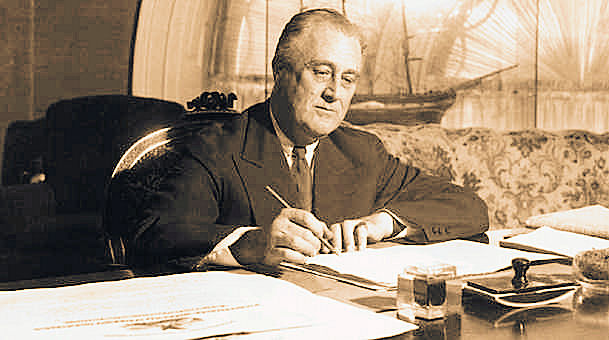
Obama' 100 days in white will be completed within few weeks from now. Keeping his promise on various other issues, he has moved on the path to end hostilities with a number of Nations. It is being viewed as a good sign across the world. The age old strict restrictions against Cuba, the sole communist island, seems to have been easing. Obama is all set to sign a bill which will enable American-Cubans to visit Cuba once in a year in place of once in every three years. The upperlimits of remmittences is also likely to be enhanced. Now the American-Cubans can be able to stay there for more longer periods. The signing of this historic bill by Obama will be remembered as a milestone in the History of not only of USA but also of the whole north America. 

The history has taught us that the hostilities and acromony have paid nothing but hatred and devastations. The world and its constituents, the countries, cannot have a stereotype democracy, the democracy of American type. It has now proved beyond doubt the every country, small or big, weak or powerful, rich or poor, all like and love sovereignty and no one likes interference and infringement on his liberty. They fight back and fight to the last of their blood. 

Raul Castro and Fidel Castro along with common cubans have hailed this shift in policy of American but with a caution. Only time will tell that wheather it is a change of heart or simply a strategic retreat or a diplomatic manoevering.

In Afghanistan also, America is to start a fresh initiative. Making a huge departure from policy of Bush, Obama has the audacity to accept that they are not winning the war in this strife torn tribal territory. Making a U turn in the established policy based on proud and arrogance rather than realism, Obama has hinted to engage some Taliban's elements in dialogue. American can simply not afford to continue with this seemingly unending war in Afghanistan. Understanding the complexity of the geo-strategic composition of this region, Obama has rightly invited Iran to participate in a regional conference on Afghanistan scheduled in this month itself.

But, before this, USA will have to show sagacity on many fronts and in many areas. Intense hatred is one of the grotesque legacies Bush has left, which naturally and unfortunately Obama had to inherit,therefore this hatred has to go and sense of mutual trust has to usher in before any meaningful dialogue or excercise would start. 

Iran has reshaped its economy and foreign policy in such a way that it has become a power to reckon with. No arrangement in this region can be stable and long lasting without engaging Iran.

Obama has a long way to go on the way of reconciliation. Still there are so-called think-tanks and power lobbies in USA which enjoy immense influence on its policy framing comtemplation.

USA is also willing to 'reset'its relation with Russia. Hillary and Sargai Lavrov have meet in Geneva and have held discussions on various issues ranging from south asia to middle east. Afghanistan definitely would have been discussed. US has already solicited Russians help in maintaining supply routes into Afghanistan. Russia can play a vital role in arranging a dialogue with Taliban. Russians have a vast experience in this country as they too have had to face wrath of Islamic fundamentlaists both in Afghanistan as well as in Chechnya.
Obama's stand of North Korea will also have ramification on the geo-political situation in this region. The words like 'rogue states', 'axis of evil powers' etc have no place in diplomacy as it worsens and aggravates rather than mitigates the problems.

India has not yet been given that kind of importance by Obama administration as it deserves. The international war aganist terror, with Pakistan into centre of policy and activity has not yet proved very successful. End of hostilities in this region is a pre-requisite of peace process to succeed. Richard Holbrooke has paid a customary visit to India and gave some stereotyped statements blended with realpolitik diplomacy rather than seriousness. Even after 9/11 America has not understood the pains of sufferings of common Indian. We have been inflicted more injuries by the terrorists than the combined attacks in America and whole of Europe including Britain. Unfortunately, even then the west has failed to understand and experience the throes of ours, the pain of Indians. Kashmir is still bleeding thanks to Pakistan and its supporter nations including America. Had America told in unequivocal terms, in the initial phase itself, to Pakistan to stop supporting terrorists and exporting terrorism into India, the situation would have not been so horrible and pathetic as it is today. The dual policy of Americans in south asia especially to keep India at bay has done more harms to the Americans themselves than it has done good to them.

The unabated and continuous supply of arms and ammunitions, military and monetary aid to Pakistan by USA has allowed the situation to go from bad to worse. Now it is slowly but definitely going to become 'Somalia of south-asia'. It has already become a 'failed state',but the tragedy is that, it will make others fail also. India's huge defence budget of more that 1 lakh crore which is more that 5% of its GDP is largely due to the hostile neighbour of ours. 

If USA wants a peaceful south-asia and central asia, it has to stop Pakistan from what it is doing today. The present political and security situation is also moving towards catastrophe and it should be prevented for the larger interests of this region. Let Holbrooke understand it and he should also make Obama understand this. Or else no one will be able to save Pakistan from extinction. 

A new dawn is waiting to appear on the globe. History has bestowed upon Obama a huge responsibility as well as an excellent opportunity to reshape the globe and redifine governance based on mutual respect and equality. We have to build a world wherein every one gets two sqaure meals a day and a roof over his head in scorching sun and chilling nights.

Thursday, March 12, 2009

DEVELOPMENT IN AFGHANISTAN AND PAKISTAN; ITS IMPACT ON INDIA


(LONG MARCH; WAY TO ISLAMABAD SEAT OF POWER?)

The security environment in Afghanistan and Pakistan is changing very swiftly over a week. The war against terrorism in Afghanistan led by US is not making desired headway. General Patreus has admitted that they are not winning the war. In a diplomatic style, he of course said that the situation would improve once as proposed 17000 American troops reach into Afghanistan. But many experts in strategic and defence fields feel that situations in Afghanistan and Iraq are completely different. In Iraq the country was blocked and no tangible support or logistic inputs were available for the Iraqi insurgents, whereas; in Afghanistan the situation is different. Mulla Omar and Osama, both are alive and commanding their men, in Iraq after the capture of Saddam the insurgents were virtually leaderless and unorganised. They made some desperate attacks but thoroughly unorganised and ill coordinated. Taliban on the other hand is proving so far unmatched with world’s best army, thanks to the local tribal support from both in Afghanistan and Pakistan. 
The Taliban is gaining ground repulsing the govt forces from country side. In fact Karzai’s writs don’t run beyond Kabul. The ministers, governors, govt offices, embassies and even jails are not safe and Taliban is capable of striking anywhere any time. The high security prison in Kabul was blown and prisoners including Taliban inmates were freed. Situation is such that even Presidential palace in Kabul is considered ‘not safe’. The supply line across north-west of Pakistan is highly unsafe and US had to solicit support from Russia for an alternate supply route to which Russia did agree but with a bargain. It too wants a role to play in this region. 
The rampant corruption in Afghanistan amongst its bureaucracy, Police and diplomats is marring all efforts of reconstruction and reconciliation. Even American army officials are not exception to these pandemics. The good will, once generated after Taliban’s ouster from Kabul, is eroding. The Afghan tribes, the autonomy loving people are frustrated with these developments and therefore; the local population is getting hostile towards the alliance forces day by day. The call of Taliban to oust, ‘foreign mercenaries’ as what it call, from its soil is finding sympathetic space in the hearts of common Afghanis also. This emotional call of Taliban has aggravated the problem for American in Afghanistan.

Under these circumstances Obama has vividly accepted that American forces are not winning the war in Afghanistan and he candidly accepted that on principle he is exploring to engage, what he called liberal and moderate elements in Taliban, in dialogue. In an interview to The New York Times, he said he ponders outreach to moderate elements in Taliban. Richard Holbrooke, the special envoy of Obama’s administration might have advised US president to do so drawing experience from Iraq perhaps. In Iraq, Shias were engaged in dialogue and seems to have paid back in restoring some amount of peace. America wants to re-do this experiment in Afghanistan. Let’s hope and pray that this formulae works.

Well, only time will tell that whether any moderate Taliban really exists or not. Some experts are of the opinion that there is no good or bad Taliban and Taliban do not have any moderates, they all are extremists and religious fundamentalists.
This marks a major shift in the established American policy towards Taliban. This is going to have profound impact on security environment in the entire region, south-Asian region in general and Indian in particular. 

On the other hand the situation in Pakistan is fast moving away from normal. President Zardari's tactless handling of situation is worsening the situation in Pakistan. The law and order situation is fast deteriorating. The bomb blasts, suicidal attacks, growing influence of Taliban and terrorists activities in general are going unabated. On constitutional front, Zardari did not offer constitutional package. The constitutional changes which Parvez Musharaff had brought in inorder to keep unbridled power with respect to dissolve Parliament etc are still to be annulled and done away with. The interference of President in matters of governance is such that even appointment in PMO are being done by the President himself. The restoration of Judiciary in pre-amendment status to which Zardari had made written agreement with Nawaz, stiil awaits presidents nod. Above all, the imminent showdown between Zardari and Nawaz over the Supreme Court’s verdict which went against the Nawaz and his brother Sahwaz, is snow balling into an unprecedented situation of political crisis with the General Ashfaz Piarvez Kayani giving ultimatum to Zardari 'either to improve situation or face the music'. The reliable sources at Islamabad claim that the Army is tightening its belt for an imminent take over situation or at least to play a major role in the coming days, a role pakistani army relish to perform unlike many democracy in the world.

Pakistani PM Gilani met General Kayani on 12th, the Wednesday and speculation is rife now that Kayani wanted Gilani to play a bigger role, hitherto denied to him by Zardari. Although the PM’s official spokesperson and advisor to PM said that Kayani is of the opinion that army should be kept out of politics because what he said, the democracy has transcended after a decade of Military rule.Holbrook and American ambassodor has met PM and has taken stock of situation. Americans are keeping a close watch over the situation.

Zardari in a determined mood to stop the ‘long march’( 15-16 March, Lahore- Islamabad), to which Nawaz has given call, has ordered tough actions to be taken. Hundreds of political activists, lawyers and media persons have either been arrested or put under house arrests. The authorities have invoked section 144 in the whole of areas and a senior official in the interior ministry, Rehman Malik, who is said to be close aide to Zardari, has said that Nawaz and his brother may be booked under charges of treason. This action of Zardari has invited condemnation from many corners including America. Democracy and Martial law are like musical chair game in Pakistan. This time the history is likely to repeat again.

Nawaz and Zardari have been at logger heads from initial days of the government. Nawaz wants Iftikhar Muhammad Chaudhary, the deposed CJ of Pakistan’s Supreme Court to be reinstated, whereas; Zardari, being sceptical about Chaudhary’s intensions, wants to defer the matter to maximum stretchable limits. It is only when the SC in a verdict on25 February, this year disqualified Sharif and his brother the CM of Punjab province from holding any elected office, the situation triggered off towards direct confrontation. Zardari immediately sacked Shabaz as CM of Punjab and put it in President’s Rule. This was interpreted by Nawaz that the decision of the SC has come on the behest of Zardari. 
Even before this the security situation in Pakistan is fast slipping out of the hands of government over some time. The complete surrender of Pakistani government in swat valley which is hardly 100 Kilometres away from Islamabad, to Taliban is the testimony of ever-growing power of Taliban in Pakistan. The purchased peaces in once an alpine tourist valley swat in exchange of introduction of Shariat law has stopped the fire throwing mouth of the guns for the time being but the authority of the government has been thoroughly undermined. The advance of Taliban is undeterred and unchecked. In fact in the entire FATA, major parts of Baluchistan and Waziristan govt writs are not running. The situation is such that if one fine morning Islamabad itself is captured by the Taliban, no one should take it as surprise. Thus the political, security and economic situation in Pakistan are ripe for such things to happen. One thing is amply clear that the days of Zardari are over. Even if Military takeover is averted, Zardari, in all possibility, is likely either to be removed or forced to quit in a couple of weeks.

Taking into consideration both the developments in Afghanistan and Pakistan, the security situation in India is likely to be seriously threatened. How far after all are our borders from these areas? T.V channels telecasted that Taliban is coming ! Is it only a TRP driven rhetoric or do we really face such a situation, needs to be contemplated.

IMPACT OF THESE DEVELOPMENT ON INDIA- India has been the softest target of Pakistani militants, right from its birth as an independent nation in 1947. We all know and it is too obvious and simple a proposition to be discussed that the humiliating defeat of Pakistan at the hands of India thrice has forced it to switch over to proxy war and subsequently low intensity war in Indian territory. The ongoing terrorist activities in India are handiwork of Pakistan and it is proven beyond a shadow of doubt.
The subjugation of Swat valley to the Taliban is of special significance with respect to India. An unholy nexus developed between Al-Qaida and Taliban in Afghanistan in order to fight against the Americans. This nexus gradually grew and flourished and took the shape of international terrorism. Many experts in this field believe that all other small or big terrorist organisations in one way or the other are logistically linked with this grand alliance of Al-Qaida and Taliban.
The figures of terrorist attacks in India and for that matter elsewhere in the world have undergone a huge qualitative and quantitative change. The mechanism as well as intensity has enhanced. 
With the swat coming to the Taliban’s hegemony, this nexus has found a new base in Pakistan which is of immense strategic importance. Swat is hardly 100 kms away from Islamabad and roughly 70 Kms away from Peshawar. It these distances are calculated Indian capital New Delhi is hardly 758 kms away from Islamabad and Lahore only 427 kms. Obviously our western command will be very near to the swat valley. Pakistan has developed intermediate and short range missiles like Abdali, Ghaznavi, both short range, Ghauri, Ghauri I, II, medium range Ghauri III (ICBM) Shaheen, Shaheen I, II and III etc. 
Swat is just a sojourn of Taliban and Al-Qaida duo and they will consolidate their position here. Unfortunately, the command and control system of these missile and nuclear warheads are in the hands of military rather than civilian govt. It is a well known fact that there is one another unholy nexus between ISI and terrorists organisations. Thus terrorists, ISI and military trio nexus has negated all the efforts of reconciliation. Even some officials on condition of anonymity say that the special wing in ISI called "S' wing has been imparting training to talibans and Al-Qaida militants. In fact it is this nexus which has aggravated the problem of US because the kind of logistic and material support which this 's' wing provides to these outfits has enhanced the strike capabilities of these groups fighting against American forces in strife torn areas of Afghanistan and Pakistan. This nexus of ISI militants and muzahiddins in Kashmir has been revealed none other than by Nawaz Sharif himself regarding Kargil war.
It is in this perspective and situation, the recent developments in Pakistan is of serious concern for India. A democratic, stable, prosperous and non-fundamentalist Pakistan is in India’s interest. 
With the Talibanisation of this strategic territory of swat valley, the above mentioned threats are looming large on India. The security situation in Kashmir is likely to further worsen. The terrorist influx into Indian Territory will increase. Kashmir went to poll and a democratically elected govt under the west educated CM came to power. The peace process is moving forward with more and more people are coming to mainstream and its testimony was witnessed in huge turnout in the last Assembly election. Peace and democracy are enemies of terrorists, therefore; this situation is likely to be threatened seriously. 
If the situation in Pakistan is allowed to go to nadir, the grip of Taliban and other such forces would grow stronger and can seriously jeopardise the security of this Nation. 


Any complacency on our part in this regard can prove to be disastrous. Shiv Shanker Menon was in USA to meet his counterpart Hillary Clinton. He has held wide ranging dialogue with his counterpart and many others in America. He has rightly said that the Afghanistan problem should be viewed and resolved in an integrated fashion. He meant thereby that any diplomatic or strategic manoeuvring or retreat without taking into India’s stand would be disastrous and would meet with fiasco. India has rightly objected to Holbrooke’s reported attempt to drag Kashmir into his mission. Fortunately Holbrooke too could perceive Indian’s mood and categorically stated that Kashmir is not an areas US wanted mediation. However India has to be too vigilant and pro-active vis-a-vis developments in its North West neighbours. Parvez Mussaraff speech at India conclave only a few day ago smacked of Pakistan’s development. He wanted to incite Indian Muslims' sentiment against the establishment. Thank to rebuff given by Maulana Madni. United we stand divided we fall, though sounds an old and obsolete rhetoric, is the need of hour.

Tuesday, March 10, 2009

WHO WILL CARE FOR GANDHI?


(BAPU,WHO WILL UPKEEP YOUR LEGACY?)

One week ago, Gandhi again came in news but not for any satyagraha movement or non-violent sermons. This news or better call it an out cry was centered around some of his belongings which were put to auction in Antiquorum Auctioneers at Manhattan in USA on thursday the 5th March,2009.

All what happened, that a film maker and peace activist, James Otis had in his possession some belongings of Mahatma Gandhi, which he wanted to put to auction through the Antiquorum. He had wanted to spend the money coming out through this auction for pacifest causes. When the news of this auction broke, it snow balled in a tempest all around in India. The Indian government as well many organisations jumped into the fray but not to buy back gandhi's pricelsse belongings like steel framed spects, a pair of sandals, a bowl and a pocket watch, but to get the auction cancelled. Otis, the peace lover was hurt and wanted to stop the auction but it was too late and the auction went ahead as per schedule.

Vijay Mallaya, the liquor magnate and a Indian business tycoon participated in the auciton through his representative Tony Bedi who became the highest bidder and the belongings were sold to Mallaya at $1.8 Million. The tempest was rested now. Mallaya is expected to bring back these items of Mahatma within a couple of weeks. The delay in handing over of the items is due to certain legal formalities which has become necessary because of some legal wrangles.

This episode has raised certain issues which unfortunately are full of ironies and paradoxes. The Party in power, the INC claims to be the real successor of Gandhi and boasts of carrying forward the legacy of Mahatma and Gandhi-Nehru family is in power, though behind the curtains, but it too could not buy Gandhi's items back. Second parodox is that Gandhi had been a champion of prohibition throughout his life but his belongings are bought back by a liquor magnate, what a contrast. Well no one can say that patriotism is the repository of those who falsely call themselves as champions of nationalism. This episode has once again revealed that India resides in Indians rich or poor, political or apolitical educated and iliterates alike. 

$1.8 million is not a huge amount for the items of Mahatma, infact they are priceless. The energy which the government wasted in getting the auction stayed, should have been channelised in buying back these items.

Many organisations, institutions and many political parties run on the name of Gandhi,unfortunately no one come to his rescue, what a shame! The political parties that always make an issue out of trivial things,but alas! this time no one except a patriot business man saved the nation from being stigmatised.

There are hundreds of items of our great leaders in this country, uncared and unattended, but who cares for them? However,as soon as these items reach out to the hands of foreigners, they become pricesless. Is it a mark of our colonial mindset or something else?

Sunday, March 8, 2009

TECHNOLOGY AND FIGHT AGAINST TERRORISM,INSURGENCY AND NAXALISM


(SECURITY IS NO MORE SECURED BY GUN ONLY)

INTRODUCTION- When we say internal security we are referring to an overall security situation prevailing in the country. Although it refers to the internal situation and it depends largely on the internal factors, though with the changing strategic-security environment around the region, it affects situations inside the country also. The balance of power in the geo-political region profoundly affects the security situation in any country. It is therefore; any change in power equation in the South-Asian, South-Eastern Asian or South-Pacific region tends to improvement or deterioration in the internal security scenario in India.
Thus the Internal security has twin dimensions; internal and external, and therefore; any study or any strategy to reshape it requires taking of cognizance of both the factors.
In recent times the mechanism and modes of operation of terrorists, extremists and insurgents have undergone metamorphosis. The use of sophisticated technology in terms strike and intelligence areas by these out fits needs to taken into account before formulating any strategy in tackling the problems of Internal Security. 

AREAS AND ASPECTS WHICH AFFECT INTERNAL SECURITY- Broadly Internal security can be divided into major areas for discussion point of views, otherwise it would be strategically and tactically blunder to treat them all at different footing. 


A- INSURGENCY
B- TERRORISM
C- NAXALISM
D- LOW INTENSITY WAR
E- ORGANISED CRIME INCLUDING CYBER CRIME
F- GENERAL LAW AND ORDER
G- COMMUNAL AND CASTE VIOLENCE 


A- INSURGENCY AND NAXALISM- The country faced another Internal Security problem in form of insurgency from the very outset. The Naga leadership under Z.A. Phizo had challenged their integration into Indian Union even before India became Independent. The Naga insurgency started way back in 1950s and as a matter of fact Mr. Z.A. Phizo had founded Naga National Council in 1947 itself. There are regional variations in the causes, forms and social chemistry of these insurgencies. Some fight on ethnic ground, whereas; others on linguistic and regional basis. Their demands and principles are also different from each other. The geo-strategic location of North-Eastern States is also congenial for such movements. These states are linked to the rest of the country through a narrow strip of land, sometimes referred as ‘chicken neck strip’. The lack of physical, cultural and emotional proximity with these states has also augmented the feeling of alienation of tribal and other people living in these states. The Natto-friendly countries bordering these states also encourage secessionist activities by way of providing arms, ammunitions and shelters to these insurgents. It is an established fact, that many insurgent and secessionist groups are running training camps in these Natto-friendly countries.

With the Sheikh Hasina becoming PM of Bangladesh, the situation in the North-Eastern States have started showing signs of improvement. The Country is no longer a safe heaven for the insurgent groups who are operating in these states. That is why, initially, I said that external factors and changing geo-political situation in neighbourhood do affect security in other country. The abortive coup attempt in Bangladesh by BDRs are, according to some experts is due to this reason. The Islamic fundamentalist and Jehadi-jamat elements in the BDR do not like the situation in India to improve.
Although almost all the north-eastern states face insurgency, the chemistry and geography of all the insurgent groups vary from each other. Insurgency is basically a situation of war, mostly guerrilla, which is aimed at liberating that particular area or region from the country. It is different from Naxalism or for that matter terrorism in the sense that Naxalism’s concept is based on the overthrow of the establishment itself through people’s armed movement and it does not advocates for secession. Terrorism, on the other hand, is aimed at spreading terror and hatred sometimes without any clear cut ideology. The ideology of terrorism is blurred but mechanism is organised, whereas; in insurgency, both ideology as well as mechanism of warfare are better organised. It is perhaps due to this reason the terrorism dies early and not the insurgency. Terrorism don’t tend to go in hibernation, whereas; insurgency often goes in hibernation especially when the time is not favourable.
The organisational hierarchy of these organisations are very well defined and well trained and their mode of operation is very hi-tech. Sometimes their hierarchical structure and strike capabilities are unmatched with the security agencies.

STRATEGIES TO TACKLE INSURGENCY AND NAXALISM-

There is no denying the fact that these problems have germinated out of political garbage and have assumed enormous proportions, therefore the long lasting solutions to these menaces also lie in political theraphy. At the same time, till then, they cannot be allowed to devastate and tatter our social and economic fabric. The strategies, therefore; let the political process of reconciliation proceed and at the same time activities of such elements in terms of attacks and disruption are checked and foiled effectively.
Here lies the importance of technology in general and use of Information Technology in particular. These outfits have grown at a rocketing pace in terms of their equipment with latest warfare technology. Unfortunately on establishment side the same did not advance with corresponding velocity. The result is devastating and catastrophic. If the number of terrorist and insurgent incidents is taken into account, the figure available with the ministry of MHA suggests that up to Nov, 2007, there have been 266 incidents resulting in killing of 43 civilians. The corresponding figures for 2006 were 282 incidents and killing of 28 civilians. According to the information made available by the MHA, 1591 incidents of naxal attacks took place in 2008 in which 231 security personnel and 490 civilians were dead. Highest number of incidents took place in Chhattisgarh followed by Jharkhand and Bihar. In most of these attacks Naxalites and such outfits use land mines and improved electronic device (IED) which causes maximum causalities to the security forces. 
We have provided some anti-land mine vehicles to the infested areas; but it is very costly as well as very heavy. Carrying such vehicle is expensive as well as herculean also. It cannot be taken to difficult terrain; a place where combing operations take place.

(a) DEVELOPMENT OF ANTI-LAND MINE APPARATUS-The DFID’s conflict and Humanitarian Affairs department is working on research and development of cheap, handy and small anti-land mine devices. It includes invention of a torch called dragon which would throw light and detonate the mine and remove the obstacles. The R&D is based on twin objective of small cost and easily manufacturing techniques. The experiences across the world suggest that maximum number of causalities to the security forces have been caused due to use these land mines. If this technology is successfully implemented, it will bring down the causalities drastically.

India has a vast infrastructure of R&D. We have DRDO, TERI etc. we can develop our own technology also. The figure suggests that we have spent more on hardware like purchase of arms and ammunition as but spent scanty amount on R&D in this area. India can learn lot in anti-land mine sphere from countries like Israel and Lebanon. Even countries like Sri Lanka have also vast experience of dealing with the anti-land mine problems.

(b)LAND MINE IN C0ASTAL AREAS- The land mines in surface area is considered less lethal as compared to those planted on the sea shore. These sea-mines, as it is called, do not get defused themselves and can explode even after hundred years. It is becoming gradually more and more challenging for internal security. Personnels and experts are of the opinion that maritime terrorism is of more far reaching consequences.


(c)ANTI AMBUSH AND ANTI-GUERRILLA WARFARE STRATEGIES- In insurgency operations, maximum causalities occur in ambush by the insurgents. In north-east states, insurgent organisations like PLA NSCN, ULFA, BLACK WIDOW, ALL BODO STUDENTS UNION, NLFB, TLF, Kanleipak communist party (KCP),Kanglei Yawol Kanna Lup (KYKL),Manipur people’s Liberation Front (MPLF),United National Liberation Front (UNLF),Hmar People’s Convention- Democracy (HPC-D),Kuki Liberation Army (KLA),Kuki National Army (KNA),Kuki Revolutionary Army (KRA),Zomi Revolutionary Army (ZRA),Chin Kuki Revolutionary Front (CKRF),Hmar People’s Convention(HPC),Indigenous People’s Revolutionary Alliance(IPRA),Iripak Kanba Lup (IKL),Islamic Revolutionary Front (IRF),Kuki Defence Force (KDF),Kom Rem People’s convention (KRPC),Manipur Liberation Tiger Army (MLTA) and a host of other such insurgent groups are adept in ambush attacks. They have taken hundreds of lives of security and civilians. Till date we have not been able to evolve an effective anti-ambush strategy. The use of technology can play a vital role vis-a-vis combating these warfare techniques. The use of age old weapons is unmatched with those of these outfits. The night vision goggles, night vision weapons and laser beam fitted rifles can enhance the strike capabilities of our security forces.

Although the basics of combating insurgency remained the same, it has to be blended with latest technology to upgrade the strike capability. The basic tactics is called tactic’s technique and procedure (TTP). It consists of suppress, breach, attack, assault and defend. 

USE OF TECHNOLOGY TO ENHANCE TTP- There is an old saying, offence is the best defence. To pre-empt, you require advance information which comes from intelligence and intelligence is purely a professional and technical dimension. The more sophisticated the gadget you have, of course manned by dedicated and highly trained personnel, would equip the establishment with advance warning or movements of the enemies. What we have seen in several attacks in many parts of the country, are the examples of weak and inefficient intelligence system. Contrary to the popular assumptions, the use of technology is cheaper than the conventional way of gathering information. Just by installing certain CCTv and footage regularly monitored and analysed by computers can not only save life of hundreds of people but relieve of dozens of police men doing duty in scorching sun and chilling nights.


B- TERRORISM, LOW INTENSITY CONFLICT AND ORGANISED CRIME-

These are the modern day phenomenon. The 2nd half of 20th century has ushered in these deadly and ghostly ideologies. Without going into the jargon of definition of terrorism, we need to discuss steps to improve our response mechanism. As far as its terminology is concerned, the term ‘Terrorism’ comes from the Latin word ‘terrere’, which means to frighten. There are hundreds of different definitions of the word “Terrorism”; therefore, universal definition of this word is nearly impossible. For example, the US Army has counted as many as 109 definitions of Terrorism in 22 different countries. It is therefore, needless to discuss upon it. Low intensity conflict or LIC is nothing but a corollary of the terrorism. The situation where the military force is used selectively to enforce compliance with a political motive is called LIC. Pakistan, when was routed in two successive wars against India, resorted to this tactics. This LIC is still continuing in J&K. It is a kind of prolonged engagement without official pronouncement or declaration of all out war. It is stressful and painful.
It drains immense resources both in terms of men and money. The use of sophisticated IT in this arena can reverse the results. The modus operandi of both terrorist attacks and LIC has under gone huge change, so should have been our tactics.
It is said that the wars are fought as per prevailing weapons of contemporary time. In ancient period they used to be fought by crude weapons but gradually modes changed and elephants, cavalry, gunpowder and canons became weapons and modes of winning combination. British came and it changed the warfare; the naval boats gave superiority to the Britishers over Indian rulers. The first world wars proved that the navy was still a force to reckon with. 2nd World War, for the first time, changed the entire paradigm of warfare and fighter planes changed the polity and geography of the region. The advent of 21st century has again brought in a new concept and now the superiority of a nation depends on information technology. Paul Bracken, an American strategic expert, use a term ‘information dominance’, meaning thereby that the more sophisticated is the IT, the more powerful is the nation.

INADEQUATE SCIENTIFIC APPARATUS AT BORDERS AND AIR PORTS (BORDER MANAGEMENT) - India has 4095 Kilometres porous border with Bangladesh and 1850 Kilometres with Nepal. The Indo-Pak border is 3323 Kilometres whereas; Indo-China border is 3428 Kilometres. Our border management in the above borders needs to be strengthened vigorously. We do not have ultra-modern scientific equipments on the checkpoints. For instance the Indo-Nepal border has several transit points like Raxaul, Jogbani, sandhauli, Birpur etc. The intelligence reports suggest that these borders are frequently used by the drug peddlers, arms dealers and terrorists and large scale smuggling takes place here.

The kinds of equipment which are installed here are far from satisfactory and cannot detect the movement of goods or arms and ammunitions. These borders require installations of highly sophisticated equipments so that the security agencies can detect and identify the saboteurs. Each day hundreds of thousands of vehicles including trucks loaded with huge containers pass through these borders and therefore it is virtually impossible to check these vehicles with the help of obsolete and outdate manual gadgets by few dozen customs and excise or police officials. Till date they act on specific tip off and check specific vehicle. Even then long queues of vehicles are lined up causing immense hardships to the commuters. 
The concept of Integrated Check Posts (ICP) has been mooted few years ago to overcome this problem but the pace of its implementation is very slow. The airports have also been used by the terrorists over the years. Although the security at airports is far more modern and tighter than the border, it needs to the further sensitised. 
The detection of liquid explosives and suicidal bombs has been a major headache for the agencies. Use of Acetone Peroxide (TATP) and HMDT, the liquid explosives has become favourites of the terrorists. ‘Raman Spectroscopy’, a device are being used by some advanced countries to detect these explosives. We can use it on wider scale.
Human suicide bombs are said to be a ‘Zero Failure Technique (ZFT)’ for the terrorists. Countries like Israel, Iraq, Afghanistan, Pakistan, Sri Lanka, India and even some European Countries are the worst hits and the largest suffers.
England is claimed to have developed a device based on ‘Nano Technology’ which would detect without fail the human suicide bombers. They claim that this technology would provide security cover over the entire city or coastal areas. IIT is also working on some R&D to develop anti-human suicide bombers device. It is required to be accelerated. Technology saves time and money and achieves target with more precision.

BORDER MANAGEMENT- India can learn much from Israel regarding border management. We have signed one MOU with them. Unfortunately much headway has not been made due to political reasons. Keeping watch over thousands of Kilo-meters international border without eye to eye ball contact of soldiers is not an easy task. It cannot be achieved without use of hi-tech and ultra modern scientific equipments. The unmanned aircrafts fitted with electronic and IT gadgets are being use by a number of developed countries to keep watch over enemies of nation, it can be imitated here also. Any cost is cheaper than blood our soldiers.

The primitive way of putting fence across the border is not a plausible proposition. It is very cumbersome, costly, time taking and ineffective also. In spite of about 70% of fencing across Indo-Bangladesh border, the influx of illegal immigrants into India is unabated.

INTERNET AND TERRORISM-

The internet upsurge has changed the globe and so has the mechanism of the terrorists. Internet has brought the entire globe to your mouse command. Gone are the days when some organisations had to resort to phone calls and hardcopy communications to reach out their viewers,followers and sympathisers. According to many reports published across the world, the terrorists have become internet savvy and have been using internet to communicate with their members, command them, instruct and guide them on net. They have started hatred campaign against their enemies by using their own websites and blogs. According to one estimate at present there are about 1 billion bloggers are across the world. The distance has minimised to zero level in terms of time. It has posed a serious challenge before our internal security also. We do have advantage also. India is perhaps one of the most developed nations in terms of software engineers and programmers. We have best brains available which can be used in evolution of anti-terror software strategies. We can develop programmes to hack the terrorist’s communication and disrupt their nefarious designs. Policies have to be framed so that Indian citizen could be involved in this tirade against the enemies of mankind. I.T. laws have been amended more than twice; we require a comprehensive and deterrent law to tackle this menace.

(C)-GERERAL LAW AND ORDER AND COMMUNAL AND CASTE CLASHES-

Policing in India is a British legacy and the hierarchical structures as well as legal frame work still persist with certain changes here and there. We have still 148 years Police Act prevalent in many parts of the country. IPC of 1860 still reminds us that we have not yet been able to codify our own penal codes in congruent and in commensurate with changing pace of times. 1871 Indian Evidence Act still does not allow many IT materials as clinching evidence. Narco-tests are not admissible in the court of law as solitary and conclusive evidence. The situation needs to be changed because they have direct bearing on the internal security situation in our country. Supreme Court of India has ruled in (CIVIL ORIGINAL JURISDICTION) WRIT PETITION (CIVIL) No. 310 OF 1996 I. A. No. 3 of 1999 Prakash Singh v/s union of India that the investigation and law and order be separated. The idea is to improve the quality of investigation and bring more judiciously culprits to book.
Here lies the crux of the problem. The unscientific and colonial way of retrieval of information many times amounts to violation of human rights and vitiates the entire procedure of law. The introduction of hi-technology in matters of investigations will held a lot in improving the internal security scenario. 
The FIRs are required to be put on local area network of the police department. The data base of criminals, terrorists, extremists and naxalites along with their photographs be made available so that SHO sitting in a remote area can have the information of the whereabouts and activities of such elements. Generally these elements escape and sneak into countryside and go in hibernation. The lack of effective information system help these elements escape from the eyes of the local police. 
Police stations are the corner stone of the entire security structure. Unfortunately, over a period of time the emphasis has shifted from this basic structure and we went on creating parallel organisations with conflicting and intersecting jurisdiction causing more harm than good. There anomalies are required to be rectified.
The general law and order and other communal and caste violent clashes sometimes snowball into serious problems for internal security. With the introduction of latest technologies in this area, the situation can be improved in a big way.Some of the important suggested measures are (a) access control system/ equipment (b) information encryption (c) air port and multimode protective security, interceptors. (d) anti-riot equipment,(e) armour personal body (e) lab for testing (f) audio surveillance equipment (g) mobile communication (h) bio-metric system (i) model for encryption (j) bomb detection equipment (k) micro-wave communication (l) bomb disposal equipment (m) passenger screening and searching equipment (n) cyber crime surveillance system (o) anti-riot and other specialist vehicle etc.

Saturday, March 7, 2009

WHO WILL BRING THE LAWYERS TO AMBIT OFLAW?

                                     WHO WILL WATCH THE WATCH DOG?

The unprecedented acts of hooliganism and vandalism done by a group of lawyers of the Madras High court in the court premises itself has raised the issue that as Policing the Police is becoming gradually difficult, similarly bringing lawyers to the ambit of law is becoming an arduous task.

The lawyers were protesting against an attempt by the police to arrest some accused in connection with a complaint lodged by Subramanyam Swami. The lawyers turned violent and started attacking the police. They set ablaze some vehicles parked in the campus. In a way the acts of violence provoked the police to resort to tough measures. Subsequently the Police also resorted to lathi charge and beat lawyers mercilessly.

The lawyers went on strike and demanded action against, what they call, the brutal actions of the police. The repeated requests by the Supreme Court to the lawyers to call off their strike went unheeded. The strike is still going on the process of law is severly hindered.

The apex court appointed one man panel to probe into this episode headed by retired SC Judge B.N.Srikrishna. The panel submitted its 22 page report to the court and was read out in the court by some senior advocates before the CJI.

The report has deplored and condemned the incident which took place on 19th February in the court premises of Madras HC. J.Srikrishna has termed the actions and behaviours of some of the advocates as ‘hooligans and miscreants’. The group of lawyers were behaving like unruly and rioting mob. It is shame on our judicial system and is an stigma on Judicial history of our country . Lawyers are the part and parcel of the entire criminal justice system and the courts cannot function without the participation of the advocates.

In recent times, a section of lawyers have formed an idea that they can take law in their hands and will go unscathed because they are under illusion that they are running the courts and the courts will not take action or allow any action to be taken against them. The report has rightly indicted the acting Chief Justice of Madras High Court because his infirm and indecisive attitude allowed the situation to go from bad to worse. 

Few days ago, similar incident, though of smaller magnitude and intensity took place inside the court room at Patna High Court. The Judge Mr. D.D. Jha was force to withdraw his order of making arrest of a lawyer for his act of contempt of the court. The said advocate shouted at the highest pitch and called all his companion lawyers. They started slogans inside the court room before the Judge and the Judge could not nothing accept left the chair helplessly and withdrew his order. Only few days before this incident, a section of lawyers and lawyer’s clerk raised slogans against the Chief Justice because the Chief Justice had issued one direction which necessitated the lawyers or the lawyers clerks to verify the stamps, they are furnishing with. This order was made in view of detection of a racket which had been using fake stamps inside the court itself. In this scam, the police said that the involvement of some advocates was allegedly possible. Any way the entire stalemate could only be resolved when this order was withdrawn.Such types of infirm and indecisive attitudes of the court have emboldened the lawyers who have started taking law in their hands.

Rising cases of so called judicial activism, according to some luminaries, are the root cause of such trends. The frequent physical appearance of senior police and civil officers in the courts due to orders of courts have left an impression that the lawyers can teach any officer a lesson if their dictates are not complied with.
Lawyer’s hooliganism and acts of vandalism have also been witnessed in Allahabad HC for more than one occasion. Few months back, a group of lawyers thrashed Pandher and Surendra Kohli, the accused of Nithari massacre, in the premises of Ghaziabad court. Such incidents are common place in our country and thus are a matter of serious concerns. Such types of infirm and indecisive attitudes of the court have emboldened the lawyers who have started taking law in their hands.

Honorable Supreme Court of India has ruled in the famous case of Praveen Bhai Togadi versus State of Karnataka that ‘COURTS SHOULD NOT NORMALLY INTERFERE WITH MATTERS RELATING TO LAW AND ORDER WHICH IS PRIMARILY THE DOMAIN OF THE CONCERNED ADMINISTRATIVE AUTHORITIES. THEY ARE BY AND LARGE THE BEST TO ASSESS AND TO KNOWLEDGE. THE COURT CANNOT IN SUCH MATTERS SUBSTITUTE ITS VIEW FOR THAT OF THE COMPETENT AUTHORITY’{ AIR 2004 SC 2081;(2004)4 SCC 684}. In spite of this the trend of judicial activism in matters of enforcement of law and order continue to show upward direction. Justice Katju has several times has come down heavily against such trend and has preached the judiciary to do the real work of dispensation of justice rather than being swayed by public and media hype.


The report of Justice Shri Krishna has rightly sought the intervention of the apex court. The panel has also suggested framing of certain guide lines for the bar. In fact there is no rule whatsoever in this matter and it is the bar council which regulates the activities of the advocates in India. Bar Councils of states and Bar Council of India themselves are formed in accordance with section 3 and 4 ofAdvocates Act, 1961.Although this Act was amended in 2003, it fail to incorporate provisions therein to regulate the actions of the advocates. Thus at present these bar councils are the only bodies which gives certain broader guide lines to the lawyers, they are becoming ineffective.The bar councils sometimes succumbs to the pressures of the lawyers and thus they are finding themselves not in a position to tame the lawyers

The Parliament should, now come up to take up and tackle this dangerous trends which is spreading like a pandemic contagion in Indian Judiciary. The time has come to frame a strict, elaborate and comprehensive law is enacted in order to ensure that such ailment is cured, and cured forever.

Friday, March 6, 2009

IT-BPO SECTOR TO GROW


(VILLAGE GIRLS USING COMPUTERS;CHANGING FACE OF INDIA)

Defying all the global trends of recession, at least one sector in India is likely to grow in coming fiscal also. If the figures released by National Association of Software and Service Companies (NASSCOM) are believed to be true, the IT-BPO sector will touch 60 billion US dollar export in the 2010-11 fiscal.

The Association, while releasing the data, said that the export in current fiscal will touch 47 billion USD whereas; it said, the previous fiscal it was only 31.4 billion USD only.The Association however did not forecast the growth for the next fiscal i.e.2009-10 and presumptions are being drawn by the experts that coming fiscal will be somewhat uncomfortable for this sector also. Thanks to the recession all around the globe. The ‘buy American’ clause in the stimulus package of USA would certainly adversely affect the export prospects and perhaps due to this reason, the growth in export of RT-BPO is not likely to grow well in resonance with the global trend.

The growth in this sector, even in the period of recession, is largely due to expansion in domestic demands. As per the data available with the public domain, the domestic market in India is likely to increase to Rs/-52,200 crore in 2014-15 from Rs/-9200 crore in 2007-08, an increase of about 60%.

With the spectacular growth in the service sector, its contribution to the GDP has touched around 50-52%; the domestic demand of IT software is increasing by leaps and bounds. Even the smaller business enterprises are using IT software to upkeep their accounts to run their business. The entire business in India has underwent a cultural change, in commensurate with the changing pace of time.The contribution of govt’s initiative in the field of IT has also contributed considerably in this growth and its contribution cannot be overlooked. The massive outlay of Rs/-700 Crore for National e-governance Programme (Ne-GP) in the general budget for2009-10 paves way for speedy growth in this sector. All most all govt departments have undertaken huge task of computerising the offices and data with the use of latest software technology. It has also contributed in a big way in terms of increase in domestic demands. The SWAN, SDC and CSC are making impressive headways and hopes are high in the coming years in terms of expansion in the domestic demands.

ANOTHER JOLT FOR CENTRAL INFORMATION COMMISSION


                           WHO WILL ADJUDICATE THE JUSTICE?

Delhi High Court stayed the order of CIC on 4th March, 2009, in which the CIC had asked the govt to disclose all the concerned papers related to the appointment of Chief Justice of Himachal Pradesh High Court and make these papers available to the petitioner. The CIC had passed this order on January 19th this year and asked the central govt to disclose all the correspondence including the noting on that file which was returned by the then President APJ Abdul Kalam regarding the appointment of Jagdish Balla as the Chief Justice of Himachal Pradesh High Court in 2006.

It was only after the return of the concerned file by the then President, the matter came in controversy and the news of Bhalla's alleged involvement in some misconduct during his tenure as judge in Allahabad HC could came in public domain.

The order of the CIC in this regard was of much embarassement for the govt and the Central govt was quick to file an appeal before the HC at Delhi. This stayal is seen as a major relief for the govt but at the same time it is another jolt for the CIC as well as the activists who are fighting against secrecy and confidentiality in the establishement.

Technically speaking, there is no provision of an appeal against the order of the CIC and it is final as per section 19(7) of the RTI Act,2005. The aggrieved party may however, file Writs in HCs or SC as enshrined in the Constitution, on the grounds of infringement of Fundamental Rights. It is being observed, and idea is being formed in the public at large, that in many cases the govt or the public authorities file an appeal before the HC or SC and in most of such cases, the order of the Information commissions are stayed. Many activists fighting for free flow of information raise serious apprehensions on the motive of the govt vis-a-vis transparency and claim that the govt hides the information and thereby nip the growth of right to freedom of free flow of information in the public domain.

Section 9 of the said Act provides for exemptions from disclosure and schedule 2 of the Act enlists 18 organisations which are entitled to exemptions. When two years back the govt sought to ammend this law to bring more exemptions into it, was vehemently opposed by the activists. The media criticised bitterely and govt bowed down and subsequently this proposal was withdrawn.

Wednesday, March 4, 2009

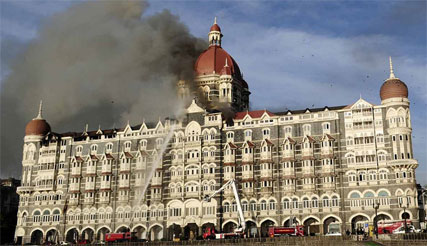
SOP ON ANVIL TO TACKLE TERRORIST ATTACKS


(BURNING OF TAJ;ATTACK ON INDIAN PSYCHE)

The Ministry of Home Affairs (MHA) is all set to implement a Standard Operating Procedure (SOP) for tackling terrorists’ crimes and attacks in the country from 31st May of this year.

This SOP has been prepared after 100 days exercise by a group of experts in security matters set up by the MHA after the fiasco of tackling the Mumbai attacks on 26/11 last year. The manner, in which the whole operation was carried out, exposed the lack of proper coordination amongst the security agencies and also witnessed almost total collapse of command and control system, at least in the important initial phase of operation. 

The above Mumbai attacks and subsequent response by the Crisis Management Group in MHA was highly criticized in the media as well as in public domain especially on the point of delayed dispatch and airdropping of NSG Commandos to the site. There was a total confusion on the site of operation and the securities forces were at a loss on the point of taking commands.

In the above circumstances, the MHA had setup a group of experts which after long and arduous deliberations, prepared a Standard Operating Procedure (SOP) for the security agencies tackling the terrorist crimes. This SOP contains list of does and don’ts, it would be followed by all concerned central and state security agencies as well as the external and internal intelligence agencies like I.B. and R.A.W. 
It is pertinent to mention here that the central as well as state security agencies do have the list of does and don’ts and SOP for Anti-Naxal operations.
This is the third important decision in the MHA after Mumbai attacks, first and second being establishment of National Investigation Agency (NIA) and amendment to the Unlawful Activities (Prevention) Act, 1967 respetively. Many experts in security and strategic matters believe that clear cut command and control mechanism and zero response time are the keys to success in tackling terrorist attacks. The kind of reflex in the rescue team which the entire world watched when a passenger plane had to make an emergency landing in the Hudson river in USA set an example for many countries including India. We, over a period of time, have created a plethora of security and intelligence agencies, but failed to evolve a scientific, coordinated and coherent system of command and controll. When tragedy occurs, the agencies bestowed on the responsibilities to carry our operations, get themselves at a loss, They usually take more than required time to respond. The recent incidents of narrow escape of President's helicopter at Mumbai air port during the visit was another example of lack of coordinationa command and control mechanism in some areas, which is matter of grave concern. Hopefully, this SOP would be able to eliminate or atleast minimise the chances of such fiasco which we unfortunately watched and experienced during Mumbai attacks.
Discussions are also going to amend the rules related to Media also, so that the entire area, where the operation is to carried out, could be cordoned off. During the Mumbai attacks, some of the electronic media (TV channels) acted in a most irresponsible manner and telecasted live the operation of the securities forces. This has proved disastrous in terms of relayed information to the terrorists inside the hotel as well as their masterminds stationed somewhere else. The amendment in the existing law will enable security agencies to disallow such things to occur.

Saturday, February 28, 2009

BIHAR TO GET HUGE GIFT FROM RAILWAY


(LALU PD YADAV; ARCHITECT OF RAILWAYS TURNAROUND)

Bihar is going to have two more new Railways Divisional Manager offices now. The Minister for Railways Lalu pd had proposed creation of Thawe ( gopalganj) and Bhagalpur divisional railway offices in the 2009-10 rail budget. Since this Budget has been passed by the Parliament, it paved the way of creation of the same.
Lalu pd today laid the foundation stones of these two newly created DRM offices in Thawe and Bhagalpur respectively.

With these two DRM offices coming to existence, the total number of DRM offices in Bihar has gone up to five(5). Besides these two, there are three DRM offices located at Danapur (Patna), Sonepur (Chhapra) and Samastipur respectively. All these two Divisional offices would be placed under North-Eastern Railway(NER) Zonal office, at Gorakhpur and Northern railway Howrah.

The creation of these two offices would increase the employment opportunities in this state and also add more revenues to the state's coffer. The actual construction work of these offices are likely to start only when the new govt takes office at the centre. Lalu pd has started constrution work in Bihar on a massive scale. One road-cum-rail bridge is being constructed at Digha in Patna and other is being built in Munger. One electric engine work shop is being constructed in Madhepura, whereas; wheel factory is likely begin in Chhapra. Besides this many railway stations have been updraded and modernised. Patna railway station has already been given face lift and sereral others are being given new and modern look. Gone are the days when you look the colonial vestige image on the railway stations in India. According to the information available with the public domain, about 60,000 crores rupees would be spent on these on going and proposed schemes in this development starved state.

Friday, February 27, 2009

NEW ERA TO USHER IN JAMMU & KASHMIR


ERA OF NEW HORIZON AND NEW HOPES WAIT TO USHER IN IN JAMMU AND KASHMIR

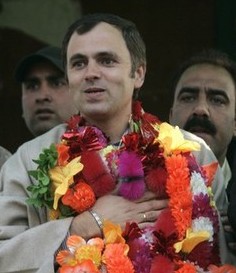
Omar Abdullah has hinted to repeal J&K Disturbed areas Act,1992 and Armed forces (special powers)Act 1958 very soon. It is pertinent to note that both these laws were enacted in order to tackle the terrorist activities in this disturbed state.

The successful election in the state in terms of high voters turn out and lesser incidents of violence have changed the political and social mileu in the state and has instilled confidence in the 'strathclyde scotland educated' and youngest CM, who in turn wants to fulfill the promises he had made to the people during his election campaign.

It should be noted that the above two laws are enacted by the Parliament, but the state govt can repeal it under the powers conferred to it vide Article 370 of the Indian Constitution and article 246(schedule-7 state list) of the constitution which gives state almost exclusive powers to the state govt in matters related to law and order.

Since these two laws give ample powers to the security forces with respect to arrests, search and firing, many human rights activists and political parties also call these laws 'draconian' and have been demanding their repeal since its enactment and application.

The withdrawal of these laws will certainly help win the good will and confidence of the people which have fast depleted over few years. But on the other hand ,it will curtail the powers of the security forces in dealing with the terrorists, which may hamper the peace process to further and normalcy to return.

Some experts in security matters are however of the opinion that constitution of National Investigationg Agency and amendment to Unlawful activities( prevention)
Act 1967 have rendered J&K Disturbed areas Act, 1992 and Armed forces (special powers)Act 1958 useless because the aforesaid law(Unlawful activities( prevention) Act 1967) and NIA are able to tackle the terrorists activities in far more effective and scientific manner.

By doing so the government can send a message of good will and kind gesture to the people of this state at large, now it is up to them to reciprocate in the same fashion.

It should be bone in mind that the local people irrespective of political affiliations have been highly critical of these, what they call'draconian and anti- kashmiri laws', therefore its repealment would usher in an era of new horizon and new hopes. This opportunity could be used to fill confidence and restore peace here in the valley,

Hopefully this step would also help in restoring peace in this strife torn territory of the Indian republic. Paksitan must also share the good gesture and reciprocate because playing with fire burns your own hands too, history has given us this lesson. All what is happening in Pakistan including in swat valley of FATA and elsewhere in this country are the fruits pakistan have sown over the years.

Tuesday, February 24, 2009

'BUY AMERICAN' ;IS IT ANOTHER SMOOT-HAWLEY ACT?


SENATOR SMOOT; THE ARCHITECT OF THE ACT

The 'buy american' clause in the Obama's 819 billion USD stimulus package has raise eye brows of many countries including India. The wave of prtectionism is blowing across the globe. The restriction in H-1B visa by USA and tightening of screws by British immigration authorities with regard to job seekers from Asian especially from coutries like India have set in this trend which will be imitated if not retaliated by many other countries across the globe. 

Similar steps had been taken by the USA after the great depression of 1930, when republican senator Reed smoot from Utah and another republcan C Hawley from Oregaon drafted America's most negative legislation called Smoot-Hawley bill which was passed by House in May, 1929. It was widely opposed by the contemporary economists of America itself, but since Hoover had made promise to the farmers of such protection, he got it implemented.It proved disastrous for not only Amrica but for the whole Europr if not the whole world. Similar retaliatory steps were taken by Britain, France, Germany and a host of such countries. They raised their tariff walls against the American goods and the export of American good fell down sharply. According to date available on the wikipedia, the export of USA fell from 2341 million dollar in 1929 to 784 million dollar in 1932. Result was catastrophic, the American Industries had to cut down production as the export fell,this led to job cuts. The figures suggest that the unemployement which was 7.8% in 1930 rose to 25.1% in 1933.

It seems that Americans have not learnt anything from history. Although Obama is opposed to this clause, the republicans are again doing the same mistakes. This clause may benifit US economy in short term but in long term this would result in negative growth of America. The export of software industries and aircrafts to countries like India, China and Brazil may go down if these countries resort to same kind of retaliatory measures.

This clause also goes against the ethos of free trade economy. If we talk in terms of a global village how can we resort to such a primitive and economically naive steps. Time has come for the Americans to ponder that much water have spilled since the first depression. World is changing and the room on the chess board is shrinking.
According to the latest figures released by the Commerce department of USA, the GDP has underwent contraction by more than 6%. Earlier it was estimated that the contraction would be less than 3% but it went more than the estimate. Obama's stimulus package lauched by the US administration is expected to show its positive results after a couple of months. This unprecedented contraction in GDP is due to decrease in domestic spending which is all time low. The figures suggest that the American export has underwent downward trend highest ever since 1970s. The Buy American clause in the stimulus package, on principle, is opposed by Obama but it is not being conceived in wider perspective.

Sunday, February 22, 2009

BERLIN CONFERENCE; PRELUDE TO G-20


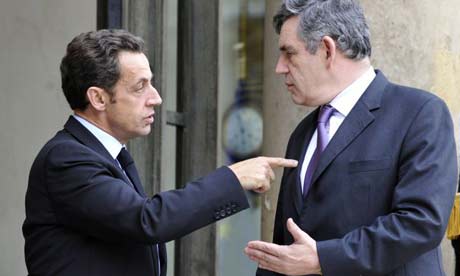
MARKEL AND BROWN; WHO WILL BELL THE CAT?

Leaders of major european countries have assembled in Berlin in a prelude to G-20 summit (India is also a member of G-20) which is scheduled to be held on 2nd April this year in London. This meeting is being attached immense singnificance because leaders of all major european economic powers have accepted officially that recession has arrived into their countries. Although no consensus is likely to be arrived at here also, but all leaders have unanimously argreed to the fact that this is a " global crisis and therefore it needs to be tackled globally", an acceptance which had been conspicously absent in all previous deliberations on economic matters. The change in attitude is significane and it seems that they are making themselves prepared to give a big say to other countries of third world, vis-a-vis new 'global financial order'. Markel went upto saying that this is the ' extraordinary international crisis' that means they want it to be solved with global participation.

Underpinning the significance of forthcoming London Summit, President Sarkozy said that ' summit would bear historic responsibility to reform global system. Apprehending the advent of trend of protectionism, Gordon Brown said that it would undo all the progresses which we have made over these years in terms of prosperity, liberty and democracy. Brown further said that an economy should be created which is based on ' soundest principles' and world needed a ' global new deal'.
Although all participating leaders have divergent views on majority of issues, but all of them reiterated the need of conferrement of major role on global financial institutions like IMF and world Bank.

The leaders also expressed their anguish and concerns on the system of giving hefty bonuses to the corporate managers at the cost of tax payers money. It should be born in minds that Obama have strongly warned against such practises. In India our PM had raised voice of concerns months ahead of this crisis when he had requested the corporate houses to trim the salaries of CEOs because it not only widens disparity but also instills frustrations in different classes of society. Unfortunately this appeal was not taken by Industrial and corporate houses in its spirit. Many laughed saying 'pay gram and you employ monkeys' 

This prelude conference at Berlin gives some idea about the agenda of the London summit on which India and other developing nations must do home works.
What actually India and other such countries want from the London summit? BRIC ( Brazil, Russia,India and China) and IBRA and other such blocs must prepare their agenda well before this summit so that they can put their case in a more cohesive and coordinated way. India has not yet started Institutionalised official deliberation on it as to what we are looking for in the forthcoming ssummit. It is the high time that we must stake claim a big role in the proposed global financial order otherwise there is no use crying over spilt milk.

Saturday, February 21, 2009

FOOD SECURITY IN INDIA; ARE WE UNDERNOURISHED?


SWAMINATHAN;HARBINGER OF GREEN REVOLUTION

One UN report on food security in India has said that about 40% of the children below age of years are undernourished. This report has been prepared after a comprehensive survey by World food programme and

The report suggests certain measures like expansion of PDS system and recommends that in place of a Targeted PDS, it should be made universal PDS so that the vailablity of food to the rural areas is made universal and made much more convenient and institutionalised.

The report has praised the schemes like NREGS and other rural developmental wage oriented programmes and emphasised the need of their better and efficient implementation so that the fruits of these programmes are reached to the rural population which constitutes about 56-60% of the total population. The report further recommends to the governments that since the food production is expected to touch record 230 Million tons in this fiscal, it should be ensured that the public distribution system be made much more wide and universal. Malnutrition and undernourishment are the stigma on our society especially when we boasts of high growth rate and a robust economy. The report urges the government that the abhorrible malnutrition is erased from the society.

SWISS BANK TO DISCLOSE HIDDEN TREASURE


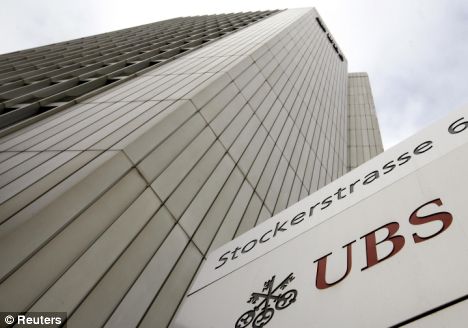
UBS, CITADEL OF PROSPERITY BUILT ON BRICKS OF POVERTY

The world economy is in deep crisis. It requires huge amount of liquidity to tide it over. It is amply clear now that the market has plummeted due to excessive financial leverage. According to one estimate, in 1980, the leverage was up to 108% of the global GDP. In fact the trend of twisting and extracting excessively from the economy even beyond its limit had started after 1990s itself. Initially, this trend paid handsomely to the money makers and finance mangers and they thought that it is the secrets of economic success. The so called boom in sectors like housing, IT, service, capital markets etc was perhaps due to this leverage also. The bottomless greed of money makers, MNCs and TNCs brought the leverage percentage up to sky soaring level of 600% of the global GDP in 2007. It is estimated that in 2007 global GDP was about 54 trillion USD, but the financial and banking sectors stretched this amount to six hundred times. Thus the growth of entire global economy was brought to stand on the foundation of sands, which was bound to sink and implode. 
Therefore, the World desperately needs huge liquidity and wealth in order to restructure, revamp and rebuilt its global financial architecture. The American GDP is about 13-15 trillion dollar. According to economic experts, the USA is in desperate need of liquidity in order to ensure that the TARP and second stimulus package get going and help US economy recover from recession. 
It is in this background the US administration is tightening its screws on the tax evaders. In a daring move, the US administration sought information from the United Bank of Switzerland (UBS) regarding the American clients who have evaded tax from the Internal Revenue Service (IRS) and deposited their money in this clandestine off shore Bank. Initially, the UBS vehemently opposed this move and declined to disclose the names of clients and their amounts in the bank account on the pretext of its age old policy of secrecy and confidentiality conferred on it under Swiss Banking Act,1934 
The US administration toughened its stand and made UBS bow down. Now the Bank’s Chairman Peter Kurer says that “We accept full responsibility for these improper activities, he added, suggesting that client confidentiality, to which UBS remains committed, was never designed to protect ‘fraudulent acts’. Now the Bank is ready to disclose the names and the turnover of 250 clients immediately and assured the US administration to divulge some more names in near future. The Bank is also ready to pay 780 million dollar as penalty to avoid possible launching of prosecution against it. 
This whole success story on part of US administration has set a good example for countries like India, the citizens of which have reportedly deposited 1456 billion dollar in UBS. According to the data of Swiss Banking Association (SBA), in 2006, Indian nationals reportedly held the largest quantity of illegally stashed money in Swiss Bank, if this data is to be believed, and there is no reason of disbelief, Russians have deposited 460 billion dollar followed by British 390 billion dollar, Ukrainians 100 billion dollar and Chinese 96 billion dollars. These figures speak much than what it appears to be. This is why it is said that India is rich country where poor citizens live. 
Ours is developing economy and we are proud of it. Even in this period of global meltdown, we have been making impressive growth, second to China only. But in terms of GDP, we are far behind than that of US, China, Japan etc. It is yet to cross 01 tn dollar at the current rate of convertibility. If the deposited huge amount of Indian Nationals is taken true, it is 1.8 times the GDP of our country. What a massive drain of wealth! Alas we could have brought it back. In fact this drain of wealth is much bigger than those of the British colonial period. Economic Historians have estimated that till Independence the Britishers had been able to drain our wealth from India equal to 5% of GDP, whereas; in post independence India it is 108% of the GDP. What a tragedy! 
Like Americans, we too desperately require huge liquidity. We have injected massive stimulus package into the economy for a ‘jerk start’, for which we require more and more money. The Indian Infrastructural Finance Company Limited (IIFCL), which provides fund to carry out infrastructural projects require money. The ambitious programne of National Rural Employement Guarantee Schemes (NREGS, which has helped our rural economy become stronger and helped increase the purchasing power of billions of people in India requires more and more money so that it can yeild much more better results. Thus, to see economy moving and rural developmental schemes get going, we require money. The million dollar question is, from where will the money come? We cannot increase the tax rate, because it is counterproductive. We have already planned to launch GST from April, the next fiscal which is expected to add 1.4% additional increase to the GDP. We have to have tax regime which provide relief to the honest tax payers.
We have, therefore, to take recourse to similar measures as Americans have taken. If we can notch hefty amounts from the UBS, it can be of immense help for our ailing economy; after all 1456 billion is an amount which can change the fate our nation. Some economists are of the opinion that the liberalisation has increased the pace of flight of capital and the size of drain of wealth kept growing with growth of economy. Time and again this issue has been raised but every time the power brokers have succeeded in thwarting the move. No serious effort has so far been made to see that the drained wealth of nation is brought back. There must be a political audacity to raise this issue and make meaningful effort in this regard. India must stand tall and extract information from UBS and other such offshore Banks with regard to clandestine bank deposits by Indian Nationals. We must talk to them in a peremptory tone and demand back the illegally drained wealth of the Nation. It is high time; India must stand firm with a determined body language so that UBS behaves with us at par with US. 

This issue can be raised on world forums including G-20 or G-7 summits. How can a Nation or a financial institution like UBS be allowed to eat up the vitals of ours in the name of century old obsolete and colonial legislation? Time has come for the international community also to exert pressure on Switzerland and see that the policy of secrecy and confidentiality of UBS and other such offshore Banks be scrapped. It does not go against the Laissez-Fairre or free market economy, after all unethical financial practises and bottom less greed have already done tremendous damage to the world financial order beyond repair. Economies are made for the welfare of citizens in particular and human kind in general. How can unethical trade and financial practises be allowed to swallow the destiny and right to live a descent life of billions of poor people who still starve, while the Banks are spilling over with money and gold?

ASSETS OF UBS AND OTHER SWISS BANKS- It is astonishing to know that the total assets of UBS, the largest of the Swiss Banks, is roughly 2 trillion dollar which four times the GDP of Switzerland and 9 times that of Iceland. If assets of all Banks in this country are taken into account, it is 6-7 times the GDP of Switzerland. Comparing with countries like America and Britain, the assets of all the Commercial Banks in these countries are hardly 70% the GDP of these countries.

THE EDIFICE IS CRUMBLING- The sources in the Banks reveal that the outflow of money from these Banks are increasing. The UBS has made certain changes in the top management also. Peter Kurer is reported not to contest the forth coming election for the top job, the Chairman, this year. It seems that the old edifice is crumbling and days are not far when the entire principle of 'privacy'or ' secrecy' on which these Banks are standing would be put to question.

Friday, February 20, 2009

IS LAISSEZ-FAIRE IN REVESE GEAR?


( BROWN AND SARKOZY,IS HONEYMOON OVER?)


THE world economic down turn has started showing its ugly and horrendous faces in social spectra also. The impact of this recession is gradually percolating down vertically and spreading horizontally across the global village. The economic depression, the product of U.S.A., is being exported throughout the length and breadth of globe and letting its jitters felt in all sections of the society.
In Europe , France is witnessing the worst ever street-protests against the alleged failure of the government in tackling the economic slowdown and mitigating the woes of its citizens. President Sarkozy is facing a grave challenge and the sweet memories of his honeymoon with Bruni are fading. This unrest has strained his relation with Gordon Brown also. Britain on the other hand, is also witnessing protests and anti-government demonstrations. “British company only for British employees” is being advocated for, very staunchly. In fact British companies have been hiring cheap paid employees from other European countries, are permissible in European Union Law, and are becoming bone of contention.
Similar social and political unrests are being witnessed in Russia and in many other erstwhile members of Warsaw Pact countries. Prime Minister Putin and President Dmitry Medevedev have been facing rough weathers in Russia. Putin, once hero of Russian people, whose popularity was said to be at a soaring level, when he quitted the presidency, is also under tremendous pressure.
Even in America, people are taking to streets and demanding tough, decisive and result oriented steps so that their lives are brought back to normalcy. In spite of Bush’s 700 billion dollar TARP (bailout package) more than 18000 jobs are being lost every month. According to America’s own labour department statistics, the un-employment rate is about to touch a double digit figure, a all time high in the post depression economic history of the country. Obama’s historic coronation to the Whitehouse seat has instilled a huge amount of hopes, which is both an asset as well as liability for this first African-American non-white president. His 836 billion dollar US Stimulus package will take few more months to make its impact felt in the socio-economic arena. Till then the American society’s patience will be put to test.
The Asian dragon, the republic of China, hitherto unscathed from the scratches of the down turn is also undergoing socio-economic as well as political upheavals. The massive 900 PLUS billion dollar stimulus package has been put on top gear of the economic vehicle. The thirst, the government says, will be on ways and employment oriented infrastructural developmental activities like Rail and roadways constructions. In spite of this the growth of this Asian Giant has shrinked to 7.5 percent. The toys industries, one of the biggest exporters of the world, have suffered very badly. It has butchered the employment to such an extent that the stimulus package’s after effects are also being neutralised.
India, one of the fastest growing economies of the world, too could not remain insulated from the viral infection of the global economic ailment. The massive pumping of liquidity into the financial systems through frequent rate cuts in CRR, SLR, REPO and REVERSE REPO RATES have applied some ointments on the bleeding wounds of economy but still a lot is required to be done. The stimulus package of Montek has a long way to go before it reaches to the tattered masses. The brunt of the slowdown has taken millions of jobs head here in India also but the social and political unrest at a magnitude similar to those in other parts of globe is not imminent here. Thanks to the accustomed Indian psyche and its endless power of tolerance. The institutionalised and bureaucratised network of social security system has done a commendable job here in this country. NATIONAL RURAL EMPLOYMENT GUARANTEE SCHEMES (NREGS), the brain child UPA government, has come as a huge relief for the people living below the poverty lines in the countryside. The massive allocation of more than 60 thousand crore rupees over a period of 3 years has done miracles in the rural economy of this country in the sense that it has provided pennies in the pockets of billions of people. It worked on KEYENESIAN theory which is based on the principle of government expenditure vis-a-vis the purchasing power of people.

THE TREND OF PROTECTIONISM -The WTO has released a report that says that about 16 countries have take protectionis measures since September the last. Many experts believe that these anti-free trade measures will provoke retaliation from other countries also and may led to reveral of the entire process of free trade capitalism across the globe.The trend of protectionism is set in USA also, ‘Buy American’clausein America’s 819 billion dollars stimulus package smack of protectionism. US administration's decision regarding H-1B visa restrictions are not in congruent with the policy of ‘lazes- fairre’, a policy which America do not get tired of boasting. One 'Patriot employer Act' is on anvil, which will give incentives to the employers taking some protectionists and social security measures with respect to providing employement in USA. Many Europeans are tightening their immigration regulations with a sole motive of saving their economy and providing employment to their own citizens. America has imposed an undeclared ban on Chinese goods. The Japanese economy has shrunk to almost negative growth due to shrink in exports, the main growth factor coming in Japanese economy, to almost Zero level. This is suggestive of the fact that the importing countries have stopped Japanese goods into their countries. 
Many Europeans nations have resorted to such similar moves which go against the basic tenets of capitalism. Germany for example have provided huge subsidies to its industries and sought to protect its economy from the onslaught of the recession. Chinese have restricted imports and is providing unprecedented protection. President Sarkozy has hinted that some protectionist steps would be taken to save the ‘French Detroit’, move opposed by many European nations themselves.
Canada, Mexico, Brazil, Argentina, Russia, Ukraine, Japan, South Korea, etc all are on similar move. The sentiment is running high across the world in favour of protectionism and the ideals of free economy are being abhorred now.
The excessive financial leverage and excessive greed have ruined the financial fabric beyond repair. According to an estimate, the financial leverage in 1980 was 108% which rose to 600% in 2007 and lending was done of worth 600 trillion dollar whereas; the total Global GDP was only about 55 trillion dollar. What an excessive leverage and what as mad race it was.
The champions of ‘European Unification’ ‘Under One Europe’, one currency and one parliament under ‘European Union Umbrella’ are sitting quiet now. The global economic forums like WTO and World Economic Forum at Davos seem to have postponed their ‘Unified world market and non-subsidised’ world economy plans. All the motions, it seems have been kept in abeyance, thanks to Xenophobia everywhere.
IMPACT ON INDIA DUE TO ‘BUY AMERICAN’ CLAUSE- the Indo-US trade has witnessed spectacular rise over a decade. According to the Ministry of Commerce, the export from India to USA has been of 160 Billion dollar in 2007-08 which rose to 200 billion dollar in 2008-09. The chart below gives the picture of more than a decade-

1993 1994 1995 1996 1997 1998 1999 2000 
India’s Exports 4,551 5,302 5,736 6,169 7,322 8,237 9,071 10,686 
India’s Imports 2,761 2,296 3,296 3,318 3,608 3,564 3,688 3,663 
Turnover 7,312 7,598 9,032 9,487 10,931 11,801 12,759 14,349 
Balance (+) 1,790 3,005 2,440 2,851 3,715 4,673 5,383 7,023 

(* Source: US Department of Commerce, Bureau of Census) ,

The above figures suggest the increasing trend of the bilateral trade over the years which have reached more than 200 billion dollars. As far as the composition of the trade is concerned, India's exports to the US have been rising mainly on account of significant increases in the exports of diamonds, textiles and ready-made garments, machinery, carpets, footwear and leather products, dyes, iron and steel products, chemicals, edible fruit and nuts and spices, coffee and tea. Items such as, cut and polished non-industrial diamonds, jewellery, textiles and clothing, carpets, shrimp and other marine products, footwear and leather goods, iron and steel, and cashew nuts constitute over 70% of total Indian exports to the USA. 
The volume of these exports is expected to witness a downward trend owing to the restrictions imposed in the stimulus package. 
As far as import of India from USA is concerned, there has been a change in the composition of India’s imports from the USA also. Due to increase in our food grains production especially wheat and edible oils, the imports of these items from the USA on a regular basis have stopped. Crude oil, which remained one of the highest imported items from USA in 1980s has been gradually phased out.
At present, we import from America, items like machinery including project items, fertilizers, aircraft and aeronautical equipment, medical equipment, and organic chemicals etc. undoubtedly, if our exports experiences contraction, we would resort to contraction of imports from USA also in order to see that the balance of trades in not slated excessively in favour of USA 
USA is the largest trading partner of India. Share of USA in India’s export is 17%, and its monetary value as we have seen is more than 200 billion USD. This economic meltdown had already adversely affected India’s export in general and export to USA in particular. According to Federation of Exporters Association (FOE), the exports from India are already showing signs of decline due to this slowdown syndrome. Figures suggest that it is experiencing a decline of more than 15%.
The bilateral trade has been galloping with unprecedented pace due to variety of reasons, thanks to the cementing of bilateral ties over a number of issues including strategic and nuclear matters.
Although, this protectionist clause will help improve the situation in the domestic demand in America on short term basis, but in the long term, this would affect adversely the American trade also. If exports from this country plummets, similar retaliatory measures are taken by host of countries. 
1. EFFECT ON IT-BPO AND SERVICE SECTORS- the service sector constitutes 50% in our GDP, meaning thereby that this sector has witnessed boom over a decade or so.
Over a period of time, the export of this sector increased by 33.5% amounting to 8.4 b USD in 2007-07, it is expected to reach 10-11 b USD by the end of 2007-08. According to National Association of Software and services Companies (NASSCOM), the number of employees working in BPO-IT sector in India is under-

Year Number of employees
2003-04
2,16,000
2004-05 3,16,000
2005-06 4,15,000
2006-07 5,53,000

The current figure is certainly much more and is increasing day by day. According to one estimate it has touched a figure of 1 million. They were getting salaries worth 1 b USD during the year before last year and naturally it has increase substantially in 2008-09. According to one estimate, about 82% of US software companies prefer Indian software professionals for obvious reasons. 
The buy American clause would be adversely affecting this outsourcing industry also and Obama has made it clear that the American companies which outsource would not get tax reliefs. Message is clear, they would be discouraged from outsourcing the job to the Indian software sector in particular and service sector in general.

WHO FIGHTING FOR ITS EXISTENCE: WILL IT TRIGGER NEW ERA OF CONFLICT? Politics and lust for power are not endemic of India only...