Sunday, July 12, 2009

BIHAR TO HAVE MORE CBI COURTS;CJI

CHARITY BEGINS AT HOME

CJI K.G.Balakrishan today hinted that Bihar may have 3 to 4 more CBI special courts. He was speaking on centenary celebration of Patna Law College in Patna yesterday,the 11th July. The occasion was conspicuous by presence of Governor of Bihar Devender Konawar, CM Nitish kumar and ACJ of Patna High court B.K.Singh. While laying down foundation stone of Auditorium cum seminar hall, Nitish kumar reiterated his commitment to fight corruption in Bihar. He enlisted his government's initiatives vis-à-vis corruption. He also highlighted his government’s much talked ‘speedy trial experiment’ which has earned nation wide appreciation in legal luminaries.

Highlighting the problem of huge pendency of Cases, the CJI said that the PM has positively responded to his letter in which he has requested to set up more courts. Sharing his experience, he said in Delhi alone, about 350 murder cases are filed per annum out of which only 250 could be disposed off, leaving a pending of 100 cases, thus over a period of time this results in huge pending.

The governor said that economic disparities among poor and rich have to be abridged otherwise the violence and Naxalism would go unabated and would not be checked merely by courts and police.

Hopefully setting of new CBI courts, which is only two at present in the state, the pace of disposal of cases related to especially corruption, would increase.

Interestingly reforms in Judiciary have taken a front seat in the UPA-II and many Bills are on anvil to weed out corruption in Judiciary and overhaul this premiere institution. The Judiciary has also sensed the mood of govt and public and has responded reluctantly positively about this move. The recent cases of corruption in higher judiciary have taken a heavy toll in terms of image of judiciary. Recent judgments in Courts sound critical to judicial system itself and rebuff judges against whom serious charges of corruption have been leveled.The CJI also hinted to go tougher on cases of corruption in judiciary also.

Saturday, July 11, 2009

G-8 PLEDGES TO INVEST 20 BILLION DOLLARS TO INCREASE FOOD PRODUCTION AND FIGHT HUNGER

WORRIED FOR AFRICA OR FOR THEMSELVES?

Leaders of world’s most developed nations, grouped as G-8 have pledged 20 billion dollars to boost agricultural production in Africa so that fear of hunger which is looming large, could be fought. This declaration was made in G-8 summit which has just concluded in Italian city of L‘Aquila.

It is estimated that owing to seemingly unending global financial crisis (GFC), World is likely to face unprecedented hunger situation and Africa naturally will be the hardest suffer. At present, it is estimated, that about 1 Billion people, mostly in African countries, are hungry and this figure would be further enhanced at least by another 100 Million by the end of this year. The world is going to face unprecedented humanitarian crisis amidst examples of lofty success.

In this back drop, the world’s most developed nations deliberated upon and focused on hunger with ‘utmost sincerity’. Climatic change and GFC were of course the major areas of concern, but world leaders vowed that we cannot have a sustained growth and prosperity amidst abject and rampant poverty.

INVESTMENT AND NOT SUBSIDY- the leaders committed that this 20 Billions USD (12.4 Billion £) money would be invested in African countries in Agriculture to boost food grain production over three years. Meaning thereby, this money, African countries are not going to get as farm subsidy or outright humanitarian help.

Many African leaders however casted a doubt on this pledge and said that such pledges have been made by world leaders in past also but their commitments and promises have not been kept.

There are another group of people who actually doubt on the entire gesture of G-8 leaders itself. They opine that this pledge in not blended with ‘philanthropy’ but actually ‘orchestrated’ with economic game plan. With the GFC still ensconced into the American and Western economy, they are looking for another area of investment and consequent returns of their investments. These activists fear that Trans-National Companies (TNCs) and MNCs from these develop countries would invest in agriculture sector of African and Asian countries and convert the very nature of farming. The use of GENETICALLY ENGINEERED SEEDS, INORGANIC FERTILISERS, big machines and high yielding variety seeds into these countries would change the very nature of farming and will make agriculture somewhat unsustainable throwing farmers in an economic quagmire.

They have a valid point when they quote instances of farmer’s suicide in India especially cotton growing farmers in Vidharba and A.P etc. Actually, they say, that use of B-2 cotton seeds and other high yielding variety seeds, most of them are genetically engineered, have made agriculture unsustainable because the cost of production has gone alarmingly high. Moreover the most defective and disastrous part of use of these seeds is that such seeds cannot be re-used. In traditional methods, farmers can use part of the harvested grains as seeds also. Thus once the farmers switch over to these genetically engineered seeds, will have to depend on MNCs and TMCs for uninterrupted supply of these seeds forever.

If this is the game plan of the G-countries, it is afraid that in the coming years, African farmers will meet the same fate as of ours.

Thursday, July 9, 2009

BIHAR TO STOP LAND GRABBING


LAND IS STILL FOR THOSE WHO CAN HOLD IT

The govt of Bihar is planning to come out with a legislation in the current session of Legislative assembly to stop illegal and forceful dispossession of lawful owner from his land.

At present there is no specific law with respect to prevention of forceful and illegal dispossession of lawful owner of land. Such cases are tried in civil courts and take many years to get the matter adjudicated. In fact the aggrieved persons have to go to Civil Courts to prove his ‘Title’ over the land in question and naturally burden of proof lie on the petitioners. Thus the aggrieved person has to prove first that the land in question belong to him, only them the court will order for restoration for which the aggrieved person has to bring a fresh suit after winning title. The process obviously is complicated and biased against the law abiding and weak citizen and slated favourably towards land grabbers and land mafia.

Nitish Kumar’s much published and praised experiment of holding Janata ke Darbar me Mukhya Mantri or ‘Chief Minister in the court of public’ programme has been flooded with complaints related to land disputes. Most of the cases which came before the CM are related to forceful dispossession of land by land mafia or criminals. Since no such powers of restoration of such illegal and forceful dispossessions are vested with executive branch of government, the CM found himself helpless on this issue. He use to send the petitioners either to police or to district collectors for redressal, but of no use, because neither collectors or police has the power to restore back the dispossessed land to the lawful owner. In fact CM’s secretariat got stuffed with such problems and become an issue of much discomfort to the CM.

Taking cue from this problem, CM constituted a committee which suggested enactment of a legislation to this effect. The draft of the proposed legislation is ready and likely to get cabinet’s nod within a couple of days. The legislation titled ‘Bihar Land Dispute Redressal Act’ is likely to be put up before the Legislative assembly after approval by the Cabinet. Once this law is passed, Bihar will perhaps become second to Andhra Pradesh only to legislate such law.

It is going to be a land mark because land grabbing and illegal dispossession have become a chronic problem across the country. Lands especially in urban and metros, are becoming costlier day by day and absence of any specific law gives Police and other muscle men to earn fortune due to this problem.

It would require Union government’s consent also because powers under this proposed law would be conferred on executive branch of government hitherto enjoyed by Civil courts, meaning thereby that some provisions of Civil Procedure Code (CPC), which is a central code, would be amended.

Hopefully this law would pave way for other states also to ponder on this vital issue and frame law on similar lines.

Tuesday, July 7, 2009

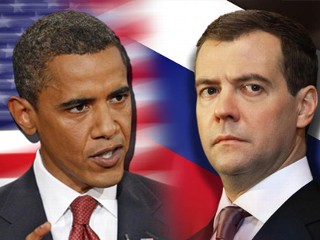
OBAMA PRESSES RESET BUTTONS WITH RUSSIA

HAVE TO GO A LONG WAY

OBAMA PRESSES RESET BUTTONS WITH RUSSIA

Obama and Medvedev agrees to cut down Nuclear war heads by one third and pave way for new nuclear disarmament treaty

In a significant development regarding reductions of ‘Nuclear Armament’, USA and Russia agreed to cut down their nuclear warheads by 1/3rd of the existing stockpiles. Pact to this effect was signed by Dmitry Medvedev and Barrack Obama in Kremlin on Monday. Obama’s maiden visit to Russia, the once staunch enemy of USA, is viewed as corollary of US administration’s vow to end hostilities and undo grotesque legacy of George W. Bush. Both leaders signed an agreement which would pave way for reduction of nuclear warheads by one third of existing stockpiles. This agreement would culminate in signing of a Treaty, said Obama and Medvedev, which will be formally prepared by the end of this year. This Treaty will replace START, 1991 (strategic arms reduction treaty) which is scheduled to expire in December 2009.

This Summit marked the pressing of ‘Reset Buttons’, a significant change in American foreign policy of which Joe Biden had elaborated upon in Berlin conference early this year. Obama emphatically said ‘we resolve to reset US-Russian relations so that we can cooperate more effectively in areas of common interest’. It is a ‘reversal of drift’, the drift which had started during Bush regime. This détente will help create congenial atmosphere in the region, they claimed.

Sources say that USA currently has 2,200 operational nuclear war heads whereas Russia has 2,790 such warheads. It is pertinent to mention here that US-Russia combine constitute 90% of global nuclear arsenals. Therefore one third reductions is a substantial one and ‘Operationalisation’ of this treaty would mean huge reduction in this stockpile. This would probably pave way for similar gestures by other nuclear powers across world.

This Summit is also important for this region because relation between these two powers had sunk all time low in post cold war era on Georgian issue. The Georgian invasion on Ossetia and Abkhazia was supported by USA and other NATO countries were viewed by Russia as an invasion on itself. Russian military built-up in Black sea followed by NATO’s open support to Mikhail Saakashvilli, the Georgian president, has made US Russia confrontation somewhat imminent, thanks to good sense prevailing that the situation was saved from going to all out war. This Summit of Obama and Medvedev would certainly instill confidence in the region and help return normalcy restored.

However only signing of this agreement does not guarantee success of this resolution. In 2002 also Bush and Putin had singed such agreement which was sacrificed at the altar of mistrust and clash of interests. This Summit was different from that of George Bush and Putin in the sense that it meant business only and lacked jokes and personality clash. Obama and Medvedev were straight forward and meeting ran for 5 hours only. Obama oratory skill is widely acknowledged especially after his Cairo speech. He is not hector in his speech, a departure for Bush’s style.

Obama choose to meet Putin also, because like many others, Obama too share the view that it is Putin who runs the country, a gesture though seems apparently related to courtesy and etiquettes, blended with hardcore diplomacy and reality. Obama ecstatically said that this pact would lead them to hold a ‘Global Summit on Nuclear Arms reduction’ next year.

Apart from international media hype on this Pact, both leaders failed to reach to an agreement on ‘Missile Defense System’ of Eastern Europe. They remained at loggerheads on this, an issue on which USA has been rigorously pursuing and Russia persistently opposing.

Obama’s hidden Agenda- This summit was not given the kind of coverage in State (Russia) controlled media, which generally such meetings get. TV channel one, the state controlled electronic media, did not show Obama’s visit in headlines. It is naïve to believe that the channel might have skipped it. This may be a calculated and calibrated telecast. Russia deliberately wanted to keep this visit at low pitch. Obama’s visit, according to Russia, might be aimed at killing two birds with one single stone. Obama knows it well that American success in Afghanistan, Pakistan, Iraq, Israel and Palestine largely depends on Russia’s stand on these issues. Bygone are days when US had the ability to dictate terms. Now there is ‘no room on the chess board’ and US can no longer ‘play with the pawns’ as Paul Bracken has put it in his book ‘Fire in the East’. Obama has to undo Bush’s legacy which was characterized by ‘with us or against us’. America can no longer afford hostilities all around the world. US Billion dollar national debts largely due to its whimsical war against terror have thrown this country in quagmire, of which USA is desperately trying to get out.

Iran’s obstinacy, belligerence and ‘ready to fight attitude’, North Korea’s defiance, Israel’s reluctance to come to terms of much talked ‘two nation solution’ and seemingly unending war in Afpak region have shattered Obama in particular and Americans in general.

Obama wants at least one success in this journey so that he can use it as sojourn in his long march to boondocks. Putin, a staunch nationalist and hardcore realist, is unwilling to give this leverage to Obama. Russia itself is recuperating from its economic shambles and desperately trying to regain a place in the world order, it has lost after eclipse of USSR. The post cold war era has so far not been a happy experience for Russians; they have lost the coveted status of ‘SUPER POWER’ and economic hegemony is a bygone chapter.

Russia wants to show that it matters again and USA cannot take it for guaranteed. Gazprom crisis was deliberately created by Russia to make its presence felt in the international arena. Acceptance of MISSILE DEFENCE SYSTEM as proposed and conceived by Bush cannot be acceptable to Russia in the above backdrop. For many experts ‘Missile defense system’ is an obsession of Bush same as STAR WARS or SDI (strategic defense initiative) was for Ronal Reagan. Hopefully obsessions and personality clashes did not figure in this summit. Well begin is half done, Obama and Dmitry Medvedev have miles to walk on bumpy roads in boondocks before they reach a resort of happiness and détente.

Monday, July 6, 2009

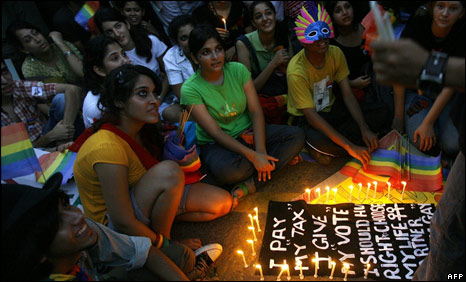
JUDGEMENT ON GAY; WHICH WAY SOCIETY WILL GO


which will you go?


The judgement of Delhi High Court which seeks to legalise gay relationship is all set to trigger a national debate between forces representing modernity and forces representing old order. The Court said that Law outlawing homosexual acts was discriminatory and ‘violation of fundamental rights.’

The judgement is based on the concept that Indian Penal Code (IPC, 1860) is one and half century old colonial law and does not represent the changing social and ethical order. It is of common knowledge that section 377 reads ‘whoever voluntarily has carnal intercourse against the order of nature with any man, woman or animal, shall be punished with 152[imprisonment for life], or with imprisonment of either description for a term which may extend to ten years, and shall also be liable to fine.

Explanation- Penetration is sufficient to constitute the carnal intercourse necessary to the offence described in this section.

The Delhi court while hearing a PIL filed by one NAJ, an NGO, has held section 377 as an infringement on the fundamental rights enshrined in constitution (article 21). This judgement is going to have far reaching ramifications in socio-religious life of many Indians and would have profound impact on the legal architecture of this country.

LEGAL IMPLICATIONS- the decision of Delhi High court will have its impact in the state of Delhi only, and other parts of territory would be governed by the same section of IPC, but this land mark judgement would necessitate the Union govt to bring about amendment to the colonial Penal code. This case shall certainly be quoted by the lawyers in related cases in other parts of the country and is going to affect judgement thereto.

Secondly, other sections like 309 of IPC and host other such provisions will be subjected to such societal and legal scrutiny because many people are of the opinion that this 150 years old law should either be scrapped and replaced with a new one or at least amended to such an extent that vestigial instincts of erstwhile order are removed. The legal framework and laws should also change at the same pace at which society is changing, they say, otherwise the laws and customs etc would be rendered meaningless. Thus we can expect in near future, more such land mark judgments or huge dose of constitutional and legal amendments. Our legal system is all set to pass through rigorous tests.

SOCIAL IMPLICATIONS- every change is a painful process, therefore the society is not going to take this change without resentment. The force of status quo is bound to fight back. In fact strong reactions have started pouring in the social panorama. It seems that the society is trying to take recourse to newer ethos and slowly discard older values. It is clash between ‘newer order and older order’ also. On the one hand, we have one India where younger generation is competing with west. This generation wants to move in resonance with the changing world. It aspires to follow new global social, financial, ethical and political order. Globalisation, Liberalisation and Privatisation for them are not just a government policy, but a way of life. They want western type of liberalism and freedom, which unfetters them of all the ethical, moral and social shackles, but on the other hand, there is one group or you can say one generation which is not cosmopolitan and is living with mundane realities. There are people who have to fetch water from distant wells to satiate thirst. They have to collect fodder for their cattle so that they can earn their livelihood. They collect leaves to feed their babies. They don’t even spend 12 Rs/day because they do not have the money to spend. For them, life means continuous struggle for subsistence and not existence. Fundamental rights and gay relationship and many such issues for them are nothing but a joke.

There is also one more group of people in India. These people believe that they are the custodian of social order and society cannot and should not change without their consent and concurrence. They believe that ethical and social values cannot be dictated by anyone other than themselves. This judgement is a jolt on such forces because this imminent change has not come from them but from other sources. They argue that just to satiate the desires of some people who indulge in ‘Unnatural sex’, legal and social order cannot be changed. They have a valid point when they say that ‘will the courts legalise sex with animals then because some people do enjoy animal sex? Some children may enjoy sex with grownup lady, will the court legalise it also?

Thus the coming days these issues are likely to constitute topics of discussion for media and middle class, but legalising gay or punishing them makes no difference for them who do not enjoy even natural sex amidst abject poverty.

Friday, July 3, 2009

JUDGES TO BE SELECTED THROUGH EXAM

IT REQUIRES MASSIVE DOSE OF REFORMS

Veerappa Moilly has taken over the guard of Ministry of Law and Justice; Bhardwaj has been changed. The message perhaps is to push some long pending reforms forward.

The reform in Judiciary is a long pending issue and no Ministry actually wanted to pursue drastic reforms because it is most of the time very contentious and invites wrath of judiciary. If fact one small amendment in the Criminal Procedure Code (section-41) invited intense wrath of one section of lawyers and protests are still going on.

Indian Judiciary is a British legacy and many remnants of this legacy still exist with meagre or naught changes. The present form of Judicial System was laid in year 1833 when Supreme Court was established in Calcutta.

The debate on Judicial Reforms has been a topic of discussion either in legal luminary or in urban middle class; therefore, it unfortunately, could not become a prime concern of common man. Discussions in public domain on this issue have also been confined to identification of problems, rather than anatomy of the system itself. It is only after plethora of instances of corruption charges in the higher judiciary, that media and Civil society took up the thread and initiated the debate and took it out of drawing room of legendary figures.

The new govt has set 100 days agenda for itself and Reforms in Judiciary is obliviously and happily one of important agenda.

ISSUES OF IMMEDIATE CONCERNS-

1. Huge pendency of cases-. The system seems crumbling when one sees the huge stockpiles of case pending at different levels of judiciary. On March 2009, as many as 50,163 cases were lying pending in Supreme Court, 38.07 lakh cases in different High Courts in January 2009. Astounding 2.64 crore cases were pending in lower courts across country on 1st January, 2009. Huge 24,130 cases under PC Act alone are pending against govt officers on January 2009.

Obviously the system is on the verge of collapse if immediate remedial measures are not undertaken.

Pendency is perhaps first and the foremost concern because it affects general public, unfortunately the poor masses. The Cases are lying pending for decades and expenses are mounting. Justice delayed is justice denied, is an old saying but is still relevant. For many of us, these figures may be a topic of academic pursuit but for those who suffer, it is a nightmare. Hearts of any sensible human would mourn to learn that a man is languishing in Jail for decades on the charges of an offence for which maximum punishment is only few months. Such Cases erode faith in our system which many find expressions in rabid forms. It needs to be addressed immediately therefore.

2. Insufficient number of courts and judges-. In India there are 15,000 courts of which 13,600 are functional. The ratio of judges and courts to population is hopelessly less as compared to many developed countries. There are many states where full High court has not yet been started. Some experts in this field however do not share the common perception about this problem. They opine that merely by increasing the number of Judges and courts, this problem would be mitigated and pendency would be decreased. The existing system of working hours and pace of disposal have to be taken into account, they add.

3. Scope of appeals and revisions- This problem has assumed monstrous proportions. Our Judicial system in fact provides nearly inexhaustible scope of appeals, revision and many other scopes in different nomenclatures. It is mainly due to this provision, the rate of conviction is low and pendency is high. It, on the one hand, puts enormous pressure on the system and on the other hand makes moneyed people less scared about the law. Here again the poor are the most sufferers. Indian Evidence Act 1871 which is a colonial law is obsolete and time consuming. The provisions of Main examination, Cross examination and Re-examination of witnesses and accused, kill maximum time of the proceedings and delay the final verdict. The rules made by courts for conduction of proceedings are such that it favour lawyers and strain citizens. Provisions of filing petitions amidst the proceedings by lawyer are proving very disturbing as well as time consuming. The proportion has reached to such a magnitude that even Apex court has reprimanded the lawyers for these behaviours. Laws therefore, are urgently required to stop these nuisances for the sake of justice.

4. Inordinate delays in disposal of cases- the delay on the part of judges in pronouncing final judgement should be dealt with without delay. We have some provisions in Criminal Procedure Code in matters of preventive section proceedings like section 107, 144 and even 145. Similar provisions should be made in civil courts and higher judiciary that particular nature of cases should be disposed off in such and such time frame. It would help in making the courts and judges more accountable and definitely the number of disposal would accelerate.

5. Issues related to appointment of judges and Cases related to corruption to them- the provision of appointment of judges has been made under Article 124 of Indian Constitution. The provision has been made to make judiciary independent as the president has to consult the CJI before making appointment of judges in HCs or SC. In advocates on record vs Union of India case, the Supreme Court ruled that such consultation shall be concurrence. The court laid down the procedure of appointment and Collegium of judges was made to recommend to the govt appointment of judges. Thus the govt or parliament is left with virtually no role in matters of appointment in higher judiciary.

STEPS ON ANVIL TO REDRESS THESE ISSUES-

Our Judicial system is on sound footing and it second to none; nonetheless there is scope of its betterment. There is list of pending issues pertaining to reforms in Judiciary. Bills related to judges accountability, appointment procedure, reservation in appointments in higher judiciary, speedy etc are likely to come up in the next few years. Naturally the Ministry of Law and Justice would be faced with challenging tasks.

Judges accountability Bill-The corruption in Judiciary is very perturbing for all of us because for many of us Judiciary remained last hope of Redressal of grievances and protection of civil rights. This however does not mean that it is immune to all sorts of societal infections. The Judges Accountability Bill seeks to make judiciary more accountable and discourage case of corruption. This bill aims at amending some provisions of Judges Inquiry Act 1968 in order to make the process of removal of judges less cumbersome and complicated. In fact Article 214(4) of Constitution provides for removal of judges whereas; Judges Inquiry Act 1968 describes the process of removal. The process is so lengthy and slated towards the Judges that not even a single judge so far has been removed after the Constitution came in vogue. In fact one Justice Shiv Prasad SInha of Allahabad High Court was removed on the recommendation of Federal court by the then Governor-General C.Rajagopalchari in 1949.

Secondly- the appointment procedure of Judges in Higher Judiciary is also likely to come before the parliament. This has been one issue where a lot of hue and cry has been made. Many a time confrontation between Judiciary and Parliament seemed imminent, fortunately perhaps it the strength of our democratic institution that standoff has been defused and crisis has been averted.

Information available before the public domain indicate that govt is determined to introduce a bill seeking amendment to Article 124 and make appointment in higher judiciary more institutionalise and transparent. Allegations have been time and again labelled that some elite families of India have monopolised higher judiciary and it is not unfounded also. To restore pristine glory and re-shape and revamp this august institution of ours, such steps are urgently required.

Thirdly- the govt has already taken steps to ensure that assets judges are declared. The bill in this regard has already come up. Provisions should be made in such a way that they are not jargonised and very purpose made thereto is defeated. After all ours is a democracy and the principle of equality before the law has been universally accepted, therefore any attempt to make it ambiguous should not be allowed.

There are other issues also on which legislations are required. The colonial system of vacations in summer and winter should be discontinued. The working hours of courts can be increased. Some states like Gujarat has introduced evening courts, this practise may be introduced in all states. After all it is the citizen for benefit of whom, govt and other institutions have been erected. Time has come to perform or perish. Hopefully we are performing and therefore we shall continue to stand tall.

VERDICT ON GAY; WHICH WAY WILL SOCIETY GO?

BEGINNING OF CHANGE IN ETHOS?

The judgement of Delhi High Court which seeks to legalise gay relationship is all set to trigger a national debate between forces representing modernity and forces representing old order. The Court said that Law outlawing homosexual acts was discriminatory and ‘violation of fundamental rights.’

The judgement is based on the concept that Indian Penal Code (IPC, 1860) is one and half century old colonial law and does not represent the changing social and ethical order. It is of common knowledge that section 377 reads ‘whoever voluntarily has carnal intercourse against the order of nature with any man, woman or animal, shall be punished with 152[imprisonment for life], or with imprisonment of either description for a term which may extend to ten years, and shall also be liable to fine.

Explanation- Penetration is sufficient to constitute the carnal intercourse necessary to the offence described in this section.

The Delhi court while hearing a PIL filed by one NAJ, an NGO, has held section 377 as an infringement on the fundamental rights enshrined in constitution (article 21). This judgement is going to have far reaching ramifications in socio-religious life of many Indians and would have profound impact on the legal architecture of this country.

LEGAL IMPLICATIONS- the decision of Delhi High court will have its impact in the state of Delhi only, and other parts of territory would be governed by the same section of IPC, but this land mark judgement would necessitate the Union govt to bring about amendment to the colonial Penal code. This case shall certainly be quoted by the lawyers in related cases in other parts of the country and is going to affect judgement thereto.

Secondly, other sections like 309 of IPC and host other such provisions will be subjected to such societal and legal scrutiny because many people are of the opinion that this 150 years old law should either be scrapped and replaced with a new one or at least amended to such an extent that vestigial instincts of erstwhile order are removed. The legal framework and laws should also change at the same pace at which society is changing, they say, otherwise the laws and customs etc would be rendered meaningless. Thus we can expect in near future, more such land mark judgments or huge dose of constitutional and legal amendments. Our legal system is all set to pass through rigorous tests.

SOCIAL IMPLICATIONS- every change is a painful process, therefore the society is not going to take this change without resentment. The force of status quo is bound to fight back. In fact strong reactions have started pouring in the social panorama. It seems that the society is trying to take recourse to newer ethos and slowly discard older values. It is clash between ‘newer order and older order’ also. On the one hand, we have one India where younger generation is competing with west. This generation wants to move in resonance with the changing world. It aspires to follow new global social, financial, ethical and political order. Globalisation, Liberalisation and Privatisation for them are not just a government policy, but a way of life. They want western type of liberalism and freedom, which unfetters them of all the ethical, moral and social shackles, but on the other hand, there is one group or you can say one generation which is not cosmopolitan and is living with mundane realities. There are people who have to fetch water from distant wells to satiate thirst. They have to collect fodder for their cattle so that they can earn their livelihood. They collect leaves to feed their babies. They don’t even spend 12 Rs/day because they do not have the money to spend. For them, life means continuous struggle for subsistence and not existence. Fundamental rights and gay relationship and many such issues for them are nothing but a joke.

There is also one more group of people in India. These people believe that they are the custodian of social order and society cannot and should not change without their consent and concurrence. They believe that ethical and social values cannot be dictated by anyone other than themselves. This judgement is a jolt on such forces because this imminent change has not come from them but from other sources. They argue that just to satiate the desires of some people who indulge in ‘Unnatural sex’, legal and social order cannot be changed. They have a valid point when they say that ‘will the courts legalise sex with animals then because some people do enjoy animal sex? Some children may enjoy sex with grownup lady, will the court legalise it also?

Thus the coming days these issues are likely to constitute topics of discussion for media and middle class, but legalising gay or punishing them makes no difference for them who do not enjoy even natural sex amidst abject poverty.

Thursday, July 2, 2009

DO INQUIRY COMMISSIONS SERVE ANY PURPOSE?

HOW LONG WILL IT STAND?

Justice M.S.Liberhan Commission, which was constituted on 16th December, 1992 to probe into demolition of Babri Masjid, has submitted its voluminous report to the Prime Minister after 17 years. About 90 Million rupees has been spent on it which saw 399 sittings and as many as 48 extensions. It was asked to give its report within 3 months.
The report now would be tabled on the floor of parliament and is likely to trigger a debate. Perhaps some more committees would be required to study thousand pages report and thus unending process of logical conclusion is likely to start. There is hardly any inquiry commission on the report of which concrete actions have so far been taken. The coming session of parliament will perhaps again witness uproar between treasury and opposition benches.
It is in this backdrop, an attempt has been made to understand intricacies and legal stand points of such Commissions in this article.
This issue has again come to fore that ‘Is Inquiry Commission a substitute of criminal prosecution? Do these Commissions serve any purpose? Is it not an eye wash? Are these Commissions able to bring culprits to book? Etc. After all, they are putting in enormous cost on public exchequer, the hard earned money of ours.
CONSTITUTIONAL AND LEGAL ASPECT-To understand the entire issue, one has to discuss the Commission of Inquiry Act, 1952 itself. Before this Act came into being, the Government used to order an inquiry by executive notifications under Public Service Inquiry Act, 1850. Sometimes, they used to enact adhoc and temporary legislations also. To meet the public demand for impartial and judicial inquiries, the Government thought to come out with a comprehensive legislation, which resulted into passage of this Commission of Inquiry Act, 1952 in 1952.
Since its enactment, the constitution of Inquiry Commissions has become a tool for the Government to white wash the public anger and delay and diverts the attention of both public as well as media.
Since Independence, more than a hundred Inquiry Commissions have been set up, but a very few have served the purpose. Reasons are obvious. First, the provisions enshrined in this Act are not of deterrent in nature and secondly, most of the time the Commissions are set up under retired Judges for obvious reasons. Section 4 the Act provides for powers and it is clear that the Commission has no power to compel a person to adduce before it and give evidence. It cannot pass verdicts or judgements which could be enforceable. The helplessness is such that when any offence is committed in view of or presence of Commission, the Commission shall forward the case to the Magistrate for trial as provided in Criminal Procedure code.
The appointment of retired Judges, as head of the Commission is very much suitable for the Government. It is not merely a chance that one Judge has headed more than one Commission. The public perception is such that these Inquiry Commissions are becoming post retirement placement schemes for the favourite retired Judges.
UNENDING LIST OF COMMISSIONS- We have a long list of such Commissions, which have made inordinate delay in submitting their reports. Many of them have taken decades in so called’ conducting inquiries’ and even then the report which was submitted were so voluminous that we required another committee to find out ways to implement the recommendations. For example, as many as ten Commissions or committees have so far been set up with regard to the anti-Sikh riots in Delhi after the assassination of Mrs Gandhi. First of all, Marvah Commission (Ved Marvah, Addl C.P.) was set up in November, 1984. The Commission was about to finish the assigned task, but it was abruptly wounded up in May, 1985 and a new Commission headed by Justice Rangnath Misra was constituted and was asked to carry out the further inquiry hitherto done by Marvah Commission. But surprisingly the terms of reference was, to find out whether this was an organised riot only? This Commission submitted its recommendations in August, 1986 and recommended for setting up of three committees to do further work. Therefore; Kapur-Mittal Committee in February, 1987, Jain-Banerjee Committee in November, 1987, Potti-Rosa Committee in March, 1990, Jain and Agarwal Committee in December, 1990, and finally Justice G.T. Nanavati Commission in 2000 were set up. Incidentally, the same Judge was made in charge to inquire into Godhara incident. Nanavati has submitted first part of the report and final report is yet to come. No one knows when this commission will complete its job and when entire truth and facts related to this incident would be made known to all.

It is needless to mention that what has happened to reports and how much amount have been spent on these exercises. Has any prominent leader been punished so far? Many persons, against whom levelled charges were being inquired into, have died. Such are the frustrating results of these Commissions and Committees.
Similarly, Justice B.N. Kripal Commission of inquiry was set up on 13th July, 1985 to probe into the bombing of Air India Flight 182 Boeing 747 on 23rd June 1985 which led to crash of this plane into Atlantic Ocean leaving 329 passengers including crew dead. The Commission submitted its report after extensive tours of countries like Canada, USA etc, but when the prosecution began, nothing could be proved and none could be punished. The entire ‘investigation and inquiry’ went in vain. It is needless again, to calculate the amount which was spent on such inquiries.
After ‘tehelka’ expose, one Phukan Commission was set up to look into it. Everyone saw the tape on television and the then Government just to avoid immediate legal course, set up this Commission. In May, 2005 the Newsweek reported that Justice Phukan along with his wife and eight officials used IAF plane and went to Pune- Mumbai and Shirdi. The Ministry later said that the Judge was not entitled to use the military plane and it was made available to him by the then government in order to influence the Judge. Such allegations and incidents definitely erode public faith in such Commissions. The situation is such every Government in power use this provision to oblige the retired judges.
In Bihar for example, one Justice Amir Das Commission was set up to probe into the alleged connections of political leaders with a banned outfit called Ranveer sena in 1997. After elapse of more than eight years, the Commission could hardly do anything except for some tours and recording of statements some leaders. It was finally wounded up in 2006. Similarly one Justice Ali Ahmed Commission was set up to look into excess withdrawal in 1996. What recommendations did it submit or what actions had been taken, hardly anyone knows.
Commission under Justice RCP Sinha and Justice Samsul was set up on Bhagalpur communal riot in 1989. Reports were submitted in 1995. But when the new Government came to power it set up NN Singh (retired Justice) Commission to re-investigate the matter again. In 2008 one Commission under retired judge Sadanand Mukherjee was set up to probe into the Kahalgaon police firing. This commission is still a non starter vis-a-vis investigation of the incidence.
When Kosi eastern embankment was breached on 18th August, 2008, there were lot of allegations and counter allegations. The Government constituted a Commission under Rajesh Walia, again a retired Judge to probe into it.
The question that every sensible citizen would like to ask is that, whether Commission is a substitute of criminal investigation? How can a Judge be better equipped to do forensic test, do scientific investigations than a professionally trained police officer? Has the Commission power to make arrests to the persons likely to tamper evidences? The effectiveness of the Commission or for that matter the Commission of Inquiry Act was looked into by two Judge commission, which was constituted in 1987, it gave its observations and said the Act as ‘ ineffective and toothless’.
COMMISSION AND INVESTIGATION-Ours is the criminal justice system, which is based on the twin pillars of investigation and dispensation of justice. How can the Judiciary be asked to do the work of investigation, which is the work of the State as enshrined the law of the land? The Criminal Procedure Code and for that matter entire Criminal Justice System is erected on this principle and perhaps it is due to this principle, that the Judiciary and Executive have been completely separated in 1973, when the Code of Criminal Procedure was amended. After almost every police firing or so called fake encounters, the government sets up Commissions of Inquiry and tends to defer the problem so years. The list of such commissions is long and still names are being added to it. Once the commission is set up, public tends to forget the real issue and Commission embarks on an unending process of investigation, inquiry and facts finding. It took years and years in submitting the reports, which are so voluminous that it again requires some committees to suggest measures to implements the recommendations. What is the use of such reports, which themselves are not obligatory and mandatory for the Government to implement. Millions and millions of rupees have so far been spent on these nearly futile exercises, but the investigating agencies are languishing in the same state for years. Instead of modernising and equipping the investigating agencies, we go on doing cosmetic make ups. Public perception is therefore that, if the Government wants to bury the truth, it sets up a Commission. Public memory is short and it tends to forget everything. In the mean time these Commissions are becoming a post retirement engagement for Judges. Ours is an independent Judiciary and that is why Article 220 provides for restriction on practise by the retired Judges. The idea is that there should not be any scope whatsoever, of favour or disfavour by the serving Judges. By appointing the retired Judges in these Commissions or for that matter in any other body is a clear cut violation of the spirit of the Constitution itself. This type of public perception is detrimental for our democracy as well as Judiciary also. Judges should perform the duty of dispensing judgments only and not do the work of investigation; otherwise the entire edifice of our institutions would start eroding and crumbling.

Saturday, June 20, 2009

IS IRAN HEADING FOR ANOTHER REVOLUTION?


When Iran went to tenth Presidential Election on 12th this month, International community thought that this election would usher in a new era of reconciliation and accommodation. Iran is going Lebanon’s way; was common perception. Victory of Saad Hariri in Lebanon was widely interpreted as victory of peace and reconciliation. In fact, Iran witnessed unprecedented public enthusiasm for the first time after establishment of Islamic republic. During election campaign, Iran’s streets were filled with huge crowds and the election debates between Ahamdinejad, the sitting President of Abadgaran Party and Mir-Hossein Mousavi, Independent Reformist were televised in western democratic style; something rarely heard in Islamic countries. Sentiments of Iranian people ran high and there was a huge voter turnout. According to Iran’s official announcements, about 75% of 46.2 million eligible voters exercised their franchise in this election. Most of International media, independent observers and journalists were of the opinion that this time Iran will vote for change. The kind of support which Mousavi was getting during his election campaign made most of the people, even in Iran, feel that Iran would vote Ahamadinejad out.
But when results were announced everyone including Moasauvi was surprised. Ahamdinejad was declared victorious in an unprecedented hurriedly manner. Interior Ministry proclaimed that incumbent President has won by huge margin securing 24,527,516(62.63%) popular votes as against Mosauvi who could secure only 13,216,411(33.75%) votes.
This announcement sparked protests across Iran and the very same day Mosauvi said that elections have been rigged. The ‘Stolen Result’ would not be accepted, he said and gradually the streets of Iran swelled by people. In the meantime, Ahmadinejad’s supporters also staged huge victory rallies in many parts including Tehran. The clash was imminent and casualties were obvious.
WHY ARE THESE PROTESTS SO DIFFERENCE- Popular protests against establishment in Iran is quite unusual. Protests on such scale which are said to be spontaneous and subterranean have been unheard in Iran for many years. Some people say that it reminds the days of Iranian revolution when such huge protests were common place against Shah Pahalavi in 1978-79. The popular protests during those were so powerful and unprecedented that Shah had to quit throne as well as country despite American and West support paving way for establishment of Islamic Republic in Iran. Ayatollah Khumeini became Iran’s supreme leader and reined the oil rich country almost without any resistance and dissent. After Ayatollah Khumeini, Ayatollah Khamenei took over the rein of supreme leader of the republic. Over a period of time, Iran got its institutions established and a new kind of democracy grew which is different from western type of democracy in a big way. In this democracy people have a right to elect President and other representatives but only ‘just one’ and these just candidates would be selected by ‘Supreme Leader’ and ‘Guardian Council’. This is how the democracy in this country is different from host of other countries. The dissents are not allowed especially against the clergy and Islamic institutions.
But the ongoing protests are not being silenced even after Ayatollah’s stern warning which he gave while giving addressing a crowd after Friday’s prayers in Tehran. Khamenei reportedly said that those who are opposing Ahmadinejad’s election are enemies of Iran and agents of west. He went up to saying that now if anybody continues to protest, would be held himself responsible for anything bad if occurs to him. Experts say that it is one of the strongest warnings Ayatollah has ever given in recent past. But the protesting Iranian people are not willing to relent to such threats and they are all set to defy warnings of Ayatollah something unthinkable in Iran. That is why it is being said that these protests are unprecedented and could have far reaching political and social consequences.
CRACKS IN CLERGY AND LOSS OF CONFIDENCE IN AYATOLLAH- It is not so that clergy in Iran still is a monolith structure. The kind of which has been prevailing since Islamic Revolution of 1979 has perhaps started waning if not disappeared. In fact the young generation which forms the majority of the protesting crowd is post Islamic Revolution generation. Most of these young students, intellectuals, unemployed youths, young businessmen have either taken birth after 1979 or were quite young that time, therefore their passion towards Islamic revolution would be different from older generation who have either taken part in that revolution or have witnessed it.
With the passage of time, the clergy in Iran has not metamorphosed. They hardly represent the aspirations of young generation who have seen freedom, liberty and democracy of west. Interestingly, the same Iran University has again becoming the epicentre of these protests which has spearheaded a strong movement against Shah leading to his ouster some thirty years ago. When official results of this controversial presidential election was announced by the internal ministry, Ahmadinejad was quick to endorse this verdict. He stood by Ahamadinejad and asked the Iranian people to do the same. But as the protesters stated pouring into towns and taking to capital’s Vali asr square and many other important venue, Ayatollah Khamnei took U turn and announced that he would ask the Guardian Council to investigate into formal 646 allegations and could order for re-counting of ballots in some areas. But the supporters of Mosauvi and other protesters are not willing to come to terms and they stick to annulment of the entire election itself. They feel that Ayatollah is buying time. Popular mood is such that now People would not accept anything less than re-election itself. In the meantime cracks have started appearing in the clergy itself. The support base of Mir-Hossein Mousavi has started widening with Hashmi Rafshanjani, son of Md Khatmi, the ex President of Iran, son of Shah Pavalvi and host of other such important personalities coming in his support. It is said some more cracks would likely to occur in the establishment. Rafshanjani heads a council which appoints Iran’s Supreme Leader and can remove him also. With Rafshanjani’s coming openly in Mir-Hossein Mousavi’s support, the hold of Ayatollah is likely to weaken. It is however early and premature to predict that the threat of Ayatollah’s ouster is looming large, but it the present trend of protests with accelerating pace and intensifying magnitude goes unabated, which have already spread in areas like Isfahan, Rasht, Zanjan and Zahendan etc, the situation may arise when a group of clergy, which is already disgruntled and disenchanted with Ayatollah many resort to such act of extreme nature.
FEAR OF LARGE SCALE VIOLENCE AND BACKLASH- according to reports coming out of Iran scanned through censorship; about a dozen people have so far lost their lives. In the meantime Basijis, Islamic Volunteer Militiamen having allegiance to Ahmaidnejad and Ayatollah have started resorting to violence against the protestors. These masked men armed with deadly weapons reportedly come out in night, pickup protestors, beat them mercilessly and sometime these abducted protestors become traceless also. Basijis were created during Islamic Revolution days by Ayatollah Ruhollah Khomeini on November 1979. Literally it means ‘Mobilisation of Oppressed’ and officially named as ‘Moqanemate Basij’ or Iranian Paramilitary Force, earned notoriety over decades and is working as private militia of establishment and especially of Ayatollah. Ahamdinejad knows that he is under watch and repression by state Police and Army or Revolutionary Guards to the protestors, may boomerang like anything therefore Basijis are being used to mute the voices in the streets at nights. It is like Brown shirts of Hitler which was used by him to silent the voices of dissent.
Such type of fear tactics psychologically betrays that authorities are afraid of magnitude of subterranean dissent, therefore wants to nip them at any cost. History taught us that such repressions do boomerang and are counterproductive. Surprisingly, Police forces so far have shown restraints in using excessive force. They are reportedly trying to keep Pro and Anti demonstrators isolated so that collateral damages are minimised. There is no denying the fact that there may be large number of sympathisers of Mir-Hossein Mousavi in police or at least they may not be subscribing to Ayatollah’s fatwa regarding Ahamdinejad’s victory. The anger against this, which many call ‘ the stolen results’ is such that members of Iranian Football team also wore green badges in the game and expressed solidarity with the protestors.
In the above backdrop, Iranian society is trying to tumult because youth, academia, farmers, workers and many other sections of newer generation wants reform, firstly within existing system itself, but lastly they would not hesitate changing the system itself if it withstood in its way. The obstinacy of establishment in not listening to the popular voices will have to pay price for it; change or perish; because within a couple weeks, this agitation would go out of hand and will not be confined to the demand of annulment of election but would metamorphose into change of establishment itself. That is why it is not an exaggeration to say that Iran may be heading towards another revolution.

Thursday, June 11, 2009

REFORMS CIVIL SERVICES; NEED OF HOUR

PRODUCING CIVIL SERVANTS OR PUBLIC SERVANTS ?
Central Civil Services in India is all set to become ebonite coated so that it is insulated from undue political interference as a bill in this regard is likely to be tabled in this session of Parliament itself. Reforms in Central Civil Services have been on the government’s priorities. In fact an Administrative Reforms Commission (ARC) had been constituted under Veerappa Moily to look into the entire gamut and recommend reforms in administration. Selection of new DGPs and Chief Secretaries by new government at State has always been a matter of debate. Similarly appointments of key functionaries at Centre like Cabinet Secretary, Home Secretary and Principal Secretary to PM by govt have also been under scanner of opposition. Need has been felt for few years to evolve a transparent and an institutional system in such appointments. The proposed legislation is perhaps aimed at addressing these core issues.
Proposed Bill is bound to trigger a National debate because Civil Service, in spite of Liberalisation, Privatisation and Globalisation (LPG), has still been embedded into the socio-economic, political and almost every walk of life with varied degree of penetration.
Government said it would bring a Bill just after the Budget. The proposed Bill seeks to constitute Central Civil Services Authority (CCSA) consisting of 3-5 members headed by a Chairman who would be selected by a committee of PM, Judge of Supreme Court, and leader of opposition in Lok Sabha. The Chairman would be placed at par with Chief Election Commission (CEC), that means his mode of appointment, service conditions, tenure and procedure of removal etc will be similar to that of CEC.
Many State governments have raised voices of concerns on the pretext of, what they call undue interference of Union Government in State’s matters. It is a scathing attack on, what they call, on the federal structure of government as enshrined in the Constitution. States are particularly averse to the provision in which consent of leader of opposition in matters of appointments of DGP and CS would be must. However one can hardly deny the fact that Civil Services in India do require some sort of overhauling and revamping in view of changing socio-economic, politico-administrative and global milieu.
Civil Service in India is a British legacy and still continue to exist with least metamorphosis. In fact posts of Collectors were created as early as in 1773 itself by the British. The Regulating Act of 1773, which was perhaps the first legislation of British in India to extend, consolidate and institutionalise British Raj created these posts. But it is only from 1853 when Civil Servants began to be selected through a competitive examination in which Indians were deprived from appearing into. Post of Divisional Commissioners (DC) and Sub-divisional Officers (SDO) were later created by governor general Lord William Bentick to lessen enormous powers of Collectors. Even after Independence this structure remained so strong that even Nehru called ICS as steel frame of India.
This steel frame work of India now requires anti-corrosion treatment to make it more resilient and vibrant so that it can suit and adapt according to the needs of our people. The PM has taken the initiative, but a lot of other provisions are required to be made to rejuvenate, revitalise and renovate this institution. The indolent and battered bureaucracy is urgently required undergo some drastic changes keeping in mind the contemporary socio-economic and politico- administrative situation of country. We have to ruthlessly trash vestiges from this structure, which is eating up vitals of our system, without fear and affection. Bureaucracy has become inured to miseries of people, therefore it has to be sensitised. We must not forget that there is an intense rancour in masses against the indifferent, lackesaidial and insensible approach of most of civil servants in our country.
The proposed move is plausible, but only cosmetic surgery and its insulation from political interference would not do। Here are some changes would should be made to make Civil Services more sensible, vibrant, accommodative, responsive, responsible and public servant rather than govt servant.

1. The entry into Central Civil Services should be from intermediate level rather than graduation। It would help diminish the chances of entry of huge number of engineers, doctors and professionals including from IITs, IIMs. Civil Services are generalist job and Civil Servants from engineers and doctors community virtually have no use of their studies in this career. Moreover technical education in our country is still highly subsidised and public money is spent on them and in a way when these students enter into Civil Services, the cost incurred on them by government goes futile. It is therefore prudent to discourage such entries. By making Intermediate as entry level into Central Civil Services we can help eradicate this trend.

2. Period in field posting should be enhanced and the officers especially IAS and IPS should have longer years in fields on sub ordinate posts. At present IAS and IPS become DMs and SPs within 3-4 years time and therefore have little experience in grass root level problems. We should not forget that we are not producing Corporate Managers in UPSC; rather we are producing public servants. Longer duration in fields especially in rural areas would enable them to understand Bharat i.e. rural India in much big and better way. IPS officers become SP even less than one year. Thus the posting profile should undergo structural and functional change to make them understand the problem in bigger way.

3. Concept of fixed term is a welcome idea, but it should not be linked with extensions। In fact the very practise of giving extensions to favourite officers has lured the Civil Servants to do act of favouritism in order to win over their political masters. At the same time it discourages officers of next junior batch because it mars their chances of coming to top posts. For instance if the serving Chief Secretary, Cabinet Secretary or Home Secretary is given extension, the just junior batch officer will be left with no motivation because by the time the officers whose service has been extended would retire, the most of the officers of just junior batch would also retire. The fact of the matter is that the practise of giving extensions have helped germination of resentment and created aberrations also. This practise should therefore be discontinued immediately.

4. These days post retirement assignments are being offered to most of the top bureaucrats। Many retired IAS especially at secretary level in govt of India get assignments immediately after their retirement. Post of CEC, CIC, Member Planning commission, Advisors in different ministries, RBI governor, governors of states, and a host of such posts almost invariably go to retired Civil Servants. There is no denying the fact that officers of huge administrative experience should be tapped for country’s welfare, but such trend helps develop tendency and chances of nepotism, favouritism and other such ‘ism’ which in long run are detrimental and deleterious for our politico-administrative tapestry. Provisions should therefore be made that no officer shall be given post retirement assignment before three years after their retirement. Not only that persons retiring from posts like Judge, CEC, CIC, governor etc should not be given any post whatsoever because it is affecting the system very adversely.

It is happy to see that Civil Services are being insulated from political interference but at the same time it should also be ensured that such immunities are utilised for good of democracy, federalism, welfarism and politico-administrative structure rather than protecting non-performance and lobbyism. Merely providing security in term and conditions may make them more obstinate and non-performing because they still have enough protection in Constitution (Article 311).

WHO FIGHTING FOR ITS EXISTENCE: WILL IT TRIGGER NEW ERA OF CONFLICT? Politics and lust for power are not endemic of India only...